By Staff Reporter
ISLAMABAD: Desperate to save millions from raging floodwaters, authorities have blasted embankments to divert rivers from Jhang and Multan, evacuating over 429,000 people as India’s dam releases worsen a disaster intensified by New Delhi’s earlier suspension of a critical water-sharing treaty.
While Lahore has escaped the worst, the Chenab, Ravi, and Sutlej rivers—surging together for the first time in Pakistan’s history—now threaten Sindh with a potential 800,000-cubic-foot-per-second deluge, deepening fears of catastrophe as rains loom.
The floods have devastated 1.46 million lives across 1,769 villages, with 3,565 people in 365 relief camps and 300,174 cattle relocated, according to Punjab’s Provincial Disaster Management Authority (PDMA). The death toll has reached 28 in the last two days.
In Lahore, officials declared the city “completely safe” as water levels at Shahdara dropped from 220,000 cusecs to 161,000, said PDMA Director General Irfan Ali Kathia. But the crisis is shifting south, with Sindh bracing for a “very high” flood at Guddu Barrage by Sept. 4, potentially rivalling the 2014 disaster that displaced 275,000. Nationwide, monsoon-related flooding and rains have claimed 830 lives since late June, half in August alone, per the National Disaster Management Authority (NDMA).
In Jhang, officials breached bunds near Athara Hazari to ease pressure downstream of the Jhelum and Chenab confluence, cutting the Rivaz Bridge bund to protect the city and evacuating nearby villages.
Explosives cleared Rungpur and Sher Shah bunds to divert water from Head Muhammad Wala, expecting up to 800,000 cusecs. On Friday, a railway embankment near Nankana village was blasted to shield Rivaz Bridge and Trimmu Headworks, where 855,000 cusecs are due within 24 hours.
“There was no other way to drain the water,” Relief Commissioner Nabil Javed said. “We are deploying all available resources and machinery to protect lives and infrastructure.”
The Sutlej River, facing its worst flooding since 1955, hit 345,366 cusecs at Ganda Singh Wala, with water levels at 24 feet submerging villages and destroying thousands of crop acres. On Friday, flows surged 47.7 percent in eight hours, from 261,030 cusecs at noon to 385,569 by 8 pm, triggering urgent alerts from the Pakistan Meteorological Department.
Kathia blamed a dam breach in India for the “catastrophic inflow,” threatening Kasur. “We have been compelled to deliberately breach the embankment to save Kasur city,” he said. The 1955 floods killed over 2,000 and affected 15 million. “This is the first time in Pakistan’s history that three major rivers have flooded simultaneously,” Kathia said, noting severe impacts at Qadirabad Headworks.
The NDMA issued warnings for Marala, Khanki, and Qadirabad headworks, sending SMS alerts. Key flows included Chiniot Bridge at 855,000 cusecs and Balloki Headworks on the Ravi at 180,520 cusecs, while downstream Sutlej points like Sulemanki and Islam held steady.
The flood’s southward shift endangers Sindh, with the NDMA urging evacuations along the Indus River. The NDMA sounded alarms for “exceptionally high” flooding ahead, with peaks up to 1.2 million cusecs possible. Between September 3 and 4, 900,000 to 950,000 cusecs might hit Panjnad Headworks, potentially spiking to 825,000-900,000 if breaches occur. Downstream, Guddu Barrage could face 1.1 million cusecs by September 5-6, Sukkur the same on 6-7, and Kotri on 8-9. “The next 48 hours will be critical,” Kathia said, citing potential downstream surges.
Pakistan blames India for exacerbating the crisis through dam releases, including from the Madhopur barrage on the Ravi, which worsened earlier flooding in Lahore before waters receded, and from Thein and Harike dams.
India’s suspension of the 1960 Indus Waters Treaty in April, after a militant attack in occupied Kashmir killed 2, halted data sharing, leaving Pakistan unprepared.
“We could have managed better if we had better information. If the Indus Waters Treaty was in operation, we could have mitigated the impact,” Planning Minister Ahsan Iqbal, whose Narowal constituency was hit hard, said.
An Indian official denied deliberate flooding, Reuters reported, confirming two gates broke at Madhopur, but Pakistan claimed India failed to issue treaty-mandated alerts for the Sutlej surge.
“Efforts are underway to rein in the Ravi using the upstream Ranjit Sagar Dam,” the official told Reuters, insisting that communication lines remained open. “India is doing whatever can be done and all the information is being passed on,” he added. “Incessant rain is causing this flood.”
But the channels for sharing the data have narrowed since the treaty’s suspension ended direct exchanges between water officials of the two countries. India has relayed four flood alerts to Islamabad since Sunday, including Friday’s, but solely on humanitarian grounds via its embassy. No detailed data exchanged.
Minister Iqbal said without the treaty’s framework, vital data on water flows has trickled in too late or too sparsely, leaving the country blindsided. “Climate change is not a bilateral issue,” Iqbal said. “It relates to humanity.”
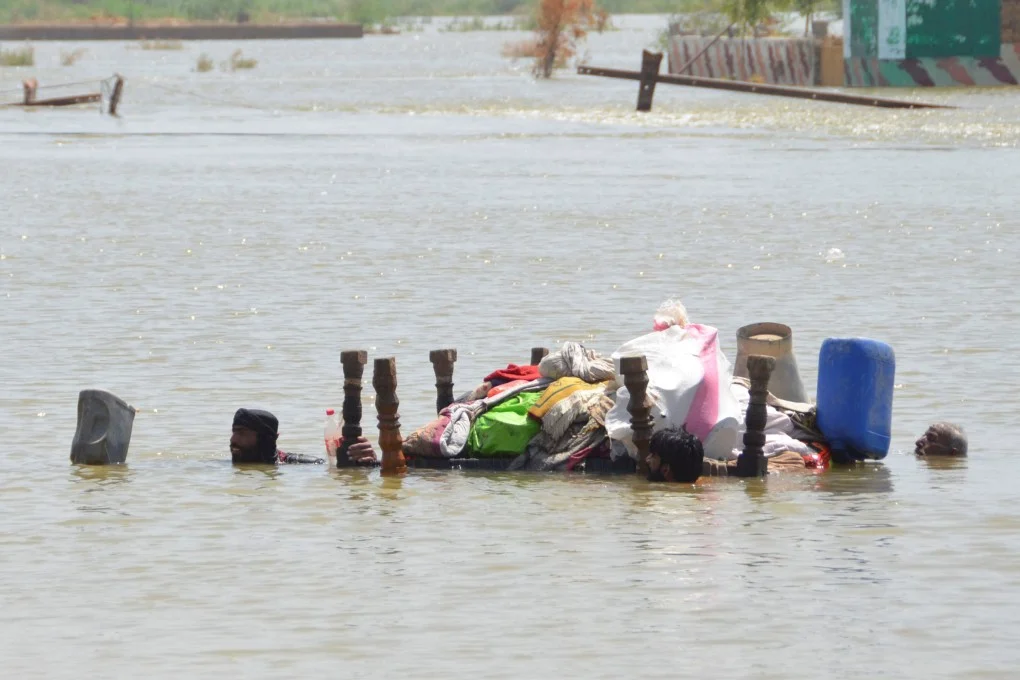
The human toll is staggering. In Kasur, over 8,600 people and 4,000 livestock were evacuated, with hundreds of homes damaged or destroyed. Villages like Kotthi Fateh Muhammad, Rukan Pura, Daya Singh, and Chhabbar are underwater, with communications down and power poles toppled in Qalai Shahu, leaving dozens of villages dark.
In Vehari, 49,573 people across 113 localities are affected, with 12,159 evacuated, 1,792 rescued by boat, and over 3,200 livestock saved; 100 villages and 30,000 crop acres are submerged. In Gujrat, 66 villages, including 30 in Jalalpur Jattan, face crisis from stagnant waters. In Phoolnagar, the Ravi at Head Balloki hit 156,750 cusecs inflow against 115,850 outflow, endangering lowlands.
In Tandlianwala, a 200,000-cusec surge at Head Balloki threatens 20 villages; 11 are evacuated, with six relief camps set up. Rescue 1122, the Pakistan Army, and police saved 44 people and 38 animals. In Multan, 84 camps house 119,715, targeting 300,000 relocations by Saturday night. “The Head Muhammad Wala Road will be breached if Multan faces threat,” said Commissioner Amir Kareem Khan, noting compensation will follow assessments. In Wazirabad, 61,000 people and 25,000 livestock were evacuated; in Sambrial, 20,000 were relocated.
In Sindh, Chief Minister Syed Murad Ali Shah chaired an emergency meeting in Karachi, eyeing the oncoming wave at Guddu. “In case of a major flood wave, not a single life, human or animal, should be lost,” he instructed officials, mandating rescue boats, over 500 relief camps, and coordination with the Pakistan Navy’s 26 standby vessels.
More than 50,000 families risked displacement if embankments failed, prompting Rescue 1122 to mobilise 30,000 personnel in districts like Sukkur, Ghotki, Khairpur, and Shikarpur, with boats at the ready.
Compounding the threat, the ninth monsoon spell unleashed fresh rains across Punjab through September 2, targeting Rawalpindi, Murree, Galiat, Attock, Chakwal, Jhelum, Gujranwala, Lahore, Gujrat, Sialkot, Narowal, Hafizabad, Mandi Bahauddin, Okara, Sahiwal, Kasur, Jhang, Sargodha, Mianwali, Dera Ghazi Khan, Multan, and Rajanpur. Javed flagged urban flash flood risks, ordering officials to erect tent villages and stock medical supplies.
Heavy downpours loomed over already inundated Gujranwala, Gujrat, and Lahore districts in the next 12-18 hours. “These rains could further worsen the current flood situation, as unusually high water flow persists in the Sutlej, Ravi and Chenab rivers,” the NDMA warned on X.
Prime Minister Shehbaz Sharif will convene an emergency meeting with chief ministers and agency heads to craft a climate and flood strategy, the government announced on X. “A strategy is being formulated for the construction of water reservoirs in all four provinces, Azad Kashmir, and Gilgit-Baltistan, and for better water management,” the post said, stressing provincial buy-in.
“Climate change is a reality, and only through effective preparation for it can the damage from natural disasters be prevented,” it added. “All four provinces, Azad Kashmir, Gilgit-Baltistan and the federation must work together to protect people from the adverse effects of climate change. This is a national issue on which everyone must work together.”
At Kartarpur Gurdwara, drainage was completed swiftly, with the site set to reopen for Sikh pilgrims in days. Army Chief Field Marshal Asim Munir visited flood-hit areas, pledging to restore sites like Darbar Sahib Kartarpur. “No stone will be unturned,” he assured the Sikh community.
While Lahore has escaped the worst, the Chenab, Ravi, and Sutlej rivers—surging together for the first time in Pakistan’s history—now threaten Sindh with a potential 800,000-cubic-foot-per-second deluge, deepening fears of catastrophe as rains loom.
The floods have devastated 1.46 million lives across 1,769 villages, with 3,565 people in 365 relief camps and 300,174 cattle relocated, according to Punjab’s Provincial Disaster Management Authority (PDMA). The death toll has reached 28 in the last two days.
In Lahore, officials declared the city “completely safe” as water levels at Shahdara dropped from 220,000 cusecs to 161,000, said PDMA Director General Irfan Ali Kathia. But the crisis is shifting south, with Sindh bracing for a “very high” flood at Guddu Barrage by Sept. 4, potentially rivalling the 2014 disaster that displaced 275,000. Nationwide, monsoon-related flooding and rains have claimed 830 lives since late June, half in August alone, per the National Disaster Management Authority (NDMA).
In Jhang, officials breached bunds near Athara Hazari to ease pressure downstream of the Jhelum and Chenab confluence, cutting the Rivaz Bridge bund to protect the city and evacuating nearby villages.
Explosives cleared Rungpur and Sher Shah bunds to divert water from Head Muhammad Wala, expecting up to 800,000 cusecs. On Friday, a railway embankment near Nankana village was blasted to shield Rivaz Bridge and Trimmu Headworks, where 855,000 cusecs are due within 24 hours.
“There was no other way to drain the water,” Relief Commissioner Nabil Javed said. “We are deploying all available resources and machinery to protect lives and infrastructure.”
The Sutlej River, facing its worst flooding since 1955, hit 345,366 cusecs at Ganda Singh Wala, with water levels at 24 feet submerging villages and destroying thousands of crop acres. On Friday, flows surged 47.7 percent in eight hours, from 261,030 cusecs at noon to 385,569 by 8 pm, triggering urgent alerts from the Pakistan Meteorological Department.
Kathia blamed a dam breach in India for the “catastrophic inflow,” threatening Kasur. “We have been compelled to deliberately breach the embankment to save Kasur city,” he said. The 1955 floods killed over 2,000 and affected 15 million. “This is the first time in Pakistan’s history that three major rivers have flooded simultaneously,” Kathia said, noting severe impacts at Qadirabad Headworks.
The NDMA issued warnings for Marala, Khanki, and Qadirabad headworks, sending SMS alerts. Key flows included Chiniot Bridge at 855,000 cusecs and Balloki Headworks on the Ravi at 180,520 cusecs, while downstream Sutlej points like Sulemanki and Islam held steady.
The flood’s southward shift endangers Sindh, with the NDMA urging evacuations along the Indus River. The NDMA sounded alarms for “exceptionally high” flooding ahead, with peaks up to 1.2 million cusecs possible. Between September 3 and 4, 900,000 to 950,000 cusecs might hit Panjnad Headworks, potentially spiking to 825,000-900,000 if breaches occur. Downstream, Guddu Barrage could face 1.1 million cusecs by September 5-6, Sukkur the same on 6-7, and Kotri on 8-9. “The next 48 hours will be critical,” Kathia said, citing potential downstream surges.
Pakistan blames India for exacerbating the crisis through dam releases, including from the Madhopur barrage on the Ravi, which worsened earlier flooding in Lahore before waters receded, and from Thein and Harike dams.
India’s suspension of the 1960 Indus Waters Treaty in April, after a militant attack in occupied Kashmir killed 2, halted data sharing, leaving Pakistan unprepared.
“We could have managed better if we had better information. If the Indus Waters Treaty was in operation, we could have mitigated the impact,” Planning Minister Ahsan Iqbal, whose Narowal constituency was hit hard, said.
An Indian official denied deliberate flooding, Reuters reported, confirming two gates broke at Madhopur, but Pakistan claimed India failed to issue treaty-mandated alerts for the Sutlej surge.
“Efforts are underway to rein in the Ravi using the upstream Ranjit Sagar Dam,” the official told Reuters, insisting that communication lines remained open. “India is doing whatever can be done and all the information is being passed on,” he added. “Incessant rain is causing this flood.”
But the channels for sharing the data have narrowed since the treaty’s suspension ended direct exchanges between water officials of the two countries. India has relayed four flood alerts to Islamabad since Sunday, including Friday’s, but solely on humanitarian grounds via its embassy. No detailed data exchanged.
Minister Iqbal said without the treaty’s framework, vital data on water flows has trickled in too late or too sparsely, leaving the country blindsided. “Climate change is not a bilateral issue,” Iqbal said. “It relates to humanity.”
The human toll is staggering. In Kasur, over 8,600 people and 4,000 livestock were evacuated, with hundreds of homes damaged or destroyed. Villages like Kotthi Fateh Muhammad, Rukan Pura, Daya Singh, and Chhabbar are underwater, with communications down and power poles toppled in Qalai Shahu, leaving dozens of villages dark.
In Vehari, 49,573 people across 113 localities are affected, with 12,159 evacuated, 1,792 rescued by boat, and over 3,200 livestock saved; 100 villages and 30,000 crop acres are submerged. In Gujrat, 66 villages, including 30 in Jalalpur Jattan, face crisis from stagnant waters. In Phoolnagar, the Ravi at Head Balloki hit 156,750 cusecs inflow against 115,850 outflow, endangering lowlands.
In Tandlianwala, a 200,000-cusec surge at Head Balloki threatens 20 villages; 11 are evacuated, with six relief camps set up. Rescue 1122, the Pakistan Army, and police saved 44 people and 38 animals. In Multan, 84 camps house 119,715, targeting 300,000 relocations by Saturday night. “The Head Muhammad Wala Road will be breached if Multan faces threat,” said Commissioner Amir Kareem Khan, noting compensation will follow assessments. In Wazirabad, 61,000 people and 25,000 livestock were evacuated; in Sambrial, 20,000 were relocated.
In Sindh, Chief Minister Syed Murad Ali Shah chaired an emergency meeting in Karachi, eyeing the oncoming wave at Guddu. “In case of a major flood wave, not a single life, human or animal, should be lost,” he instructed officials, mandating rescue boats, over 500 relief camps, and coordination with the Pakistan Navy’s 26 standby vessels.
More than 50,000 families risked displacement if embankments failed, prompting Rescue 1122 to mobilise 30,000 personnel in districts like Sukkur, Ghotki, Khairpur, and Shikarpur, with boats at the ready.
Compounding the threat, the ninth monsoon spell unleashed fresh rains across Punjab through September 2, targeting Rawalpindi, Murree, Galiat, Attock, Chakwal, Jhelum, Gujranwala, Lahore, Gujrat, Sialkot, Narowal, Hafizabad, Mandi Bahauddin, Okara, Sahiwal, Kasur, Jhang, Sargodha, Mianwali, Dera Ghazi Khan, Multan, and Rajanpur. Javed flagged urban flash flood risks, ordering officials to erect tent villages and stock medical supplies.
Heavy downpours loomed over already inundated Gujranwala, Gujrat, and Lahore districts in the next 12-18 hours. “These rains could further worsen the current flood situation, as unusually high water flow persists in the Sutlej, Ravi and Chenab rivers,” the NDMA warned on X.
Prime Minister Shehbaz Sharif will convene an emergency meeting with chief ministers and agency heads to craft a climate and flood strategy, the government announced on X. “A strategy is being formulated for the construction of water reservoirs in all four provinces, Azad Kashmir, and Gilgit-Baltistan, and for better water management,” the post said, stressing provincial buy-in.
“Climate change is a reality, and only through effective preparation for it can the damage from natural disasters be prevented,” it added. “All four provinces, Azad Kashmir, Gilgit-Baltistan and the federation must work together to protect people from the adverse effects of climate change. This is a national issue on which everyone must work together.”
At Kartarpur Gurdwara, drainage was completed swiftly, with the site set to reopen for Sikh pilgrims in days. Army Chief Field Marshal Asim Munir visited flood-hit areas, pledging to restore sites like Darbar Sahib Kartarpur. “No stone will be unturned,” he assured the Sikh community.
Copyright © 2021 Independent Pakistan | All rights reserved