By Staff Reporter
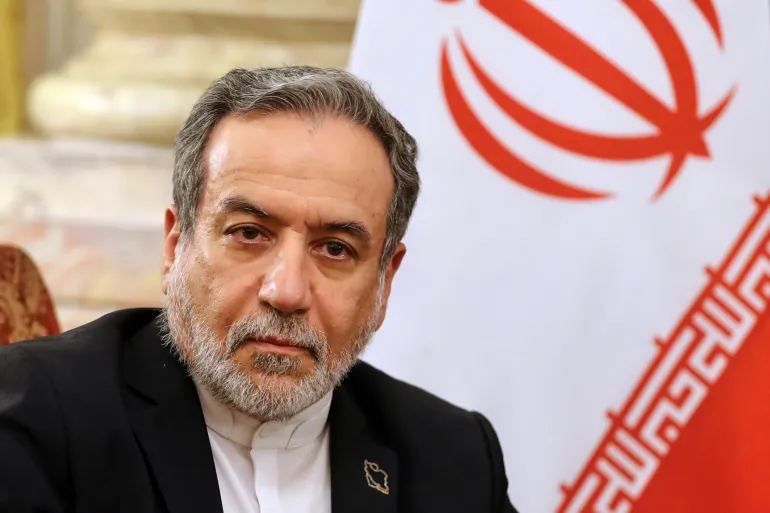
ISLAMABAD: Iran’s foreign minister said on Saturday that Tehran had never turned down an offer to hold peace talks in Pakistan, directly challenging US media accounts that portrayed the latest round of regional mediation efforts as deadlocked.
In a post on X, Abbas Araghchi said Iran’s position had been “misrepresented by US media.” He expressed deep gratitude to Pakistan for its diplomatic initiative and emphasised that what matters to Tehran is securing “the terms of a conclusive and lasting END to the illegal war that is imposed on us.”
Araghchi accompanied his statement with a video of Iranians waving Pakistani flags in a show of appreciation and closed the message with the Urdu phrase “Pakistan Zindabad” — “Long live Pakistan.”
The clarification came one day after The Wall Street Journal reported, citing unnamed mediators, that efforts by Pakistan and other regional countries to broker a ceasefire between the United States and Iran had reached a “dead end.” The newspaper said Iran had been unwilling to engage in talks in Islamabad and had rejected Washington’s demands.
Pakistan moved quickly to welcome the Iranian statement. Deputy Prime Minister and Foreign Minister Ishaq Dar replied on X within hours: “Truly appreciate your clarification, my dear brother.” Foreign Office spokesperson Tahir Andrabi called Araghchi’s post a “timely reminder” that “speculation helps no one.” He urged all parties to “stick to official statements and verified media readouts for clear and accurate information.”
The conflict began with joint US-Israeli strikes on Iranian targets on Feb. 28, which prompted retaliatory attacks by Tehran. The fighting has rattled global energy markets, driven oil prices sharply higher and raised fears of wider economic disruption and supply-chain breakdowns. Pakistan has cast itself as a neutral facilitator, drawing on its longstanding ties to the United States, its working relationship with Iran and its strategic partnership with China. On March 24, Prime Minister Shehbaz Sharif publicly offered to host “meaningful and conclusive talks” between Washington and Tehran, saying Islamabad would be “ready and honoured” to do so.
Last week, Pakistan convened a quadrilateral meeting of foreign ministers and repeated the offer. On March 31, Islamabad and Beijing jointly issued a five-point initiative for restoring peace in the Middle East that called for an immediate cessation of hostilities, the resumption of dialogue and the protection of critical infrastructure and shipping routes.
The Iranian clarification also followed earlier media reports that Tehran had yet to issue a formal response to specific proposals despite back-channel contacts in recent days. A senior Iranian official in Tehran told reporters on Friday that Iran had not refused to participate in talks in Islamabad but found the terms conveyed by Washington unacceptable. “The conditions, or the 15-point proposal, put forward by the United States are too difficult to accept,” the official said, describing the situation as “highly complex.”
He added that Iran’s immediate priority remained the war itself rather than negotiations, citing “zero confidence in the US” because recent American military deployments in the region appeared inconsistent with any genuine interest in talks. The official also voiced security concerns, noting that two Iranian leaders who had previously pursued de-escalation initiatives had been targeted. “There are serious concerns that anyone participating in negotiations could also be targeted,” he said. Even so, he praised Pakistani leaders for “undoubtedly doing their best for cessation of hostilities.”
Pakistan had earlier conveyed a 15-point US ceasefire proposal to Tehran, which Iranian authorities deemed unacceptable. Islamabad also hosted separate quadrilateral talks involving Saudi Arabia, Turkey and Egypt to explore additional avenues for defusing the crisis. Dar traveled to Beijing to coordinate the joint five-point plan with China. Despite these intensive efforts, no breakthrough has been achieved.
President Donald Trump said in a recent address that the war could end “in another few weeks,” offering no specific timeline even as US and Israeli military operations have continued to intensify. Iran has made clear it is not interested in a temporary pause in fighting. Officials in Tehran have repeatedly stated that any agreement must deliver a definitive end to the conflict and include ironclad guarantees that Iran will not face renewed attacks once hostilities subside.
Copyright © 2021 Independent Pakistan | All rights reserved