By Staff Reporter
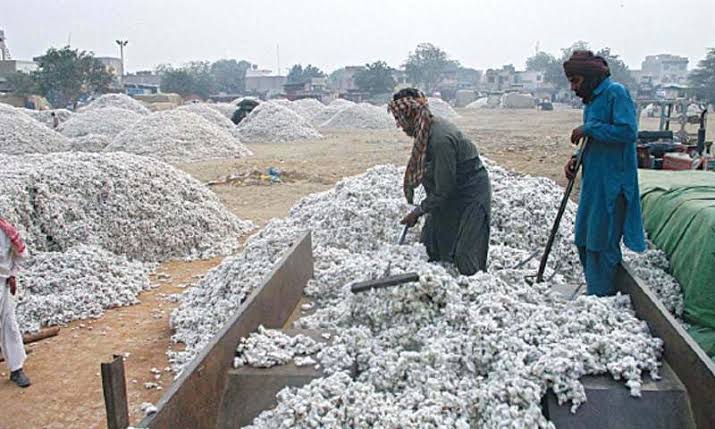
ISLAMABAD: Cotton arrivals at the ginning factories surged more than 32% in the season through July 31, as a record jump in Sindh province more than compensated for a decline in Punjab, historically the country’s dominant cotton-growing region.
Seed-cotton, known locally as phutti, reached ginning factories in volumes of 785,822 bales, up from 593,821 bales a year earlier, according to fortnightly data released Monday by the Pakistan Cotton Ginners Association. The gain was driven almost entirely by Sindh, where arrivals climbed 66.82% to 487,672 bales even as the province absorbed early monsoon rains.
Punjab, by contrast, recorded a 1.1% drop to 298,150 bales. Balochistan, though a minor contributor to national output, posted the steepest percentage gain of the three provinces, with arrivals rising 52.67% to 22,900 bales.
The divergence has drawn scrutiny from industry officials. Ihsanul Haq, chairman of the Cotton Ginners Forum, flagged a substantial gap between the association’s Punjab figures and those of the provincial government’s Crop Reporting Service, which put output at roughly 435,000 bales by July 30 — about 32% above the ginners’ estimate. Haq said the discrepancy required clarification from relevant authorities.
Sugarcane Squeeze
Haq pointed to a more structural concern embedded in the government data: a near-collapse of cotton cultivation in Punjab’s Bahawalpur Division, long considered the province’s premier cotton belt, where production has fallen to roughly 17,000 bales. He attributed the decline to the rapid expansion of sugarcane farming, fueled by the concentration of sugar mills in the area, which he said has effectively converted the traditional cotton zone into sugarcane territory.
The shift, Haq warned, is compounding Pakistan’s dependence on imported cotton and edible oil as domestic acreage shrinks. He called on federal and provincial governments to curb sugarcane sowing in designated cotton-growing districts to help restore production.
The stakes are considerable. Pakistan’s edible oil imports climbed to a record 3.482 million tonnes valued at $3.785 billion in the 2025-26 fiscal year, up from 3.214 million tonnes worth $3.40 billion the year prior — underscoring the broader cost of the country’s shrinking oilseed and cotton base.
Sindh’s Coastal Advantage
Within Sindh, Sanghar district alone accounted for 398,000 bales, or 82% of the province’s output and 51% of the national total. Ginners attributed the concentration to early sowing along the province’s coastal belt in February and March, which allowed crops there to reach market ahead of other growing regions.
Nationwide, 231 ginning factories were operational during the period, up from 225 a year earlier, including 108 in Punjab and 123 in Sindh — though the ginners association noted some units were running at partial capacity or had suspended operations entirely amid financial and commercial pressures.
Textile mills purchased 704,000 bales during the period, while exporters bought 3,400 bales — split between 2,200 bales from Punjab and 1,200 bales from Sindh. That marks a notable shift from a year earlier, when export and trader purchases were negligible. Unsold stocks at ginning factories climbed to 78,044 bales, up from 64,667 bales a year ago, suggesting buying has lagged the pace of arrivals.
Early Days
Sajid Mahmood, head of the Transfer of Technology Department at the Central Cotton Research Institute in Multan, said the early-season data pointed to a stronger start than last year, particularly in Sindh, where timely sowing, harvesting and crop management practices have supported the gains.
Mahmood cautioned, however, that the true trajectory of the crop would not become clear until August and September. He warned that continued humidity and rainfall could raise the risk of whitefly infestation, pink bollworm and other crop diseases capable of undermining lint quality and yields.
He urged growers to prioritize field drainage, monitor pest populations closely and coordinate with agricultural extension officials on protective measures as the season progresses.
Industry participants said the coming two months would prove decisive. Should Sindh sustain its current momentum and Punjab stabilize, total production for the season could surpass last year’s levels — even without a meaningful expansion in cultivated area — offering some relief to both farmers and a textile industry that depends on steady domestic raw cotton supply.
Copyright © 2021 Independent Pakistan | All rights reserved