By Staff Reporter
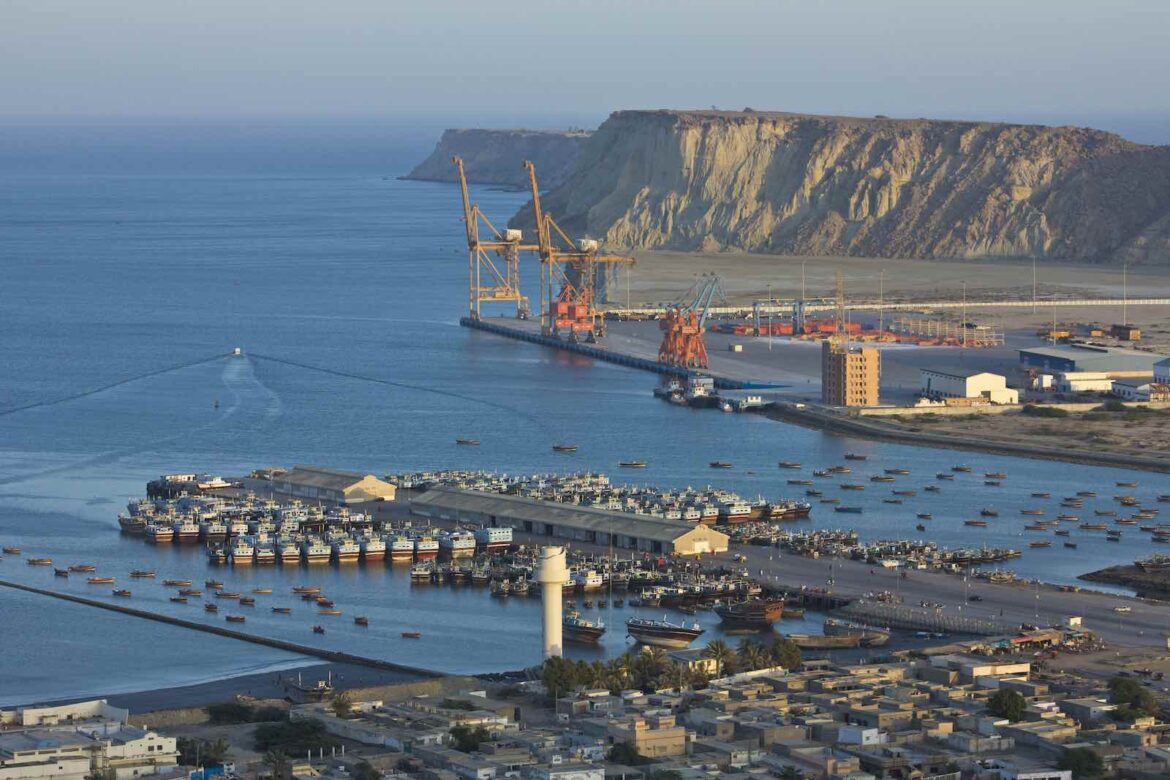
ISLAMABAD: Minister for maritime affairs announced reductions in tariffs at Gwadar Port on Monday, trimming fees for container vessels and offering a month of free storage in a bid to capture more global transit and transshipment business amid disruptions in the Strait of Hormuz.
Berthing fees for container ships were reduced by 25%, while charges on international transshipment containers were cut by 40%, Junaid Anwar Chaudhry said in a statement. Port charges on transit container cargo were lowered by 31%. The authority is also providing one month of free storage for general cargo, an incentive that exceeds the five-day allowance typical at other Pakistani ports.
“These incentives take effect immediately, and further adjustments will be reviewed in phases based on operational data and market response,” Chaudhry said. “Future revisions would be guided by cargo trends, regional competition and sustainability considerations.”
The moves are the latest step in a broader government strategy to transform the deep-sea port in southwestern Balochistan into a competitive, investor-friendly logistics hub serving Central Asia, the Middle East, East Africa and beyond. Officials expect the lower costs to encourage new transshipment and feeder services, reduce operating expenses for shipping lines and lift cargo volumes.
“This initiative will stimulate economic activity in the country, generate employment opportunities, and expand Pakistan’s logistics and maritime sectors,” Chaudhry said. The announcement coincided with the arrival of the month’s second transshipment vessel at Gwadar. The MV Yuan Hang Wei Ye berthed Monday morning carrying approximately 34,000 tons of cargo — roughly 20,000 individual pieces — destined for Abu Dhabi and Kuwait, according to the maritime affairs ministry. The consignments will be offloaded at Gwadar for onward movement.
Gwadar Port Authority Chairman Noorul Haq Baloch said a day earlier that the port’s strategic importance has grown significantly because of rising tensions in the Strait of Hormuz, through which roughly 20% of the world’s oil and gas supplies pass. Iran has maintained a chokehold on the waterway since February, when the US and Israel launched joint strikes against Tehran. The conflict has prompted shipping lines to divert cargo from traditional Gulf hubs toward alternative routes, including those through Pakistan.
Baloch, speaking at a meeting with members of the All Pakistan Shipping Association in Karachi, described Gwadar as an increasingly attractive, safe alternative trade gateway. The port offers shorter access routes to Iran and Central Asia, low operational costs, modern facilities and the newly operational Gabd-Rimdan border corridor, which serves as a multi-modal link for trade with those markets.
“Gwadar had the potential to become the future hub of regional trade and logistics,” Baloch said, according to a statement. He also noted that four transshipment vessels called at the port in April, underscoring its growing role as an alternative route.
Chaudhry described the tariff package as providing “major relief” to ships carrying transit and transshipment cargo, calling the incentives unprecedented compared with other national ports. Implementation of the policy to position Gwadar as a regional logistics center has now begun, he said, with expectations of higher cargo handling, accelerated economic activity, new jobs and expansion of the logistics sector.
Baloch separately highlighted the potential for significant employment growth in Balochistan, saying the reduced fees and improved facilities would draw both local and international investors and accelerate economic development in the region. Transshipment volumes have already risen across Pakistan’s ports — particularly at Karachi and Port Qasim, and to a lesser extent at Gwadar — as lines seek lower-cost, congestion-free options. The revised tariff regime at Gwadar forms part of that shift, officials said, positioning the facility to capture a larger share of regional trade flows that have been rerouted because of Middle East instability.
Copyright © 2021 Independent Pakistan | All rights reserved