By Staff Reporter
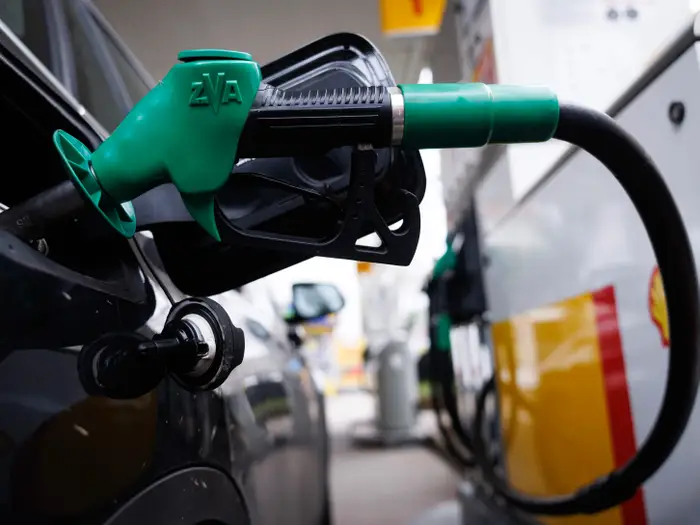
ISLAMABAD: Pakistan reduced the price of petrol by one rupee a liter and left diesel unchanged, according to a notification from the Oil and Gas Regulatory Authority issued on Friday.
The new rates take effect Nov. 28 and run through Monday, Nov. 30. Petrol will retail at 312 rupees a liter and high-speed diesel at 346 rupees. The government had cut petrol by one rupee and diesel by 2 rupees for Nov. 27, so Friday’s decision extends a run of reductions that has taken both fuels below their July 18 levels of 316.15 rupees for petrol and 354.35 rupees for diesel.
The pullback has been steady since the start of the month. Local price records show petrol at 374.51 rupees on Nov. 3 and diesel at 395.20 rupees. Petrol is now 62.51 rupees lower and diesel 49.20 rupees lower over that period. Both are about a third below the peaks they reached in April.
Taxes remain a large part of the pump price. The government continues to levy 114 rupees a liter in taxes and duties on petrol and 100 rupees on diesel.
Refineries are also helping to hold prices down. Under an arrangement announced Nov. 2 that runs for 30 days, they are bearing a cumulative impact of 15 billion rupees as their contribution to the petroleum levy, according to the government. That has allowed a 14.71-rupee reduction in the consumer price of petrol. A 30-day term from Nov. 2 would take the arrangement into early December.
On Sept. 17, the government introduced the Prime Minister’s Fuel Relief Scheme nationwide to ease the burden of rising fuel costs tied to the Middle East conflict. The subsidy covers owners of motorcycles, rickshaws and vehicles of up to 800cc.
Fuel costs have swung sharply this year. Diesel began climbing from 281 rupees a liter after war between the US and Iran broke out on Feb. 28, and peaked at 520.35 rupees on April 3. Petrol started its rise from 266 rupees in the first week of March and hit 458.41 rupees on the same day in April.
The government has since reinstated austerity measures in response to the elevated prices. Markets are required to close by 9 p.m., and fuel allocations for official vehicles have been cut by 50% for three months.
The pricing mechanism has also changed. Since July 17, authorities have revised fuel prices almost daily, reflecting swings in international markets after hostilities between Iran and the US resumed. The petroleum minister has said the cabinet and the prime minister decided to hand Ogra responsibility for setting prices daily, based on global market trends. Before that, the government had announced weekly revisions since early March, alongside fuel conservation steps meant to guard against possible oil supply disruptions. In April, the federal government also introduced targeted relief measures to provide subsidized fuel.
Crude has been volatile, which is why Pakistan’s pump prices keep moving. Brent futures settled at $95.44 a barrel on Friday, down 1.2% on the day, but gained about 3% on the week, the first weekly rise in November after three straight declines. Attacks on tankers in the Strait of Hormuz and uncertainty before an OPEC+ meeting added to supply concerns. Brent had settled at $104.77 on Nov. 2, after falling more than 7% in a day on hopes of a diplomatic resolution to the conflict involving Iran.
Petrol is used mainly in private transport, small vehicles, rickshaws and two-wheelers, so changes in its price hit the middle and lower-middle classes. Diesel is used mainly in heavy transport, power plants and large generators, so its price reaches the wider public.
The two fuels are also the biggest revenue earners among petroleum products. Combined monthly sales of petrol and diesel run at about 700,000 to 800,000 tonnes, compared with only about 10,000 tonnes of monthly demand for kerosene.
Copyright © 2021 Independent Pakistan | All rights reserved