By Staff Reporter
ISLAMABAD: After nearly two months of a near-total halt in cross-border cargo movement, Pakistan has begun clearing humanitarian consignments destined for Afghanistan, officials said, marking the first controlled reopening of transit trade since routine operations were suspended in October.
The move, limited to aid from three United Nations agencies, comes amid mounting concerns over the humanitarian crisis in Afghanistan, where millions face food insecurity and shortages of essential supplies. It follows consultations between Pakistani authorities and UN officials, but does not extend to commercial trade, which remains frozen at key border points.
The Pakistani government issued an official letter to the Federal Board of Revenue and the Directorate General of Transit Trade, instructing them to initiate the movement of consignments through the border crossings at Chaman and Torkham. The decision was prompted by instructions from the foreign ministry after discussions with the UN resident coordinator in Pakistan.
In the first phase, a total of 143 containers of humanitarian goods will be allowed for clearance at those two crossings. The containers include 67 of food assistance from the World Food Programme, 74 of supplies for children from Unicef, and two of healthcare and family support items from the United Nations Population Fund.
According to the letter, the cargo movement will proceed in three stages: the first covering food shipments, the second medicine and medical equipment, and the third items for education services. More consignments are expected to follow once the agencies provide updated requirements.
Officials emphasised that the reopening applies only to humanitarian cargoes under the Afghan Transit Trade framework and does not signal the restoration of routine trade. Senior officials added that the remaining UN cargo lists would be shared in stages once documentation was verified.
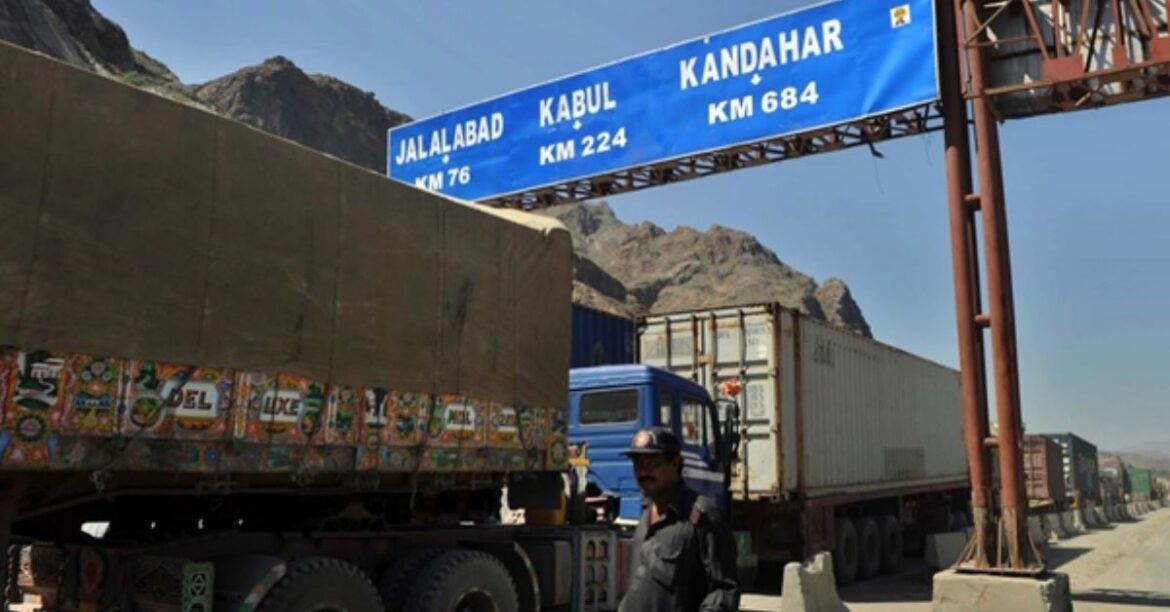
Pakistan had sealed its border to commerce shortly after the October clashes with the Afghan Taliban. The broader suspension of customs clearance for exports, imports and Afghan Transit Trade cargos took effect on Oct. 12 at major border crossings, including Torkham, Ghulam Khan, Kharlachi and Angoor Adda, and on Oct. 15 at Chaman. The closures left truck drivers and customs workers in Chaman and Torkham facing long periods without cargo activity, with hundreds of vehicles parked along the routes.
In terms of transit cargo, approximately 495 vehicles are currently queued for border crossing at Torkham and Chaman. Of these, the majority, 412 vehicles, are stranded at Chaman, while the remaining 83 are held up at Torkham.
In the fiscal year 2024-25, Pakistan recorded transit trade imports valued at $1.012 billion, comprising a total of 42,959 containers, highlighting the economic significance of the route before the suspension. The letter further stated that the Directorate General of Transit Trade and the Federal Board of Revenue were requested to undertake the necessary actions for the clearance and onward transportation of the mentioned containers via Chaman and Torkham, as originally manifested under the Afghanistan-Pakistan Transit Trade Agreement and Afghan Transit Trade rules.
Copyright © 2021 Independent Pakistan | All rights reserved