By Staff Reporter
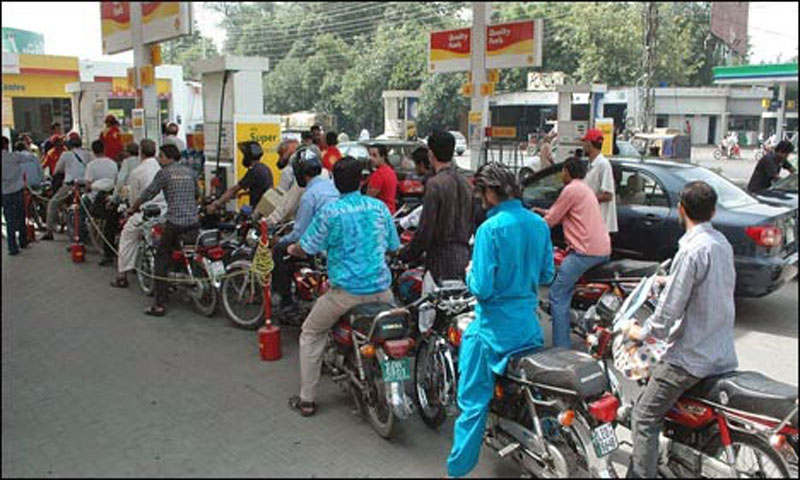
ISLAMABAD: The government has completed testing and finalised a mobile-application-based quota system for subsidised fuel sales to two- and three-wheelers, with the possibility of extending coverage to vehicles of up to 800 cubic centimetres, according to a senior government official.
The move is designed to channel assistance directly to lower-income households while using price signals to restrain overall oil consumption. Details of the automated platform were jointly developed by the Oil and Gas Regulatory Authority and the ministries of finance, petroleum and information technology. Authorities are now preparing a final decision on whether the scheme will also cover small cars or remain confined to motorcycles and rickshaws.
The program will function as an end-to-end digital quota system. A free, pre-installed application will be supplied to retail operators, while consumers will use a separate app to manage their allocations. The government will require every petrol station to maintain a minimum of two mobile phones to operate the platform.
The Ministry of Information Technology has coordinated with domestic cellular-phone manufacturers to supply specialised handsets. The units carry an initial procurement cost of about Rs36,000 each and a retail price near Rs72,000. Petrol stations have been instructed to deposit the necessary funds into a designated government account, whose details will be provided by the regulator, to ensure immediate delivery of the devices.
Quotas will be linked to individual users through their vehicle registration numbers and Computerised National Identity Cards. Final limits on allowable volumes will be set by the relevant cabinet committee. Consumers will generate a digital voucher within the app; retailers will scan or manually enter the code, triggering an automatic check against remaining quota. A request for 20 litres, for example, would be fulfilled only up to the available 15-litre balance. The mechanism follows the template of the earlier, successful Ramadan Package distribution model, the official said.
Subsidies will apply specifically to two- and three-wheelers. Retail outlets will be required to allocate dedicated dispensers or nozzles for the discounted product. A decision remains pending on whether four-wheelers will continue to receive any subsidy or whether such support will be eliminated.
The government intends to maintain timely price revisions to protect retailers from licensing difficulties and to avoid the kind of market disruptions seen in 2020, the official added. All oil marketing companies will be required to designate focal persons at each retail site and furnish their names, mobile numbers and CNIC details to the Oil and Gas Regulatory Authority for round-the-clock monitoring and complaint handling. The same information will be shared with the companies themselves and the petroleum division. The IT ministry will distribute demonstration sessions and video tutorials on system operation. A separate emergency protocol will permit special dispensations when required.
Officials described the broader fuel-supply environment as increasingly strained. Domestic demand has shown no meaningful decline despite elevated prices and heavy foreign-exchange requirements. The additional fiscal burden has so far been absorbed through reductions in the development program and special emergency budget allocations. Holding petrol and diesel prices steady for the past two weeks has already generated an estimated Rs70 billion in extra costs.
Global oil markets have been roiled by the ongoing Middle East conflict and resulting paralysis in shipping through the Strait of Hormuz. Influential voices inside the government have argued that aligning domestic petrol and diesel rates more closely with international levels would send a clear conservation signal to consumers and discourage unnecessary travel. After implementing an initial increase of Rs55 per litre on March 6, authorities have left pump prices unchanged through two subsequent weekly reviews. By contrast, kerosene and jet-fuel rates have risen roughly 128 percent and 150 percent, respectively, since the conflict began.
Parallel diplomatic efforts by the ministries of finance and foreign affairs are underway with Iran and Saudi Arabia to help stabilise the situation. The quota system is being fast-tracked to guarantee uniform implementation across all retail outlets and eliminate operational discrepancies.
Earlier this month, Petroleum Division Secretary Hamed Yaqoob Shaikh told a Senate Standing Committee on Petroleum that the government was preparing a subsidized fuel package for motorcycle and rickshaw owners to cushion the impact of the sharp oil-price rise — a step that echoes an earlier provincial initiative in Khyber Pakhtunkhwa. “The government is working on a package to provide relief to (owners of) motorcycles and rickshaws,” Shaikh said during the hearing.
Separately, petroleum dealers on Wednesday postponed a nationwide strike they had scheduled to begin March 26. Pakistan Petroleum Dealers Association Chairperson Abdul Sami Khan cited the risk of greater consumer hardship if the Middle East conflict escalates and triggers wider supply-chain disruptions. “We have postponed the strike, keeping in view the hardships consumers will face if the war escalates and leads to a supply chain crisis of petroleum products,” Khan said. He declined to provide a new date, noting only that “the situation is highly volatile.”
The association had announced the strike on March 13 and given the government until March 26 to raise the dealers’ margin on petrol and diesel to 8 percent from the current 2.59 percent, following the Rs55-per-litre price hike announced on March 6 — Pakistan’s first significant domestic economic consequence of the US-Israel conflict with Iran.
Khan said the Economic Coordination Committee had earlier recommended the margin increase ahead of the price adjustment, but implementation was suspended by the prime minister and the margin was left unchanged even after the hike took effect. He added that dealers have not yet faced a “severe crisis of petrol and diesel,” with supplies continuing to flow normally from oil marketing companies. On the planned app-based quota system, Khan said the government “has not taken petroleum dealers into confidence in this regard.”
Copyright © 2021 Independent Pakistan | All rights reserved