By Staff Reporter
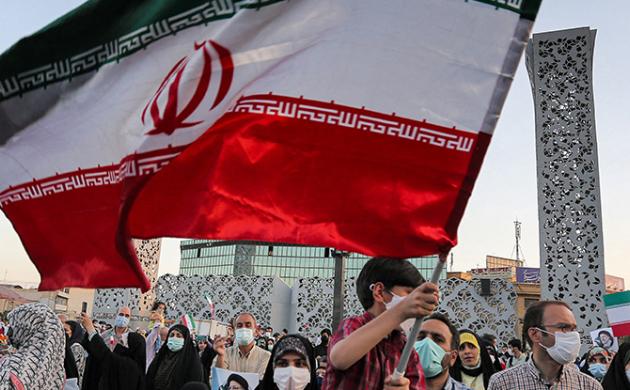
ISLAMABAD: Iran has flatly rejected a US proposal aimed at ending the nearly month-old war with the United States and Israel, insisting that any cessation of hostilities will occur only on Tehran’s terms and timeline, a senior Iranian political-security official told state broadcaster Press TV on Wednesday.
The official, who spoke exclusively to Press TV and was described as having direct knowledge of the proposal, said Iran views Washington’s latest overture as “excessive” and disconnected from the reality on the battlefield. “Iran will end the war when it decides to do so and when its own conditions are met,” the official said. “The end of the war will occur when Iran decides it should end, not when Trump envisions its conclusion.” Tehran, the official added, will continue its defensive operations and inflict “heavy blows” on its adversaries until those conditions are satisfied in full.
The rejection came hours after Pakistan had formally delivered the U.S. proposal to Iranian officials, with Islamabad or Ankara potentially serving as venues for any future de-escalation talks. The disclosure marked one of the few public signals that intense behind-the-scenes diplomacy involving multiple regional powers is continuing despite Iran’s public insistence that it will not negotiate under current circumstances.
The war erupted on Feb. 28 with U.S. and Israeli strikes that included the assassination of Iran’s supreme leader, Ayatollah Seyyed Ali Khamenei, and several top military commanders and government officials. Iranian forces have since launched retaliatory missile and drone strikes against American and Israeli military targets across the region. In response to the initial assault, Tehran imposed severe restrictions on the Strait of Hormuz, a critical chokepoint for global oil shipments, driving energy prices sharply higher.
The senior official told Press TV that the latest U.S. proposal had been relayed through a “friendly regional intermediary” — identified by Reuters as Pakistan — and that Iran had responded negatively, viewing it as another in a series of insincere overtures. The official drew explicit parallels to two earlier rounds of negotiations, in the spring and winter of 2025, which he characterized as deceptive: in both cases, he said, the United States engaged in talks while preparing subsequent military action.
Iran, the official said, has communicated to “all intermediaries acting in good faith” that a cease-fire is contingent on the acceptance of five specific conditions, which he described as non-negotiable and in addition to positions Tehran laid out during the second round of indirect nuclear talks in Geneva just days before the Feb. 28 strikes.
The senior official outlined five specific conditions that Iran says must be accepted in full before any ceasefire or negotiations can proceed. Those conditions are:
- A complete halt to “aggression and assassinations” by the enemy.
- The establishment of concrete mechanisms to ensure that the war is not reimposed on the Islamic Republic.
- Guaranteed and clearly defined payment of war damages and reparations.
- The conclusion of the war across all fronts and for all resistance groups involved throughout the region.
- International recognition and guarantees regarding Iran’s sovereign right to exercise authority over the Strait of Hormuz
“No negotiations will be held prior to that,” the official said. Iranian defensive operations, he stressed, will continue until the conditions are met.
Pakistan Steps In as Go-Between
Pakistan has positioned itself at the center of the diplomatic effort. On Tuesday, Prime Minister Shehbaz Sharif publicly offered Islamabad as a host for direct or indirect talks, writing on X that On Tuesday, Sharif publicly offered to host direct or indirect talks between Washington and Tehran, writing on X that “subject to concurrence by the U.S. and Iran, Pakistan stands ready and honoured to be the host to facilitate meaningful and conclusive talks for a comprehensive settlement of the ongoing conflict” a message that Trump reposted on Truth Social. A senior Iranian source told Reuters on Wednesday that Pakistan had delivered the U.S. proposal and that either Pakistan or Turkey could serve as the venue for discussions.
Pakistani officials have been in intensive contact with their Iranian counterparts. Foreign Minister Ishaq Dar has spoken at least five times recently with Iranian Foreign Minister Abbas Araghchi, and Sharif held two conversations with Iranian President Masoud Pezeshkian in recent days, including one Monday that lasted more than an hour. Field Marshal Asim Munir, Pakistan’s chief of army staff, also spoke directly with Trump on Sunday, the White House confirmed.
The International Atomic Energy Agency’s director general, Rafael Grossi, added a note of cautious optimism, telling Italy’s Corriere della Sera that he expects U.S.-Iran negotiations — potentially broader than previous nuclear-focused talks — could take place in Islamabad as soon as this weekend. The agenda, Grossi said, is likely to include Iran’s missile program, allied militias and security guarantees for Tehran. “There are alternative diplomatic plans,” he said, suggesting a possible temporary freeze on enrichment that could be revisited in five or 10 years. “There are alternative diplomatic plans,” he said.
Trump, whose public statements on the conflict have oscillated between threats of massive escalation and declarations that the war is nearly over, told reporters Tuesday that the U.S. was “in negotiations right now” with Iran. He cited what he called a significant “present” from Iran related to the Strait of Hormuz, where Tehran has imposed restrictions in retaliation for the strikes, disrupting global energy shipments. “They did something yesterday that was amazing actually. They gave us a present and the present arrived today. And it was a very big present worth a tremendous amount of money,” Trump said. “That meant one thing to me — we’re dealing with the right people.” He offered no further details.
Iran’s ambassador to Pakistan, Reza Amiri Moghadam, sought to temper expectations, telling reporters there had been “no negotiations, direct or indirect” between Washington and Tehran despite media reports. “We have also heard such details through the media,” he said, “but according to my information — and contrary to Trump’s claims — so far no negotiations have taken place.”
Separately, Sharif spoke by telephone with Saudi Crown Prince Mohammed bin Salman on Wednesday morning, reiterating Pakistan’s condemnation of recent attacks on the kingdom — including the interception of four ballistic missiles aimed at Riyadh and a drone attempt on an eastern gas facility — and pledging “complete solidarity.” The two leaders agreed to maintain close coordination and called for an immediate end to hostilities.
U.S. special envoy Steve Witkoff is reported to be in Islamabad, according to a U.S.-based outlet citing diplomatic sources, though neither Pakistan’s Foreign Office nor the Iranian Embassy has confirmed any formal meeting schedule. Israeli cabinet sources told media outlets that Prime Minister Benjamin Netanyahu’s security cabinet had been briefed on the American proposal, which they described as including the removal of Iran’s stocks of highly enriched uranium, a halt to enrichment, curbs on its ballistic-missile program and an end to funding for regional allies — a framework sometimes referred to in reporting as a 15-point plan.
The flurry of diplomatic activity comes as the conflict enters its fourth week, with significant economic and humanitarian costs across the Middle East. Iranian officials have warned that any strike on critical infrastructure would trigger an immediate and decisive response. While back-channel efforts continue, Tehran’s public posture remains uncompromising. The senior official told Press TV that Iran has “inflict[ed] heavy blows” on its adversaries and will persist until its demands are fulfilled.
Copyright © 2021 Independent Pakistan | All rights reserved