By Staff Reporter
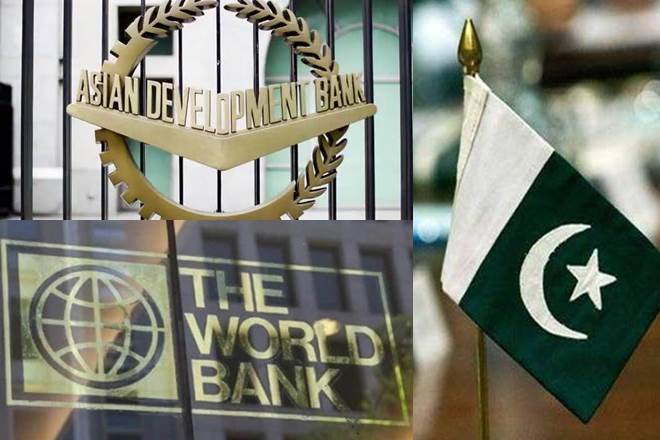
ISLAMABAD: Pakistan’s economy is forecast to expand 2.6% in the fiscal year through June 2026, little changed from the prior period, as catastrophic floods sap agricultural output and revive inflation pressures, the World Bank said.
“In Pakistan, real GDP at factor cost is expected to have grown by 2.7% year-on-year in FY 2024/25, slightly above FY 2023/24’s 2.5 % expansion. For FY 2025/26, real GDP growth is projected to remain around 2.6%, as ongoing catastrophic floods have damped the forecast,” read the report.
Early estimates suggest a drop of at least 10% in agricultural output in Punjab, affecting major crops such as rice, sugarcane, cotton, wheat, and maize, the World Bank said in its latest economic update on the Middle East, North Africa, Afghanistan & Pakistan region, released on Tuesday. “For FY 2026/27, growth is expected to accelerate to 3.4%, supported by higher agricultural output, lower inflation and interest rates, recovering consumer and business confidence, and a rebound in private consumption and investment,” the report said.
Pakistan, which had historically maintained high tariffs with a complex structure, stands to benefit in terms of exports and growth from a recently approved five-year reform plan (2025–2030) to reduce its tariffs by half, the World Bank said. “Looking ahead, Pakistan, which had historically maintained high tariffs with a complex structure, stands to benefit in terms of exports and growth from a recently approved five-year reform plan (2025–2030) to reduce its tariffs by half,” said the World Bank.
Inflation has been receding in regional economies where it was especially high in recent years, the report said. “Pakistan’s inflation rate dropped to single digits in FY 2024/25, as price increases for food and energy eased. However, disruption to food supply chains, due to ongoing catastrophic floods, is expected to push inflation up through 2027.”
In line with global trends, poverty at the lower-middle-income line in Pakistan dropped by 9.4 pps between 2011 and 2018, the World Bank said. “However, a combination of economic shocks and natural disasters since 2020 is projected to have stalled this trend of poverty reduction. Furthermore, due to its relatively high poverty rate and large population, the country accounts for a large share of MENAAP’s poor.”
Pakistan has one of the highest fertility rates in the region, the report found. However, its demographic transition is following a similar trajectory as its peers, only delayed, with the fertility rate projected to fall below replacement level within one generation. In economies such as Pakistan, removing the barriers that prevent women from joining the labour market could lift GDP per capita by 20 to 30%, the largest potential gains globally, it noted.
The report points to an improved economic outlook for the MENAPP region, with expected growth reaching 2.8% in 2025 and 3.3% in 2026.“However, global uncertainty, trade policy shifts, and continued conflict and displacement all pose possible risks,” it said.
Higher tariffs on Indian goods exported to the US would be a drag on South Asia’s economic growth rate in 2026, even as it remains shielded in the current year by government spending, the World Bank said. Growth in South Asia was expected to slow sharply to 5.8 percent in 2026 from its projection of 6.6pc for 2025, according to the report.
Its forecast for the region comprises India, Bangladesh, Sri Lanka, Nepal, Bhutan, and the Maldives. “For 2026, the forecast has been downgraded, as some of these effects unwind and India continues to face higher-than-expected tariffs on goods exports to the United States.”
The World Bank has raised its forecast for India’s growth in the current fiscal year ending March 2026 to 6.5pc from 6.3pc, while trimming its projection for the next fiscal year to 6.3pc from 6.5pc due to tariffs imposed by the United States. US President Donald Trump has imposed a 50pc tariff on most exports from India, among the highest for any US trading partner. The move impacts about $50 billion of Indian exports to the US, mainly hurting labour-intensive sectors such as textiles, gems and jewellery and the shrimp industry. About one-fifth of India’s total exports in 2024 went to the United States. The new tariffs affect about three-quarters of all Indian goods exported there.
Copyright © 2021 Independent Pakistan | All rights reserved