By Staff Reporter
ISLAMABAD: Power Minister Awais Ahmed Khan Leghari said on Friday that planned power outages have ended nationwide after a liquefied natural gas cargo arrived the previous day, restoring stability to the electricity system following a month of fuel-driven disruptions.
In a recorded televised message, Leghari attributed the outages solely to an external gas shortage caused by the US-Iran conflict, rejecting any suggestion of domestic mismanagement or system failure. “Load-shedding was not due to any negligence on our part or because the system was non-functional or lacked generation capacity,” he said. “We were unable to procure gas needed to generate electricity due to the Iran-US war.”
The minister detailed a sharp escalation in mid-April before a gradual easing. Consumers faced outages of up to five hours on April 13 and 14, which lengthened to around seven hours on April 15-16. The schedule was then tightened, with load-shedding limited to two to two-and-a-half hours from April 19 through April 29. On April 14 the government had formally announced more than two hours of daily cuts during peak hours, sparing K-Electric and the Hyderabad Electric Supply Company.
Leghari noted that Pakistan had gone six to seven years without experiencing loadshedding, a problem eliminated during the tenure of former Prime Minister Nawaz Sharif. The recent shortfall, he said, stemmed from LNG supplies halting after April 1 when Qatar’s state-run energy firm declared force majeure. That created a “huge gap” in fuel for gas-fired plants during peak demand, forcing authorities to impose limited cuts rather than tap more expensive alternatives. “If we had generated electricity using diesel or furnace oil to eliminate load-shedding entirely, it would have been very expensive,” Leghari said, adding that the government used furnace oil selectively and only where necessary to cap the financial burden on consumers while keeping outages to a minimum.
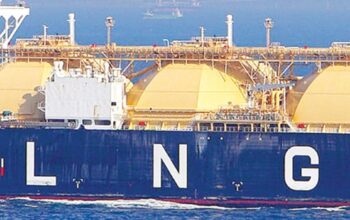
Hydropower output rose sharply in response, climbing to 6,000 megawatts from about 1,000 megawatts previously. To bridge the gap, the government turned to the spot market for additional LNG. On April 24, state-run Pakistan LNG Limited secured three bids priced between $17.997 and $18.88 per million British thermal units for cargoes scheduled between April 27 and May 8. Leghari confirmed the first of those shipments docked on Thursday. “Yesterday, we received LNG, and as soon as the gas arrived, load management of electricity has now ended,” he said.
Pakistan’s total installed generation capacity stands at approximately 32,000 megawatts, the minister added, dismissing public claims of a 46,000-megawatt surplus as “completely wrong. Leghari, who had apologized for the severity of the cuts at an April 16 press conference, said the government’s strategy had been calibrated to protect household budgets while maintaining system balance.
He expressed confidence that loadshedding would not return and that the transmission network could handle the upcoming peak summer season.“ Load shedding will not return to previous levels,” he said. “As it did not happen before, we hope it will not happen again.” The announcement caps a period of acute pressure on Pakistan’s power sector, where fuel availability has repeatedly tested the balance between cost control and supply reliability.
Copyright © 2021 Independent Pakistan | All rights reserved