Islamabad needs the agreement as soon as possible both to replenish its hard currency reserves and to take some pressure off the Pakistani rupee.
By Muhammad Ali
ISLAMABAD: After ten days of exhaustive talks over the state and direction of the country’s economy, the Pakistani authorities are optimistic to clinch a staff-level agreement Thursday over a bailout review with a field mission of the International Monetary Fund (IMF), Independent Pakistan can report.
The two sides continued to work towards an agreement late into night Wednesday, eventually without success.
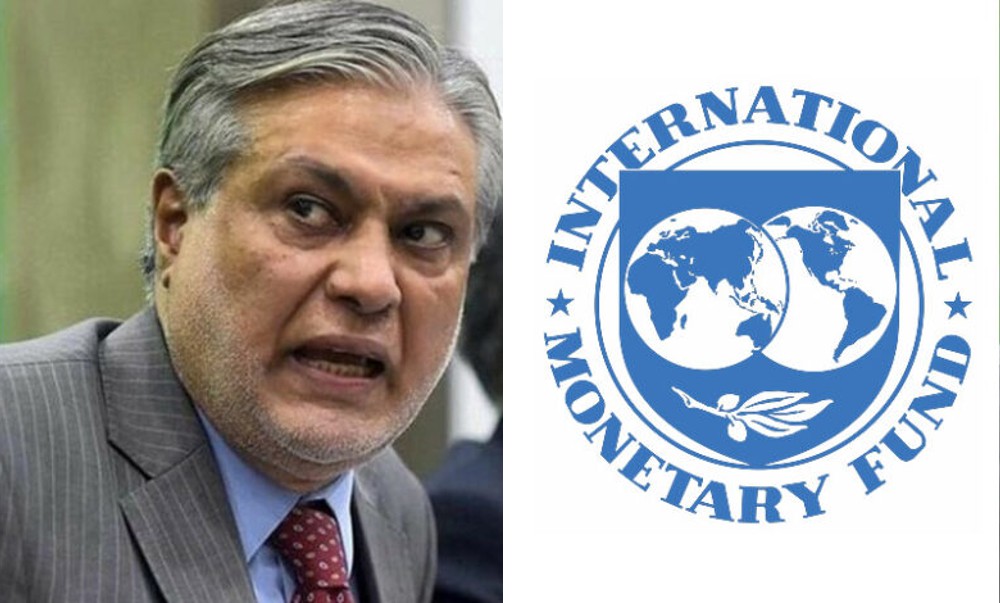
The IMF mission chief Nathan Porter held a meeting with Minister for Finance Ishaq Dar late in the evening to sort out differences over gross external financing requirements and the precise steps required to bridge this yawning fiscal gap and manage power sector losses.
While the two sides are making all out efforts to evolve consensus, differences of opinion still exist. One of the key points of contention at this stage is Pakistan’s external financing needs. The IMF staff have raised doubts over Pakistan’s ability to secure the financing the country needs to stay afloat from multilateral and bilateral creditors and from commercial banks.
Haunted by massive macroeconomic distortions, undermined by years of mismanagement, and devastated by last year’s cataclysmic monsoon flooding, Pakistan’s economy is in deep trouble.
The fallout of the war in Ukraine and a currency crisis brought on by the country’s flimsy foreign exchange reserves have fuelled inflation to 50-year high levels, with food inflation leading the trend.
The government believes the common Pakistani is already grunting under historic economic hardship and need a respite, but the IMF thinks the country needs to find additional revenue streams to stay on-budget regardless.
Earlier this week, the New York-based Human Rights Watch (HRC) raised a clarion call for the IMF to work with Pakistan to protect the poor and the vulnerable and all the country more time and more flexibility to build its economy.
Pakistan’s dwindling foreign exchange reserves mean the country requires a cash injection in the vicinity of USD 9 billion to USD 10 billion to keep its economy solvent and in particular to avoid default on its external obligations.
Islamabad has to repay USD 8 billion in debt service including rollover of deposits in the remaining period of the ongoing financial year ending on June 30, 2023.
Another contentious issue is whether or not to count power sector circular debt towards primary balance. Agreement over how to calculate primary balance – fiscal balance before debt service payments – is important because it is fundamental to ascertaining the fiscal gap the authorities need to bridge to stay on-budget.
If power sector circular debt is counted towards primary balance as the IMF mission insists, it will widen the fiscal gap the government needs to bridge through new taxation measures before it can return the budgeted primary deficit at the end of the current fiscal.
Depending upon how you calculate it, the gap (and therefore the size of the upcoming minibudget) can be anywhere between 0.6 percent and 0.9 percent of the country’s GDP.
Pakistan is also under the gun to hike electricity tariffs. The government feels a compulsion to throw a subsidy for lifeline consumers already strolling under the brunt of the cost of living crisis. The magnitude of the hike will depend on magnitude of the sector’s losses and the size of any prospective subsidy.
The government is believed to be making last ditch effort to convince the IMF to incorporate half the amount of power subsidies in the circular debt and finance the remaining half through a tariff adjustment.
Officials continue to play down the possibility of a power tariff hike, but they are tight-lipped as to how the government hopes to finance the additional subsidy of PKR 675 billion required to keep the tariffs at the current levels.
Thursday is the final day of scheduled talks for the 9th review of a USD 6.5 billion Extended Fund Facility (EFF) that began on January 31, 2023.
Sources close to the parley tell Independent Pakistan the two side may announce a staff level agreement but keep the country’s external financing needs as an open item until the IMF executive board’s endorsement at a future date.
Alternatively, the IMF mission can also extend the review talks, to be continued through online meetings after the mission’s return to Washington as scheduled.
But a senior Finance Division official said the talks are heading towards conclusion and a staff-level agreement would be reached on Thursday.
Upon successfully concluding a staff-level agreement, the IMF mission will share the draft Memorandum of Economic and Financial Policies (MEFP) with Pakistani authorities, which will be reviewed and signed before being returned to the IMF.
The executive board’s approval of the staff-level agreement will pave the way for the revival of the EFF program and the release of a USD 1 billion tranche of IMF financing. It will also enable Pakistan to tap multilateral, bilateral, and commercial sources of financing to meet the economy’s needs.
Copyright © 2021 Independent Pakistan | All rights reserved