By Staff Reporter
ISLAMABAD: Authorities issued urgent alerts for glacial lake outburst floods in the rugged northern regions of Khyber Pakhtunkhwa and Gilgit-Baltistan, where an incoming weather system is forecast to bring heavy rain to vulnerable mountain valleys and heighten the risk of sudden, catastrophic flooding.
The Pakistan Meteorological Department warned that a moderate westerly wave would move into the upper parts of the country on Monday, delivering widespread rain and thunderstorms, with isolated heavy downpours likely in mountainous catchments. The system was expected to intensify the danger of glacial lake outbursts, debris flows and flash floods in areas already primed by melting snow and ice, the department said.
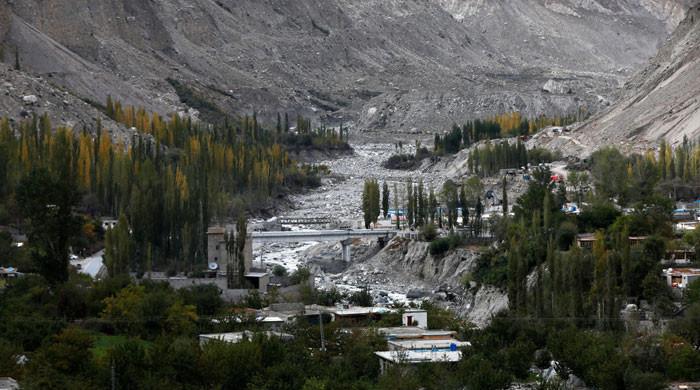
Among the districts and valleys placed on high alert were Swat, lower Chitral, Dir, Upper Hazara and Kohistan in Khyber Pakhtunkhwa, as well as Hoper, Ghulkin, Shishper, Ghizer, Hunza, Nagar, Ghanche, Shigar and Astore in Gilgit-Baltistan. Officials described these zones as particularly susceptible because of their concentration of glacial lakes perched above steep, populated river valleys.
Residents in glacial valleys were told to stay clear of riverbanks and stream beds during the rain, to watch local streams — known locally as nullahs — for sudden changes in water colour or the grinding sound of rocks being carried downstream, and to move livestock and essential supplies to higher ground.
Disaster management authorities were instructed to maintain round-the-clock readiness, keep communication lines open with technical focal persons in remote areas and push out weather alerts through text messages and social media. “All concerned departments and residents of vulnerable areas have been urged to remain vigilant and take precautionary measures to avoid any untoward situation during the forecast period,” the meteorological department said in its alert.
The Khyber Pakhtunkhwa Provincial Disaster Management Authority followed up with specific instructions to deputy commissioners in Upper Chitral, Lower Chitral, Upper Dir, Swat, Upper Kohistan and Mansehra. The authority directed them to step up monitoring and surveillance at known glacial lake outburst sites, conduct evacuation drills in at-risk communities and ensure that designated safe sites were fully stocked with supplies.
Local officials were also told to alert people living in low-lying areas, keep rescue teams on standby and coordinate with other departments to clear any road blockages quickly. In cases of heightened risk, the authority said, controlled breaching of vulnerable glacial lakes could be carried out in coordination with technical teams to prevent a sudden outburst.
Residents and tourists were advised to avoid unnecessary movement near streams, waterways and rivers. The instructions were blunt: if water flow changes suddenly or the sounds of mudslides and falling rocks are heard, move immediately to higher, safer ground.
The alerts come as Pakistan, one of the countries most vulnerable to climate-driven extreme weather, continues to reckon with the legacy of devastating floods in recent years. Glacial lakes in the Hindu Kush and Karakoram ranges have grown rapidly because of accelerated melting, turning once-stable bodies of water into potential threats to downstream villages, roads and infrastructure.
Separately, the meteorological department reported on Monday that Karachi, the country’s largest city and busiest port, would continue to experience hot and humid conditions over the next several days, with daytime temperatures hovering in the mid-30s Celsius. Sea breezes were expected to keep the metropolis relatively stable, with forecasts calling for highs around 36 to 37 degrees Celsius and no immediate threat of a full-blown heatwave.
Farther inland across Sindh province, however, the outlook is more severe. Meteorologists warned that a fresh spell of extreme heat is likely to grip several districts from May 15, potentially persisting until May 20 or longer. Most parts of the province will see hot to very hot and dry weather, with the central and upper districts bearing the brunt.
Interior areas such as Dadu, Shaheed Benazirabad and Ghotki could see temperatures climbing to between 46 and 48 degrees Celsius. Intense heat is also forecast to continue in Naushahro Feroze, Jacobabad, Larkana and Sukkur, where residents have already endured prolonged stretches of punishing temperatures. Officials said the current heat wave may ease slightly on Tuesday before another extended period of high temperatures develops mid-month.
Authorities urged the public — especially children, women and the elderly — to avoid unnecessary exposure to direct sunlight, stay hydrated and use water judiciously. Farmers were advised to adjust agricultural schedules and take extra care of livestock. All relevant departments were directed to remain on alert to prevent heat-related emergencies.
Copyright © 2021 Independent Pakistan | All rights reserved