By Staff Reporter
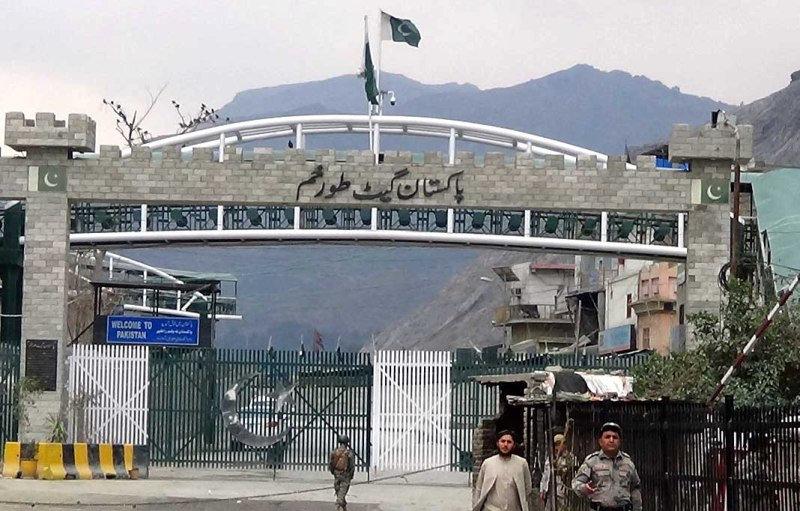
ISLAMABAD: Pakistan said on Friday it would keep its border crossings with Afghanistan closed to transit trade indefinitely, citing persistent security threats from across the frontier, even as a fragile ceasefire holds following weeks of deadly clashes.
The decision, which has stranded thousands of containers and disrupted a vital economic lifeline between the two neighbours, underscores the deepening mistrust since the Taliban regained power in Kabul in 2021. Officials in Islamabad have accused Afghan-based militants of launching attacks into Pakistan, a charge the Taliban government has repeatedly denied.
Tahir Hussain Andrabi, the Foreign Office spokesperson, made the announcement during his first weekly press briefing. “Afghan transit trade is not taking place and it will remain closed till the evaluation of the security situation.”
Andrabi pointed to a series of attacks on border trading points originating from the Afghan side, which have resulted in Pakistani casualties. “The lives of citizens were more important than any commodity trade,” Andrabi said. “There was considerable discussion on this question during last week’s briefing as well. Till the evaluation of the security situation, this transit trade will remain closed.”
Reflecting on the initial hopes after the Taliban’s takeover, he said there was certainly “optimism in the air when the Taliban had taken over Afghanistan a few years back, but the use of Afghan soil by the Tehreek-i-Taliban Pakistan and other armed groups to carry out attacks on Pakistan has changed the environment”.
The border, stretching 2,600 kilometers, has been sealed since Oct. 11 amid ground fighting and Pakistani airstrikes that killed dozens on both sides, the most intense violence since the Taliban’s seizure of Kabul. All trade and transit have ground to a halt, Khan Jan Alokozay, head of the Pak-Afghan Chamber of Commerce in Kabul, told Reuters on Thursday.
The clashes erupted after Pakistan demanded that the Taliban rein in militants operating from Afghan havens to strike across the border. Islamabad has long maintained that groups like the Tehreek-i-Taliban Pakistan find sanctuary there. A ceasefire, brokered in talks hosted by Qatar and Turkey last weekend, has taken hold, but commerce remains paralyzed.
Negotiators from both sides are set to convene again on Oct. 25 in Istanbul to chart a path forward. The standoff has immobilised roughly 5,000 containers of goods on either side of the border, a Pakistani official at the Torkham crossing in northwest Pakistan said. The annual trade between the countries totals about $2.3 billion, encompassing fresh fruits, vegetables, minerals, medicines, wheat, rice, sugar, meat and dairy products.
At the Chaman border point in Balochistan Province, authorities briefly opened the Friendship Gate for the repatriation of Afghan refugees arriving from various parts of Pakistan, including Karachi. But broader activities, including those handled by the Federal Investigation Agency’s immigration section, have been suspended. Visa and passport holders bound for Afghanistan are among those stuck in Chaman. “Over 5,000 Pakistanis are stranded in Spin Boldak as they visit there and Vesh on a daily basis for their small businesses,” an agency official said.
Traders and business leaders have pressed for a swift reopening, but officials have demurred. “We have no information when the border with Afghanistan will be opened,” a senior Chaman administration official said earlier this week. The official added that despite demands from those involved in import and export, no timeline has emerged. Another senior official indicated that the border was unlikely to reopen before the Istanbul meeting, where both sides would assess the recent clashes and decide on next steps.
In Doha, where the recent ceasefire discussions unfolded, Andrabi confirmed that a document had been agreed upon and signed. He dismissed any quibbling over terminology. It “makes no difference if the Afghan Taliban regime considers it an agreement or not.” Pakistan also restated its stance on the Kunar River, pledging adherence to international laws amid any disputes.
Pakistan and Afghanistan Convene in Istanbul
As delegations from Pakistan and Afghanistan gathered in Istanbul for a second round of mediated talks, officials expressed cautious optimism that the discussions would yield a concrete system to monitor Taliban efforts in preventing terrorist attacks across their shared border, a persistent flash point in one of South Asia’s most volatile frontiers.
The meeting in this historic city, straddling Europe and Asia, builds on a fragile truce forged just days earlier in Doha, Qatar. The cease-fire has held so far, with Pakistani officials reporting no major terrorist incidents since its announcement. “Pakistan looks forward to the establishment of a concrete and verifiable monitoring mechanism in the next meeting to be hosted by Turkiye in Istanbul on Oct 25, 2025, to address the menace of terrorism emanating from Afghan soil towards Pakistan and prevent any further loss of life of Pakistanis,” the ministry said.
Andrabi, speaking with the measured cadence of a diplomat navigating delicate terrain, emphasised continuity in Islamabad’s approach. “We are taking part in the second round of talks in Istanbul with the same sincerity of purpose, with the same sincerity of intent with which we participated in Doha,” he said.
Afghan officials, too, signaled readiness to engage. Zabihullah Mujahid, spokesman for the country’s interim administration, confirmed the delegation’s departure from Kabul in a post on X. The group is led by Mawlawi Rahmatullah Najeeb, the deputy minister for interior, according to the Turkish news agency Anadolu. “The remaining issues [with Pakistan] will be discussed in the meeting,” Mujahid wrote. Unlike the Doha talks, which diplomats described as a political breakthrough to halt immediate hostilities, the Istanbul agenda tilts toward the nuts and bolts of enforcement. Turkish officials have outlined plans for a technical committee to scrutinize the cease-fire’s finer points, including definitions of cross-border terrorism, protocols for verification, and strategies for resolving disputes over alleged violations. Broader concerns — migration flows, border security — are also on the table.
In practical terms, the sessions are expected to operationalise the Doha commitments. That means hashing out what qualifies as prohibited activity, how evidence of breaches will be gathered and authenticated, and the channels for airing grievances without derailing the truce.
Pakistan arrives with a clear wishlist, shaped by years of frustration over unheeded demands. Islamabad wants firm, testable pledges from Kabul to dismantle known TTP sanctuaries inside Afghanistan, apprehend or deport prominent figures, and set explicit deadlines for actions like raids on hideouts, arrests, and the razing of safe houses.
To back this up, Pakistani envoys plan to advocate for joint intelligence-sharing arrangements, coordinated patrols along the 1,600-mile Durand Line that divides the countries, and real-time tracking of militant movements and funding streams. A centerpiece of Pakistan’s pitch: the creation of a third-party oversight body, possibly co-led by Turkey and Qatar, to audit compliance and intervene in cases of foot-dragging.
This would extend to Afghan vows against sheltering any anti-Pakistani factions, bolstering frontier controls, ensuring transparency in how insurgents are financed, and scheduling periodic check-ins to gauge headway.
Andrabi laid bare the underlying rationale during his briefing. “During the Doha talks, the basic focus was to stop the terrorist attacks from Afghan soil into Pakistan. And in order to do that, we should have a verifiable, empirical mechanism to ascertain that the Afghan Taliban regime in Kabul is taking concrete actions to stop such attacks,” he said.
He pointed to the absence of fresh violence as a quiet vindication of the Doha path. “In effect, the Doha talks and outcomes were fruitful. We would like the trend to continue in Istanbul and post-Istanbul,” Andrabi added. Turkey’s mediation role lends the proceedings an air of quiet authority. Ankara brings hard-won expertise from its decades-long campaign against the Kurdistan Workers’ Party along its own rugged frontiers, experience that resonates with Pakistan’s struggles against TTP redoubts in Afghanistan’s lawless borderlands. Longstanding ties between Islamabad and Ankara, including counterterrorism huddles earlier this year, only deepen that trust. For Pakistan, Turkey is less a neutral broker than a reliable architect, capable of turning rhetorical cease-fires into enduring frameworks. The Istanbul talks unfold against a backdrop of suspended economic lifelines.
Beyond the bilateral tensions, Andrabi addressed India’s decision to reopen its embassy in Afghanistan, calling it an internal matter between New Delhi and Kabul. “We do not comment on the internal affairs of other states,” he said. “However, India’s role in Afghanistan has not been particularly positive.”
On the broader Middle East, the spokesperson condemned Israel’s actions. “Tel Aviv continues to violate international laws,” he said. “We will keep raising this issue. Pakistan is closely monitoring Israeli violations and the events leading to them. The establishment of a Palestinian state remains the only roadmap we adhere to.”
Copyright © 2021 Independent Pakistan | All rights reserved