By Staff Reporter
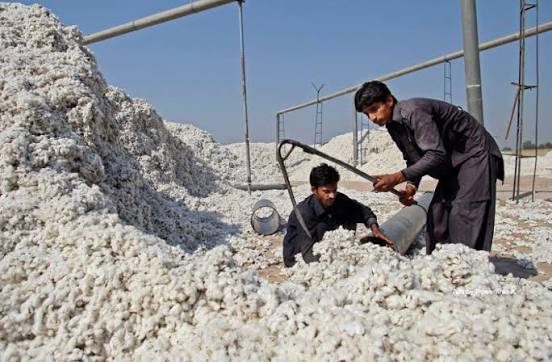
LAHORE: Pakistan’s cotton arrivals at ginning factories rose 7.5% from a year earlier to 4.08 million bales by Oct. 15, even as industry groups say about 500 ginning plants, more than 150 textile mills and nearly half the country’s power looms are idle.
Industry representatives blame higher production costs and what they describe as misuse of the Export Facilitation Scheme, under which imported yarn and fabric are allegedly being sold in the domestic market rather than re-exported.
Arrivals totaled 4,081,265 bales, up 285,628 from 3,795,637 a year earlier, according to the Pakistan Cotton Ginners Association. The latest fortnightly report, released Sunday, showed 872,863 bales arriving in the two weeks to Oct. 15, a sign that peak season is under way. Some 471 ginning factories were operating.
The pace has cooled from earlier in the season. Arrivals were running 27% above the previous year at the end of August. Year-on-year growth slowed to about 5% by Sept. 30, when arrivals stood at 3.208 million bales.
Textile mills have bought about 3.45 million bales and exporters 97,000, leaving 531,530 bales unsold. Unsold stock is 15.7% lower than a year ago, which the data suggest is supporting the market.
Regional shift
Sindh accounted for 55.43% of arrivals, or 2.262 million bales excluding Balochistan. Punjab delivered 1.638 million bales, up 7.79%, for a 40.15% share that was little changed from 40.05% a year earlier. Including Balochistan, Sindh’s tally was 2.44 million bales, up 7.35%.
Balochistan contributed 180,000 bales, the fastest growth of the three at 30.36%. Its share of national arrivals rose to 4.43% from 3.65%. That is a modest base, but the figures point to a crop moving away from its traditional Punjab-centered footing.
The divide is sharpest by district. Sanghar in Sindh led with 1.137 million bales, almost half of the province’s total. Punjab’s top district, Bahawalnagar, recorded 418,750 bales, followed by Bahawalpur with 294,606, Dera Ghazi Khan with 236,514, Rahim Yar Khan with 169,949 and Layyah with 122,327. In Sindh, Sukkur posted 264,500 bales, Naushehro Feroze 223,200 and Khairpur 213,900.
Ihsanul Haq, chairman of the Cotton Ginners Forum, cautioned that adverse weather could leave national output below initial estimates. He also highlighted a gap between association data and the Punjab Crop Reporting Service, which put the province’s production at 2.983 million bales against 1.638 million bales of arrivals by Oct. 15. He had raised the discrepancy in early August as well, and linked expanding sugarcane acreage in the Bahawalpur Division to falling cotton area and greater reliance on imports.
Import scheme
Haq said the alleged misuse of the Export Facilitation Scheme, together with rising costs, had hurt domestic industry. He cited estimates that 40 million to 50 million meters of fabric had been imported from China alone under the program, with little matching growth in exports.
The All Pakistan Textile Mills Association, or Aptma, reported that man-made yarn imports rose to 12,773 tonnes in the first quarter of 2026-27 from 3,056 tonnes a year earlier. Man-made fabric imports climbed to 8,628 tonnes from 660 tonnes.
Haq alleged some material meant for re-export was sold locally, where an 18% sales tax applies to domestic producers. Aptma has called for restrictions on man-made yarn and fabric imports under the scheme.
The complaint is not new. Aptma said in March that imports of bleached cotton fabric under the scheme surged to 1,911 tonnes in February from 23 tonnes a year before, after unbleached fabric was removed from the program. In late August, it said Customs had begun stricter physical inspections and laboratory testing of fabric consignments, with some tests reportedly finding food coloring rather than proper dyeing. Pakistan Customs said facilitation and enforcement are complementary priorities and that misuse of exemptions must be dealt with under the law. Aptma has welcomed the action.
Farmers and prices
Sajid Mahmood, head of the Transfer of Technology Department at the Central Cotton Research Institute in Multan, said revival requires policy that addresses farmers’ profitability, production costs, market access and lint quality, not just output. He warned that farmers could cut acreage next season if cotton keeps paying less than competing crops, and that the measure of success should be net income per acre rather than volume reaching gins.
With 15 to 20 days of picking left, the institute recommends a spray of 2 kilograms of urea per 100 liters of water in fields with eight to 10 green bolls per plant to encourage boll opening. Farmers should also watch for pink bollworm, pick mature bolls promptly and harvest in dry weather to avoid contamination.
Quality is expected to improve as winter sets in, with cooler-weather picking yielding better staple length. The price gap between low-grade and high-quality cotton is 2,000 rupees per maund and could widen to 2,500 rupees as buyers pay more for better grades. Local prices had slipped to 18,600 to 18,800 rupees per maund by early September. The ginners’ association said arrivals could stay healthy in the next fortnight if weather permits.
Naseem Usman of the Karachi Cotton Brokers Forum urged the government to announce a support price and to set up a procurement mechanism in case market prices fall below it. He said he expects undocumented cotton trading to decline this year because of strict government measures, which could modestly lift overall output.
Copyright © 2021 Independent Pakistan | All rights reserved