By Staff Reporter
ISLAMABAD: Iran has insisted that its offer to reopen the Strait of Hormuz within seven days remains on the table, as Pakistan’s foreign minister urged Tehran and Washington to keep talking.
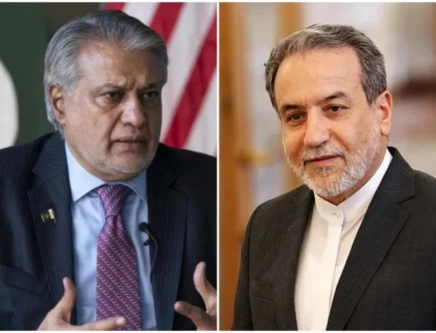
Ishaq Dar, Pakistan’s deputy prime minister and foreign minister, spoke by telephone on Sunday with his Iranian counterpart, Abbas Araghchi, who was in Baghdad for the 52nd session of the Organisation of Islamic Cooperation (OIC) Council of Foreign Ministers. Pakistan’s Foreign Office said Dar “underscored the importance of continued dialogue and diplomacy in addressing regional challenges”, and that the two men agreed to stay in close contact. Iran’s state news agency, IRNA, said they also discussed bilateral issues and efforts to calm tensions in West Asia.
Addressing the OIC meeting, Araghchi said Iran “does not accept coercion, threats, or intimidation” from the United States and “will not relinquish its sovereign rights under pressure”, but remained ready for dialogue “based on mutual respect and credible guarantees”. He said Tehran had conveyed its seven-day plan to Washington through Qatar.
Speaking to reporters in Baghdad, he said Washington had shared comments on the proposal, which Tehran was reviewing. “Our proposal is still on the table,” he said. If the US showed “honesty”, he added, the route to reopening the strait was clear.
Iran’s conditions include lifting the American blockade of its ports, removing sanctions on its oil exports and ending hostilities on all regional fronts. Araghchi said that if Washington accepted them, the strait would reopen on the sixth day and talks would resume on the seventh.
Washington has shown no sign of moving. Donald Trump publicly rejected an earlier version of the plan last month as unacceptable. On Sunday he said the US could soon finish its campaign against Iran unless Tehran changed course, and endorsed Benjamin Netanyahu ahead of Israel’s 27 October election. Araghchi replied on social media, challenging Washington to “try your luck again” and warning that Iran had “unfinished jobs” of its own.
The US also disputes the premise of Iran’s offer, saying the strait is open to all shipping except Iran’s. US Central Command says about 97 per cent of vessels seeking to transit have done so without being hit.
One of the main points of contention is Washington’s insistence on addressing Iran’s nuclear programme from the outset of any negotiations. Vice President JD Vance said earlier this month that Iran must make a “tangible” reduction in its uranium enrichment capability to end a war now nearly eight months old.
Iran’s newly appointed defence minister, Mehrdad Akhlaghi, warned that any fresh American attack would cause “enormous damage” to Washington and its regional allies. “People can rest assured that they will most likely not dare to attack us,” he told reporters after winning a parliamentary vote of confidence.
Dar also spoke on Sunday with the Egyptian foreign minister, Badr Abdelatty. The two strongly condemned Houthi attacks on Saudi Arabia and reaffirmed support for the kingdom’s sovereignty, territorial integrity and security. They also discussed the Regional Four (R-4) framework of Pakistan, Egypt, Turkiye and Saudi Arabia, and said they looked forward to its next meeting.
The Yemen-based Houthis have stepped up attacks on Saudi aviation and energy facilities. This month’s assault on Riyadh’s main airport killed at least 12 people and injured more than 300. Pakistan has repeatedly assured Saudi Arabia that it will defend its territorial integrity and has called on the Houthis to halt what it describes as “terrorist” attacks on civilian infrastructure.
Egypt’s presidency has said it will give Riyadh all necessary support. President Abdel Fattah al-Sisi convened the National Defence Council and sought parliamentary authorisation to back the kingdom if asked, with MPs due to resume discussions on Monday.
The US and Iran have been in conflict since February, when Washington and Israel launched joint air strikes on the country. Both sides have since traded fire intermittently, with Iran targeting US interests and civilian infrastructure in the Gulf states.
Iran has all but closed the strait to commercial traffic by firing on, or threatening, vessels. Roughly a fifth of the world’s oil and gas supplies passed through it before the war. Brent crude closed on Friday at its highest level since May, at about $110 a barrel.
A temporary ceasefire brokered by Pakistan collapsed before Tehran tabled its proposal in September. The Secretary of Iran’s Supreme National Security Council said last week that talks had stalled because Washington had not answered all seven of Iran’s conditions. Pakistan’s civilian and military leaders have made frequent trips to Iran in an effort to secure a lasting settlement. Iran’s foreign ministry has said the Russian foreign minister, Sergey Lavrov, is due in Tehran on Monday.
Copyright © 2021 Independent Pakistan | All rights reserved