By Staff Reporter
ISLAMABAD: Pakistan’s Oil and Gas Regulatory Authority and state-owned Pakistan State Oil came under heavy criticism on Monday for their sluggish progress in automating and integrating real-time data on petroleum stocks and supplies, prompting the government to activate law-enforcement and investigative agencies to monitor retail outlets and stamp out hoarding.
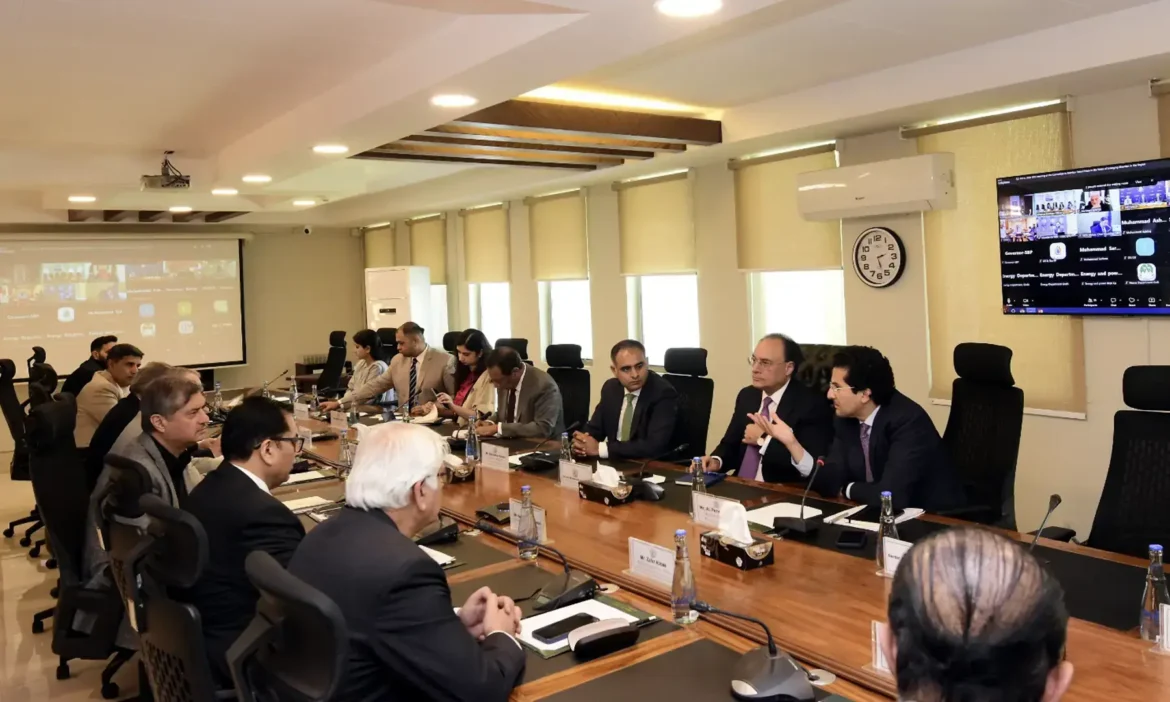
The move was announced after a meeting of the cabinet committee established by Prime Minister Shehbaz Sharif to oversee petroleum prices amid tightening supply conditions and rising costs at home and abroad. Finance Minister Muhammad Aurangzeb chaired the session.
Participants questioned gaps in the petroleum pricing mechanism, particularly in the way diesel rates are calculated. People familiar with the discussions said Climate Change Minister Dr. Musadik Malik — a former energy and petroleum minister — voiced suspicion that the oil industry had been allowed to reap windfall gains as prices climbed, with insufficient corrective action taken in time.
Both Malik and Aurangzeb expressed frustration that even PSO, as a public-sector enterprise, had failed to complete integration of its retail outlets and depots. Ogra, for its part, was faulted for moving too slowly on data integration despite explicit instructions issued more than three weeks earlier.
The shortcomings appear to have created openings for market players to hoard supplies while prices continued to rise, according to officials. PSO has achieved roughly 60% integration at its own sites, but compliance is markedly weaker among private-sector participants in the supply chain.
In an official statement issued after the meeting, the Ministry of Finance said the committee decided to deploy joint teams — drawn from the Petroleum Division, Ogra, the Federal Investigation Agency and PSO — to selected PSO petrol pumps in Islamabad. The teams’ mandate is to support timely data entry, improve stock transparency and enforce operational compliance.
The meeting stressed the need to institutionalize such mechanisms across the broader retail network to bolster oversight, accountability and consistent reporting. Particular weight was given to Ogra’s newly launched digital dashboard, which is designed to deliver real-time visibility into stock levels, sales volumes and supply flows from depots through to retail outlets. The system is intended to track key indicators including inventory, demand fluctuations and potential supply gaps, feeding directly into policy decisions.
While acknowledging some progress, the committee noted that data reporting from the country’s more than 12,000 petrol pumps remains well below expectations and urged full operational rollout to unlock the dashboard’s intended benefits. Aurangzeb directed all stakeholders to ensure prompt and accurate information sharing so the platform can be used effectively for decision-making.
Ogra was instructed to enforce compliance with data-reporting rules, accelerate digitisation across the supply chain and maintain close coordination with oil marketing companies. PSO was told to prioritise greater visibility and reporting coverage across its retail network.
The meeting, convened in the wake of recent price adjustments, reviewed the overall petroleum supply situation and market conditions with an eye toward ensuring continuity, maintaining discipline and strengthening monitoring. Officials reported that the supply position remains stable: diesel stocks provide about 25 days of cover, petrol availability is sufficient to meet current demand, and crude inventories stand at roughly 12 days, backed by incoming cargoes and scheduled imports.
The Petroleum Division told the committee that import plans for the coming weeks are on track, combining commercial purchases and government-to-government arrangements, while refineries are operating at optimal levels to sustain throughput and product output. Ministers underscored the strategic importance of reliable energy supplies to key sectors including agriculture, fertilizer manufacturing, transportation and industry, noting their role in sustaining broader economic activity and containing price pressures. The committee called for continued vigilance to prevent hoarding, speculation or any disruption in availability, and directed Ogra to take immediate steps against unauthorized storage and other market irregularities. Demand patterns, including localised variations in consumption, will also be monitored closely to support balanced allocation.
Separately, the panel reviewed the gas supply outlook and discussed options for managing availability to domestic consumers and the power sector through rationing and more efficient utilization. People familiar with the meeting said more than 40 million cubic feet of gas supply to Pak-Arab Fertiliser has been disconnected by the relevant gas company. The statement emphasised a balanced, data-driven approach to resource allocation, taking into account seasonal demand shifts and the growing role of liquefied petroleum gas.
Copyright © 2021 Independent Pakistan | All rights reserved