By Staff Reporter
ISLAMABAD: The opposition has said that nobody but the jailed Imran Khan can call off a planned march on the capital, confirming that the interior minister met opposition leaders in private just days before publicly promising to stop the protest by force of law.
Allama Raja Nasir Abbas, the leader of the opposition in the Senate, said on Saturday that only the founder of the Pakistan Tehreek-e-Insaf (PTI) had the authority to postpone the party’s nationwide protest, planned for 27 September, which includes a “long march” on Islamabad.
“Imran Khan cannot be minused (sidelined); we will not let Imran Khan sahib be minused,” Abbas told reporters at Khyber Pakhtunkhwa House in Islamabad. “Therefore, no issue can be resolved without a meeting with Imran Khan sahib.”
The remarks, which follow the disclosure of a hitherto unreported meeting with interior minister Mohsin Naqvi, expose the tension at the heart of Pakistan’s latest political standoff: a government that is publicly threatening contempt proceedings against marchers while, according to opposition figures, privately seeking a way to head the protest off.
A meeting made public
In a post on X on Saturday, Abbas said Naqvi had “called on him” and been told that only Khan could postpone the protest. “No one can minus Imran,” he wrote.
Akhunzada Hussain Ahmed Yousufzai, spokesperson for the Tehreek-e-Tahafuz-e-Ayin-e-Pakistan (TTAP) opposition alliance, said the meeting took place on 14 September at Mr Naqvi’s request. Abbas and PTI chairman Barrister Gohar Ali Khan attended for the opposition.
Speaking to reporters, Abbas said he had not sought the encounter. “Whether he comes to my home or office for a meeting, I welcome it,” he said. “As the leader of the opposition in the Senate, a meeting with him is neither unnatural nor unusual, and there is nothing mysterious about it.”
Sources said the meeting lasted about an hour and a quarter and was held at the home of one of Abbas’s relatives, with Gohar helping to arrange it. The same sources said Naqvi asked Abbas to meet the Prime Minister Shehbaz Sharif, suggesting such a meeting could open the way to relief for Khan and his wife, Bushra Bibi. He also sought the cancellation of the protest, they said, and was reported to have insisted that once withdrawn, the call should not be revived.
According to the same sources, Naqvi said any negotiations would require the resumption of meetings with Khan, and that the opposition should arrange for the former prime minister to be consulted on whether to call off the march. Abbas also arranged a telephone call between Naqvi and Mahmood Khan Achakzai, the TTAP chairman and leader of the opposition in the National Assembly. None of these details has been confirmed on the record by the government. Opposition alliance sources said the contacts had produced no meaningful progress.
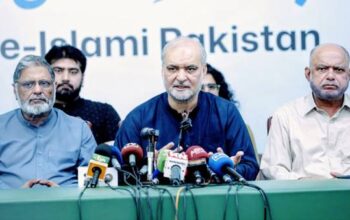
Gohar told reporters that contact with Naqvi was being maintained “through back channels”, the details of which he could not disclose. He said no proposal to postpone the protest was under consideration and that there were currently no talks of any kind under way with the government. The PTI founder, he said, had always prioritised negotiations and had authorised Achakzai and Abbas to hold talks, but the party’s willingness to talk had been read as weakness.
“Every possible way”
The revelation lands awkwardly against the government’s public stance. On Friday, days after the meeting, Naqvi told a press conference that the state would stop anyone marching on the capital “in every possible way”.
He said organisers would be held personally responsible for any loss of life and warned that anyone defying a recent Islamabad High Court (IHC) ruling would face contempt of court proceedings. “If someone comes out after the court’s decision, we will first initiate contempt of court proceedings. Otherwise, we will not allow anyone to come out,” he said.
He urged opposition leaders to stop “mobilising people, collecting funds and arranging transport”, and said that “this time, we are clearly communicating the rules of engagement to our personnel”. He also said there remained “sensible” voices within the opposition who he hoped would reconsider. “If you want to resolve matters through violent mobs, we are ready for it,” he added.
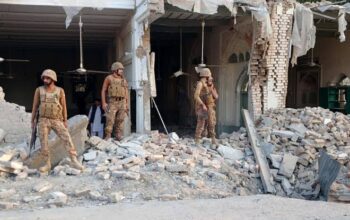
The press conference came hours after a militant attack on Kohat Police Lines in Khyber Pakhtunkhwa, in which an explosives-laden vehicle detonated near a mosque inside the compound before gunmen tried to storm it. At least 16 people, including five police officers, were reported killed. “You are carrying the funerals of martyrs on one side and preparing for sit-ins on the other,” Mr Naqvi said, urging the provincial government to concentrate on fighting terrorism.
The court ruling
Naqvi’s warning followed the release of a 37-page detailed judgment from a larger IHC bench headed by Chief Justice Sardar Muhammad Sarfraz Dogar, delivered on a petition filed by an Islamabad resident, Waqas Ahmed, who argued the march could damage his business. The court ruled that no political party has a lawful right to occupy public roads, highways, interchanges, toll plazas or buildings, or to obstruct the free movement of citizens.
“The question is not whether a political party is entitled to protest. It plainly is, subject always to the Constitution and law,” the judgment observed.
The bench directed provincial governments to ensure that state funds, personnel, vehicles and machinery were not used for any march, procession or rally, and barred them from compelling public servants to take part. It ordered a helpline for officials pressured to join. The ruling also cited the PTI’s demonstrations of May 2022 and November 2024 as having created serious security and law-and-order problems in the capital.
Acting on the order, Khyber Pakhtunkhwa’s inspector general of police, Zulfiqar Hameed, has instructed officers not to facilitate any march or procession heading for Islamabad. A letter to all relevant police officers ordered them to report immediately any instruction to do otherwise, warning that disciplinary action would follow any breach. The PTI runs the provincial government in Khyber Pakhtunkhwa.
Preparations and mobilisation
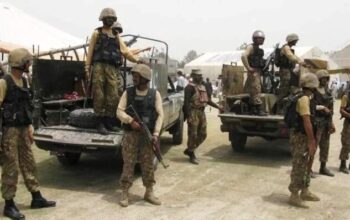
The administrations of Rawalpindi and Islamabad had already begun preparations last week, including a request for the detention of activists, the arrangement of containers, additional personnel and the procurement of anti-riot equipment.
On the opposition side, Khyber Pakhtunkhwa Chief Minister Sohail Afridi has toured Sindh and Punjab to build support. During his Punjab visit he alleged that he had been “abducted” by authorities in Lahore and later “thrown” by the roadside, and claimed that a man had been sent to kill him. The Punjab government swiftly denied the arrest claim, and Wazirabad police said the man Mr Afridi accused was a police constable assigned to his security detail.
Afridi met Abbas and Achakzai in Islamabad on Saturday, the second time in three days that the trio had conferred. A TTAP statement said they held “detailed political consultations” on the 27 September call, including political strategy and ways of advancing the “democratic struggle”. The leaders discussed taking the protest forward as an “effective and organised political struggle for upholding the supremacy of the Constitution, democratic rights, provincial rights, and the protection of the public mandate”.
Gohar said Afridi would lead the protest, and stressed that it was not a unilateral PTI decision but the product of consultation across opposition parties, all of which he said would take part.
Khan’s imprisonment
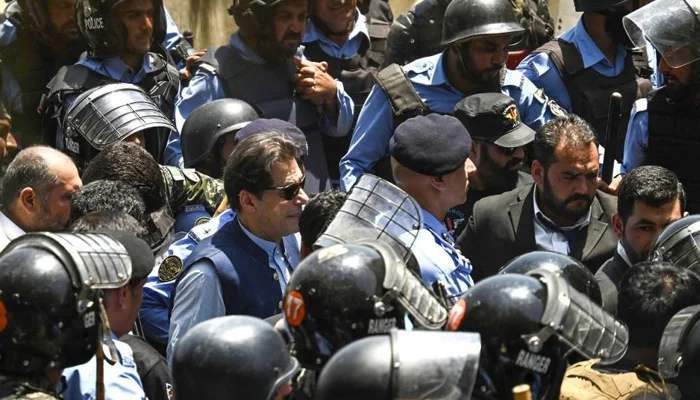
Khan, 73, has been in jail since August 2023 and is held at Adiala prison in Rawalpindi. He was sentenced in December 2025, along with Bibi, to 17 years in the Toshakhana-II case, and is serving a separate 14-year term in the £190m corruption case. He also faces pending anti-terrorism trials linked to the May 2023 protests. He and the PTI say the cases are politically motivated, which the authorities deny.
His health and access to him have become central to the dispute. Mr Afridi, who announced the march at a rally in Peshawar on 5 August, has said the protest was a last resort after democratic avenues had been exhausted and that the party would call it off if Mr Khan directed it. Last month, the Supreme Court ordered Khan to be moved to Shifa International Hospital for assessment amid concerns over his blood pressure and loss of vision in one eye. He was examined there and returned to Adiala within hours after doctors declared him medically fit, according to the information minister. The PTI has disputed the handling of the order.
The PTI’s earlier marches on Islamabad ended badly. In May 2022, Khan called off his “long march” after a single day. In November 2024, a protest that reached D-Chowk in the capital ended in a security crackdown; the government reported four security personnel killed, the PTI claimed dozens of supporters had died, and more than 4,000 people were arrested.
The government has repeatedly said Sharif’s offer of talks remains open. The opposition, for now, insists that the route to any settlement runs through Adiala jail.
Copyright © 2021 Independent Pakistan | All rights reserved