By Staff Reporter
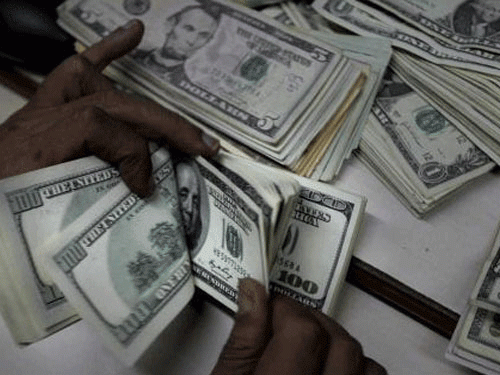
ISLAMABAD: Pakistan recorded a fiscal deficit of less than 1% of gross domestic product for the first time in its history during the nine months through March, the government said on Tuesday, as tighter spending controls and higher revenues helped stabilise public finances.
The deficit narrowed to 0.7% of GDP in the period from July 2025 to March 2026, down from 2.6% in the same nine months of the previous fiscal year, according to official data released Tuesday. Khurram Schehzad, an adviser to Finance Minister Muhammad Aurangzeb, described the outcome as evidence of a broader policy shift toward credible macroeconomic management, stronger sovereign fundamentals and sustainable growth.
“The Primary Surplus reached 3.2 percent of GDP in 9MFY26, following an exceptionally strong surplus of 3.0 percent in 9MFY25,” Schehzad wrote on X. “This reflects improving public finances alongside economic stability and growth recovery.”
The figures come just days after the International Monetary Fund’s executive board completed its reviews of Pakistan’s ongoing lending arrangements, approving the immediate release of about $1.32 billion in fresh funding. The IMF said Islamabad’s policy efforts have produced “significant progress” in stabilizing the economy and rebuilding confidence, even as the global environment remains challenging. The lender noted that fiscal performance has remained strong, with a primary surplus of 1.6% of GDP now projected for the full fiscal year ending June 2026 — in line with program targets.
The 0.7% nine-month deficit is the lowest on record for the period and well below the full-year target of around 3.9% of GDP originally set for fiscal 2026.
Schehzad highlighted a rare alignment in Pakistan’s external and fiscal accounts. The country has long struggled with chronic fiscal and current-account deficits, he said. This fiscal year, both have improved simultaneously, with the current account moving into surplus. “This reinforces macroeconomic stability through fiscal consolidation, reserve accumulation, exchange rate stability, moderating inflation, and improving investor sentiment.”
The nine-month numbers mark the latest sign that Prime Minister Shehbaz Sharif’s government is delivering on promises to restore fiscal discipline after years of large deficits that contributed to repeated balance-of-payments crises. The primary surplus — which strips out debt-servicing costs and is closely watched by creditors — has remained above 3% of GDP for two consecutive nine-month periods, a level rarely sustained in Pakistan’s history. The data will bolster arguments that the South Asian nation of 240 million people is turning a corner after securing a $7 billion IMF standby arrangement in 2023 and a subsequent extended fund facility.
The IMF’s endorsement and fresh disbursement are expected to provide additional breathing room. The funds will help replenish reserves and support debt repayments falling due later this year. Pakistan faces a heavy external financing schedule through 2027, including repayments to bilateral creditors and international bondholders.
Copyright © 2021 Independent Pakistan | All rights reserved