By Staff Reporter
ISLAMABAD: The caretaker government on Wednesday approved the country’s first-ever National Space Policy, allowing private companies to offer internet and communication services through low-orbit satellites, a minister said.
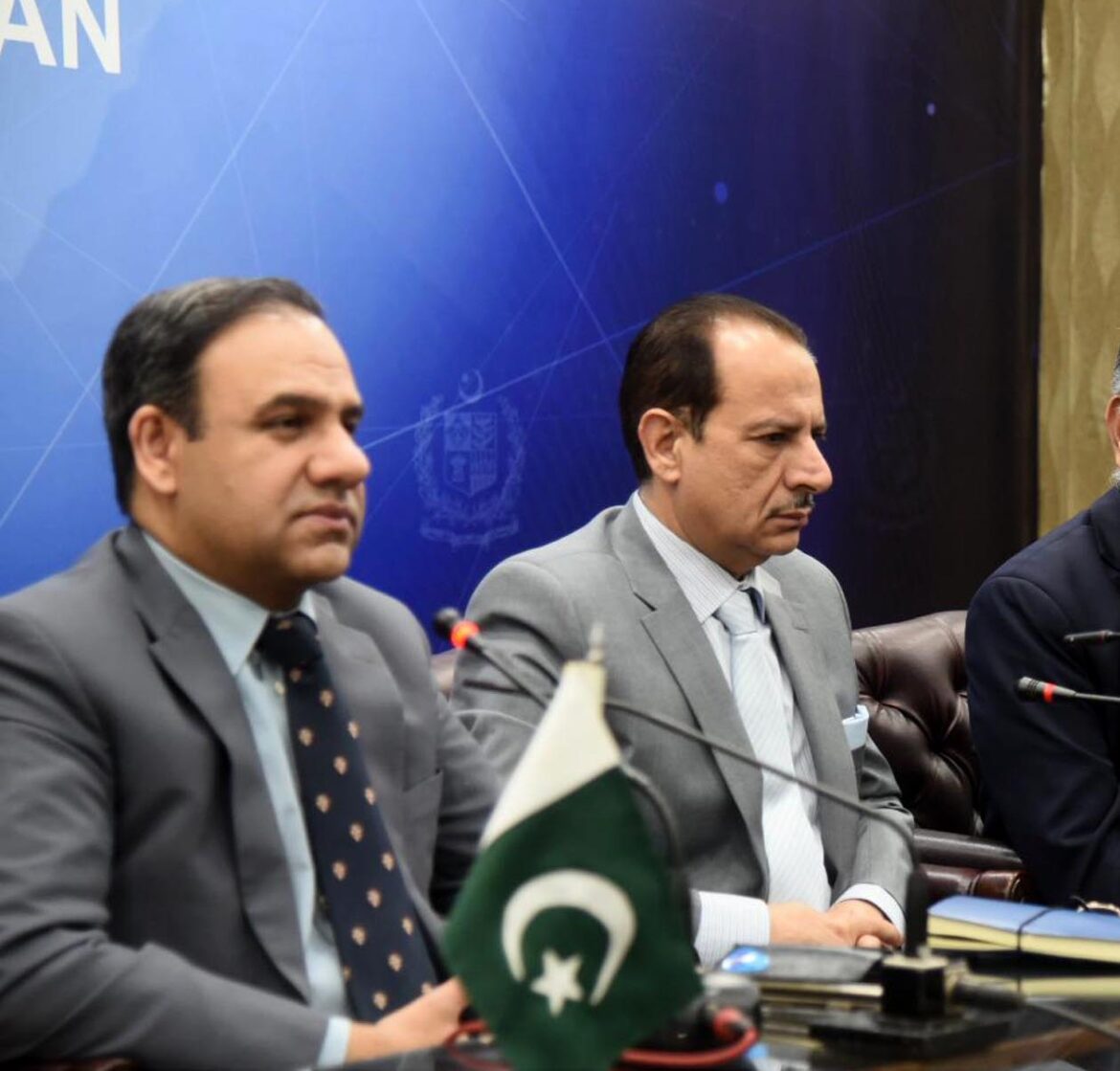
The policy, which also envisages the establishment of a National Cyber Crime Investigation Agency (NCCIA) and a specialised telecom tribunal, was announced by the caretaker minister for Information Technology and Telecommunications Dr. Umar Saif on X, a social media platform.
Saif said the NCCIA would replace the existing Federal Investigation Agency (FIA), which has been accused of stifling dissent and press freedom, and would have the necessary expertise, funding, and resources to prevent, investigate and prosecute cybercrimes in Pakistan.
The move comes amid a series of legislative changes that have raised concerns over the state of civil liberties and human rights in the South Asian nation, where the military and intelligence agencies wield considerable influence.
In August, Pakistan’s Senate passed the Official Secrets (Amendment) Bill 2023, which removed a clause that gave spy agencies the power to carry out raids or make arrests without warrants.
Another amendment to the Pakistan Army Act, 1952, criminalized social media campaigns against the armed forces, imposing a jail term of up to two years and a fine of up to one million rupees ($5,900).
In February 2022, the government of former Prime Minister Imran Khan passed an ordinance that increased the jail term for defaming any person or institution on social media from two to five years. The ordinance was later struck down by the Islamabad High Court as unconstitutional.
Journalists and rights groups have denounced the FIA for its role in cracking down on free speech and dissent on social media, as well as harassing and arresting journalists, activists, and opposition politicians.
The FIA has also been accused of failing to effectively deal with the growing threat of cybercrime, such as hacking, phishing, identity theft, online fraud, and blackmail.
Saif said the NCCIA would be a landmark decision for the IT and telecom sector and would help Pakistan cope with the challenges of the digital age.
He said the space policy would enable private sector companies to “offer affordable internet services in Pakistan while enabling increased investment in our national space programme”.
The minister said the telecom tribunal would ensure that court cases and disputes in the telecom sector could be decided without delay, paving the way for spectrum availability for 5G.
Saif later told a news conference that the space policy was “as important as the telecom policy” and that satellite communication technology was advancing rapidly.
“Satellites used to be geostationary, far away from the land. They are useful for broadcasting TV signals but communicating is difficult because there is latency,” he said.
He said that communication services and internet services could be offered through low-orbit satellites, which were relatively closer, and that many private companies in the world wanted to provide these services.
“So now it has become possible for communication services in Pakistan to be provided through satellites and the private sector has this technology.”
The minister said the cabinet’s decision to approve the first space policy meant that the private sector could now offer these services in Pakistan and that many companies were offering these services, such as Starlink, Leo, and OneWeb.
Copyright © 2021 Independent Pakistan | All rights reserved