By Staff Reporter
ISLAMABAD: In a push to tighten security for Chinese workers and investments in Pakistan, the two countries have settled on a series of new steps, including a dedicated police unit in Islamabad to guard Chinese citizens, officials said on Wednesday after high-level talks in Beijing.
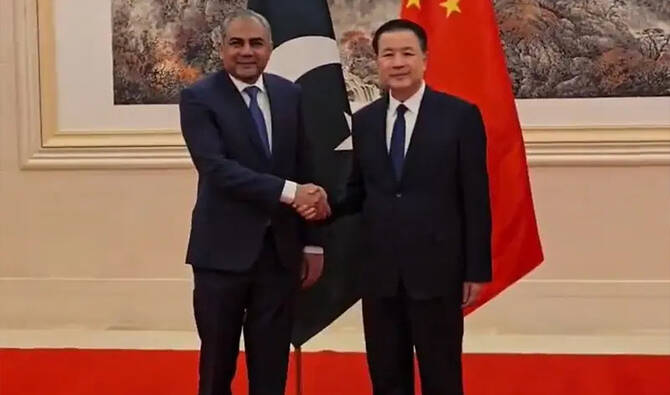
Pakistan’s interior minister, Mohsin Naqvi, outlined the plans during a meeting with his Chinese counterpart, Wang Xiaohong, at the Ministry of Public Security headquarters, where he and his delegation got a cordial reception from top Chinese security figures. The session, which ran for more than three hours, delved into ways to step up joint work against terrorism, improve police training and share intelligence, according to a statement from the interior ministry.
The ministers decided to set up a working group that would meet every three months, with the two of them conferring once a year to keep the momentum going. Naqvi told Wang about the latest security moves back home, including the new unit in the capital. “The protection of Chinese citizens and projects of mutual interest remains our top priority,” he said. “Effective measures had been taken to ensure the security of Chinese citizens in Pakistan.”
Wang voiced approval of the setup and commended Pakistan’s work on domestic security and fighting militants. “We appreciate Pakistan’s sacrifices in the fight against terrorism,” he said, calling the nations strategic partners and affirming China’s eagerness to work together across the board. The two agreed to craft a shared approach to training security forces and to keep information flowing between their agencies. They also committed to sharpening quick-response tools for dealing with terrorism and crime, and to broadening exchange programs for officers.
Turning to online threats, Naqvi said Pakistan hoped to draw on Chinese know-how to beef up its National Cyber Crimes Investigation Agency. “Pakistan wants to benefit from the support of Chinese institutions to enhance the capacity of the National Cyber Crimes Investigation Agency,” he said, pointing out how China’s artificial intelligence tools could prove invaluable in handling terrorism and other risks.
The steps follow a string of violent incidents aimed at Chinese people in Pakistan, which have tested the relationship and led Beijing to call for stronger safeguards. Figures from Pakistan’s National Counter Terrorism Authority, released in December 2024, put the toll at 20 Chinese nationals killed and 34 wounded in attacks since 2021. That report came roughly a month after a guard in Karachi fired on two Chinese citizens, wounding them both. Before that, in October, a blast at the city’s airport claimed the lives of two Chinese engineers and hurt others.
Last July, Prime Minister Shehbaz Sharif, leading a session on protections for Chinese residents, called for a welcoming climate that would encourage business. “The confidence of Chinese companies in the Pakistani economy is extremely important for our economic future,” he said. With the China-Pakistan Economic Corridor in mind, a major artery of trade and development, the prime minister stressed the urgency of shielding Chinese visitors and ordered swift improvements at airports to smooth their travel.
At Wednesday’s gathering, Naqvi passed along greetings from President Asif Ali Zardari and Sharif to China’s leaders and asked Wang to come to Pakistan. Wang returned the gesture by inviting Naqvi to the Global Security Cooperation Forum in China this September. The agreements signal a drive by both sides to lock in steady security links, as Pakistan leans on Chinese funding to fuel its growth and China sees its neighbor as a vital foothold in South Asia. Past worries from Beijing about insurgent dangers have already spurred more joint intelligence and guards around shared ventures.
Copyright © 2021 Independent Pakistan | All rights reserved