By Staff Reporter
ISLAMABAD: Pakistan and Portugal signed a memorandum of understanding on investment protection, aimed at deepening economic ties, encouraging cross-border investment and easing business partnerships, Pakistan’s Special Investment Facilitation Council said on Tuesday.
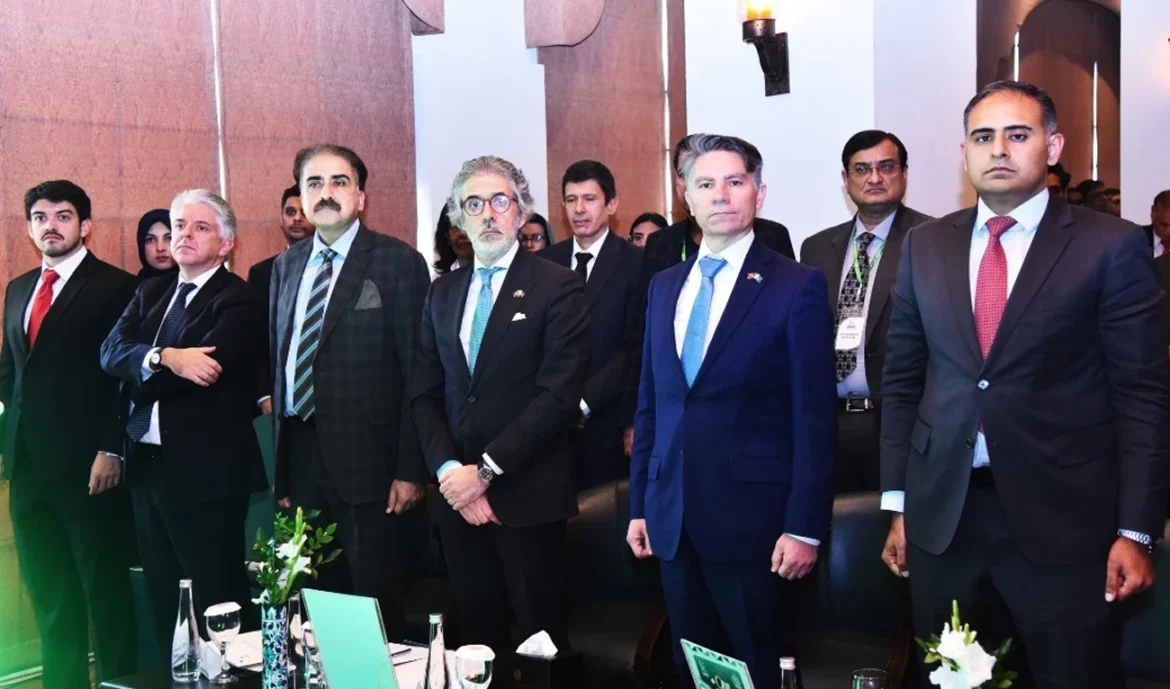
The agreement, between Pakistan’s Board of Investment and Portugal’s Agency for Investment and Foreign Trade, known as AICEP, was the main result of a Pakistan-Portugal business forum that the council hosted in Islamabad. The forum took place during a two-day visit by Portuguese Foreign Minister Paulo Rangel. Portugal’s trade promotion agency had scheduled the event for Nov. 23.
“The agreement provides an institutional framework for enhanced cooperation between the two countries’ investment promotion agencies and reflects their shared commitment to promoting bilateral investment and facilitating business partnerships,” the council said. The memorandum is an agency-level arrangement rather than a government-to-government treaty.
Trade between the two countries is still small. Bilateral trade reached $288 million in Pakistan’s fiscal year 2025, which began July 1, up from $189 million in 2020, according to Pakistani government figures. That is an increase of about 52%. Portugal’s ambassador to Pakistan, Paulo Domingues, urged businesses in October to forge partnerships, explore new markets and pursue practical projects.
Around 20 Portuguese companies attended the forum alongside representatives of Pakistan’s business community. The event gave them a platform for networking, investor engagement and spotting opportunities, the council said. Business-to-business meetings were a central feature. They allowed company representatives to swap proposals, explore partnerships, assess joint-venture opportunities and set up direct commercial contacts.
Discussions covered agriculture, textiles, renewable energy, information technology, tourism, maritime services, education and the movement of skilled labor. Olive cultivation, agricultural processing and value addition drew particular attention, with Portuguese expertise and technology seen as a fit for Pakistan’s agricultural potential. Participants also looked at industrial collaboration, renewable energy and wider trade in goods and services.
Pakistan’s Foreign Minister Ishaq Dar and Rangel both attended the forum.
“Portugal’s established capabilities in technology, modern agriculture, renewable energy and industrial development offer considerable scope for cooperation with Pakistani enterprises,” the council said. “Similarly, Pakistan presents attractive opportunities through its large consumer market, skilled workforce, industrial capacity, strategic geographical location and diverse natural resources.” It added that closer private-sector contact could help turn those complementary strengths into practical commercial partnerships.
On Monday, the two governments agreed to set up a joint ministerial commission to boost trade and investment. They also signed an agreement waiving visas for holders of diplomatic passports, Dar said at a joint news conference with Rangel.
“We have a high potential and we can really deliver,” Rangel said. “We fully agree that this joint ministerial committee is decisive to boost the economic dynamics of our relationship.”
The visit follows months of groundwork. Dar invited Rangel to visit Pakistan when the two met in New York on May 27, and Rangel accepted. The fourth round of bilateral political consultations was held in Islamabad on July 15. In September, Pakistan’s food security minister, Rana Tanveer Hussain, proposed a joint working group on olive cooperation in a meeting with the Portuguese ambassador.
The two countries already have an older investment treaty. They signed an agreement on the mutual promotion and protection of investments in Islamabad in April 1995, and it entered into force in November 1996. The Islamabad Chamber of Commerce and Industry and Porto Business School have since launched an initiative that also seeks to revitalise that treaty.
The investment council is a hybrid civil-military body that Pakistan launched in June 2023 to attract foreign investment from allies and other nations.
Copyright © 2021 Independent Pakistan | All rights reserved