By Staff Reporter
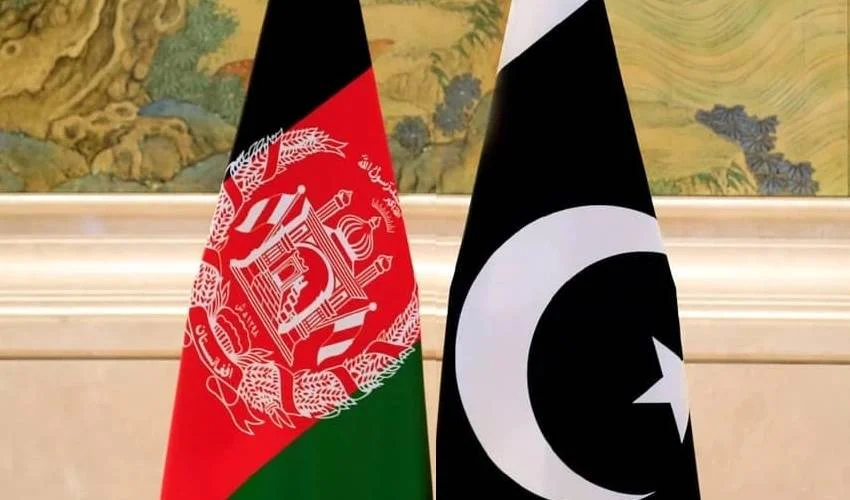
ISLAMABAD: Pakistan has handed over a comprehensive counterterrorism plan to the Afghan Taliban as the second round of talks between the two sides held in Istanbul on Saturday, part of Islamabad’s efforts to establish a mechanism to curb cross-border terrorism originating from Afghan soil.
The discussions follow earlier Pakistan-Afghanistan talks, mediated by Qatar and Turkiye, held in Doha on October 19, where both sides agreed to a ceasefire. The border clashes were triggered after Islamabad demanded that Kabul control militants who attack Pakistan across their shared border, saying they operated from havens in Afghanistan.
The Qatar talks had come after days of fighting along the Pak-Afghan border — where trade is still closed — and strikes by Islamabad on Gul Bahadur group camps in Afghanistan. The agreement reached in Doha extended an initial 48-hour truce and resulted in a permanent ceasefire, as well as a commitment to reconvene in Istanbul to work on mechanisms for lasting peace and stability between the two countries. Border crossings between the two countries have remained closed since October 11, following clashes, the worst since the Taliban’s 2021 takeover of Kabul. A ceasefire was agreed in Doha is holding between the two sides.
Earlier, Afghan interim administration spokesman Zabihullah Mujahid said the Afghan delegation was led by Mawlawi Rahmatullah Najeeb, deputy minister at Ministry of Interior, Turkish news agency Anadolu reported. “The remaining issues [with Pakistan] will be discussed in the meeting,” Mujahid said in a post on X last night, adding that the Afghan delegation had left Kabul for Istanbul.
Officials said Islamabad proposed mechanisms for intelligence-sharing, cross-border coordination and real-time monitoring of militant movements and financing. Pakistan also supports establishing a third-party oversight structure, potentially co-chaired by Turkiye and Qatar, to verify progress and address non-compliance.
Officials said Islamabad presented Afghanistan’s Taliban regime with a comprehensive set of demands aimed at bolstering border security and dismantling terrorist sanctuaries on Afghan soil, after the Taliban failed to offer a verifiable roadmap for action against TTP, a militant group that has long plagued relations between the two neighbors.
The negotiations, which stretched nearly nine hours, ended with the Taliban delegation asking for time to review the Pakistani document. It was unclear how long the review might take or when the sides could reconvene, pointing to a potential impasse in efforts to curb cross-border terrorism despite mediation by Turkey and Qatar.
The meeting’s aim was to establish oversight and monitoring mechanisms to prevent terrorist incursions and restore stability to the volatile border region. The talks unfolded at the centrally located Conrad Hotel, beginning shortly after midday and extending into the late evening. The discussions were continuing over a working dinner.
Officials described the discussions as wide-ranging, centering on the creation of an oversight framework to limit the operational space for the TTP and other terrorist groups with havens in Afghanistan. The talks also addressed disruptions to trade and humanitarian aid caused by ongoing border tensions.
Pakistani delegation “firmly stuck to the position that Afghanistan’s Taliban administration must clearly and verifiably end all support for the TTP,” officials said, adding that Islamabad was “not ready to accept anything less, including offers for relocation of militants or formation of further committees to discuss the issue.”
Pakistan grounded its demands in commitments the Afghan Taliban made to the international community under the Doha Agreement, signed with the United States in February 2020. That accord explicitly required the Taliban to prevent Afghan territory from being used as a sanctuary for terrorist groups launching attacks on other countries. The pledge was reiterated by the Taliban during the recent ceasefire talks with Pakistan, mediated by Qatar and Turkey in Doha. The Pakistani side stressed that the Taliban’s failure to rein in TTP activities breached the spirit of the 2020 Doha accord.
They said Istanbul is expected to operationalise the Doha agreement by defining what constitutes cross-border terrorism, how violations will be verified and how disputes will be resolved. The Istanbul round offers an opportunity to move from temporary calm toward a structured, verifiable peace framework with mechanisms for monitoring, verification and sustained dialogue through technical committees.
Meanwhile, Defence Minister Khawaja Asif, who had earlier expressed cautious optimism about the peace agreement, warned of “all-out war” with the Afghan Taliban regime if the negotiations failed.
Speaking to reporters in Sialkot, he expressed hope that the outcome of the negotiations would be known by tomorrow, if not today. “We have the option, if no agreement takes place, we have an open war with them,” he said, adding: “But I saw that they want peace.”
The defence minister noted that no hostilities had occurred along the border over the past four to five days, stating that 80 percent of the points agreed between the two countries during the first round of talks in Doha were being implemented.
Asif assailed neighbouring India for fighting a proxy war against Pakistan using the Afghan Taliban. “The Afghans are acting against us as a proxy of India.” The minister expressed hope that the two nations would agree to a deal that would ensure long-lasting peace in the region.
Recalling the first round of talks, in which he led the Pakistani delegation, the defence minister said that he felt an urge for peace during the negotiations. However, he regretted that Afghans backed terrorism in Pakistan, despite the country having hosted them for more than four decades.
Copyright © 2021 Independent Pakistan | All rights reserved