By Staff Reporter
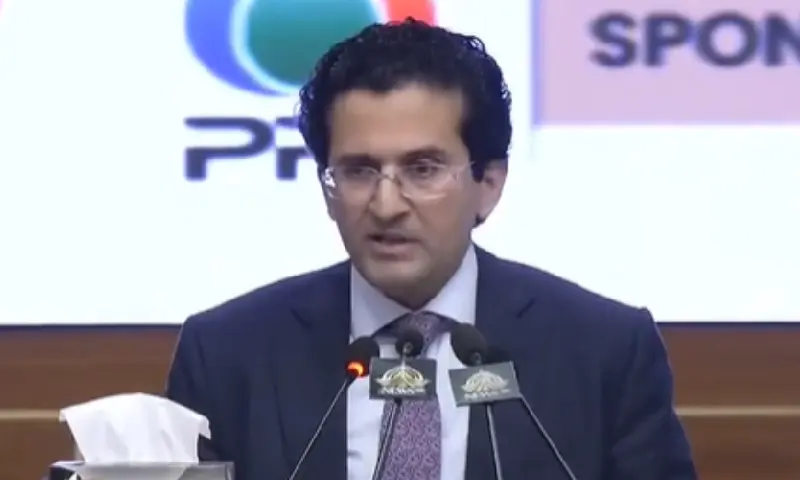
ISLAMABAD: Pakistan will offer mining investors uniform fiscal terms without case-by-case negotiations and has tightened protection for mine sites, Petroleum Minister Ali Pervaiz Malik said on Friday, in a bid to win back foreign capital unsettled by militant violence in Balochistan.
Malik spoke on the second day of the Pakistan Minerals Investment Forum 2026 in Islamabad, where the government is marketing deposits ranging from coal and salt to gold and critical minerals. Organizers moved the event to November from April 8-9, citing regional developments and an uncertain international travel environment.
“We want clear fiscal terms available to every responsible company without the need to negotiate special arrangements on a case-to-case basis,” Malik said. He said the terms should be “attractive and fair for investors, to the provinces and to the federal government alike.”
Security is the central obstacle. Separatist militants in Balochistan have repeatedly attacked workers at coal mines and Chinese-backed projects in the province. Barrick Mining Corp. said in April it would slow development of its Reko Diq copper-gold project, extend a security-driven review to mid-2027 and warn of significant increases to its capital budget and timeline. Phase 1 had been estimated at $5.6 billion to $6 billion, with first production targeted by the end of 2028.
“The government is committed to providing security and safety for the mine sites, logistics, and above all, trained human resources,” Malik said, adding that special arrangements had been made to strengthen the security framework for uninterrupted operations. He addressed Barrick, Ivanhoe and Minmetals by name. “Pakistan is open for long-term mining investment,” he said, adding that the government hoped to earn their confidence “through what we deliver from here, starting from how we follow up after this forum ends.”
A Balochistan government official told reporters in February that authorities had decided to raise a dedicated paramilitary force for the province’s mineral-rich areas and to secure borders with Iran and Afghanistan.
Ivanhoe Atlantic signed a memorandum of understanding with Pakistan’s Mari Energies Ltd. on Thursday, according to Robert Friedland, who chairs the company’s largest shareholder. The deal marks the Canadian company’s entry into South Asia, and Mari’s mining unit holds several copper and gold exploration projects in Pakistan. Friedland said Ivanhoe is in the early stages of opening a local office and expects to sign a second MoU Friday.
Malik said the government is investing in geological data, led by the Geological Survey of Pakistan, to help investors assess risk. “You cannot price risk for a project you cannot scientifically measure,” he said. More than 40 exploration licences were recently granted in the Chagai and Khuzdar districts of Balochistan, he said, which he cited as evidence of growing private-sector interest in strategic and critical minerals.
The government is speeding up geological mapping at a scale of 1:50,000 and digitizing decades of survey records. Malik pointed to prospects including copper and gold in Chagai and western Balochistan, lithium, tin and tungsten in Gilgit-Baltistan, and antimony and base metals in Khyber Pakhtunkhwa. Exploration is being backed by geochemical and geophysical surveys, drilling and upgraded laboratories, he said, with help from the UK-Pakistan Geoscience Capacity Building Programme.
Pakistan wants a bigger share of the value chain. “For too long, we have exported raw ore or concentrate and imported the finished products to meet our requirements,” Malik said. “We are now advancing copper smelting to capture more of the value chain from the mine to the finished metal.”
He said a mine needs more than a deposit. “Discovering a mineral deposit is only the beginning,” he said, citing the need for power, water, roads, railways and access to export markets. He named a planned upgrade of the Rohri-Nokundi rail corridor, links to Port Qasim, supporting infrastructure around Reko Diq, a road from Chagai’s mineral belt to Gwadar port, and connections from Thar coal to power plants.
Malik said investment should support processing, refining, downstream industry and technology transfer where commercially viable, and that the sector should build local skills, engineering services and supplier networks, including jobs for women. Projects must also deliver benefits to host communities, he said, with environmental management and transparent engagement. “Projects that earn the trust of the communities around them are, in our experience, the projects that actually get built and sustained,” he said.
He thanked Prime Minister Shehbaz Sharif and Field Marshal Asim Munir for backing the sector and urged investors to bring proposals. The government would arrange follow-up meetings, technical discussions, site visits and project evaluations, he said, “not a vague promise to be in touch.”
Islamabad is trying to anchor the push with Western money. The U.S. Export-Import Bank has approved $1.25 billion for Reko Diq. The Express Tribune reported in October that no U.S. company operates in Balochistan, and that Pakistan was urging Washington to lead investment there despite the security risks. A report by the ACLED conflict-monitoring group published in August said attacks on extractive operations in the province were escalating.
The first forum, in 2025, drew 5,000 delegates from more than 50 countries and produced 16 memoranda of understanding.
Copyright © 2021 Independent Pakistan | All rights reserved