By Staff Reporter
ISLAMABAD: Pakistan raised retail fuel prices for the sixth time in roughly two weeks, as a disabled Saudi Arabian pipeline and mounting attacks on Persian Gulf shipping keep global crude on an upward march that is being felt directly at pumps from Karachi to Peshawar.
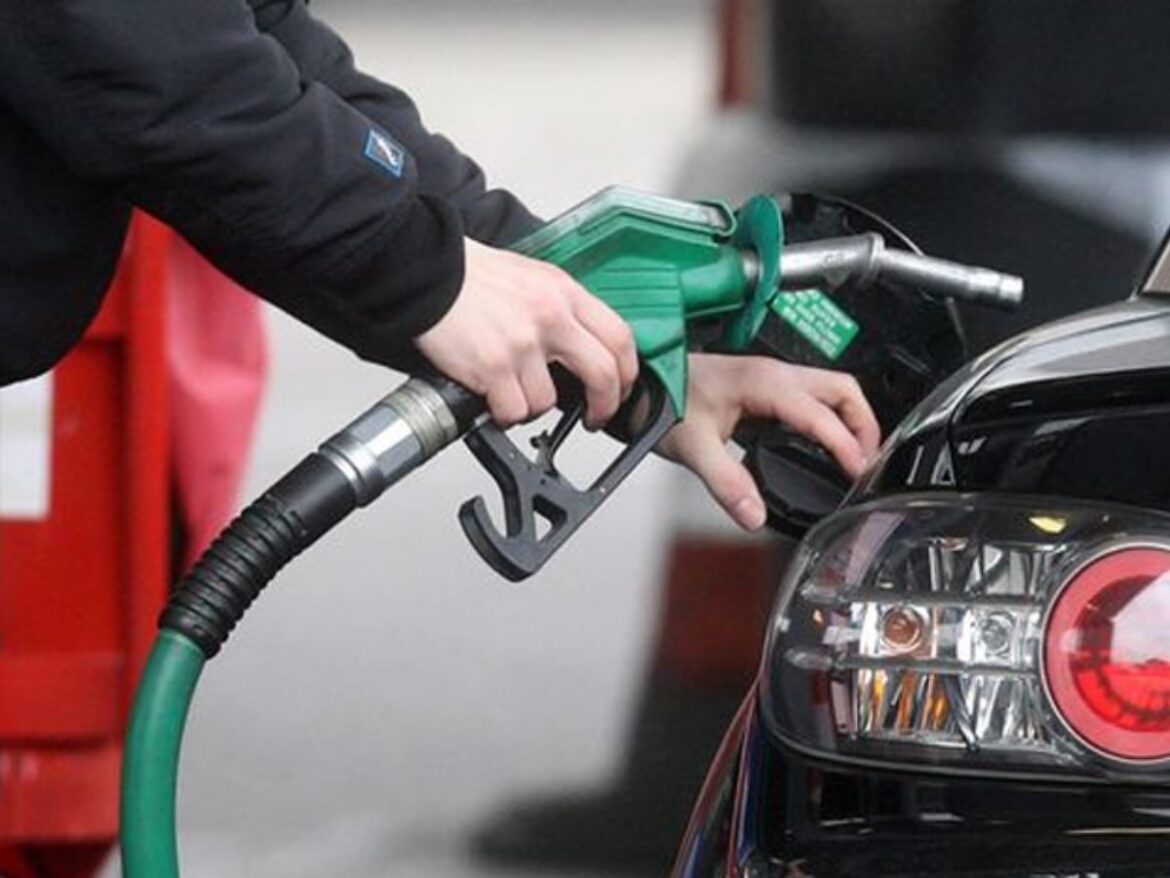
The Petroleum Division, in a notification on Monday, set petrol at 380.24 rupees a liter and high-speed diesel at 409.42 rupees, effective Tuesday. The increases — 4.42 rupees for petrol and 6.10 rupees for diesel — mark the sixth consecutive upward revision under the daily-pricing mechanism Islamabad adopted in July. The government’s tax take is unchanged, at 114 rupees a liter on petrol and 100 rupees on diesel. The prior revision, effective Saturday, September 12, had set petrol at 375.82 rupees and diesel at 403.32 rupees.
Diesel remains below the 520.35-rupee peak it hit on April 3, having climbed from 281 rupees after the US-Iran war broke out on Feb. 28. Petrol peaked the same day at 458.41 rupees, up from 266 rupees at the start of March.
The renewed climb in crude traces to a drone attack on Saudi Arabia’s East-West Pipeline, disclosed by the kingdom’s energy ministry Friday. The ministry said the pipeline — which normally lets Saudi crude reach the Red Sea port of Yanbu without transiting the Strait of Hormuz — was shut down as a precaution after sustaining multiple strikes early Thursday, and that the attack caused a number of injuries. Reuters reported the outage could threaten as much as 4% of global oil supply, with Yanbu holding only five to seven days of export inventory should the line stay down; industry estimates for repairs have ranged from several weeks to, in one assessment, months. A Monday meeting in Oman between Gulf Arab states and Iran to discuss Strait of Hormuz tensions was postponed following the attack.
Brent crude climbed more than 2% Monday, trading as high as $108.65 a barrel before easing to change hands near $107.33 — up $2.72 on the day — while West Texas Intermediate rose to $102.56, putting the US benchmark on track for its highest close since May 19, according to Reuters figures reported through the session. The advance builds on a roughly 9% gain the prior week, when Brent first crossed $100 since July. “The relatively contained price reaction suggests the market still expects Saudi inventories to cushion exports in the near term, but if the disruption extends beyond the five-to-seven-day inventory cushion, that could change quickly,” Janiv Shah, an oil markets analyst at Rystad Energy, said in a note. Andy Lipow, president of Lipow Oil Associates, said a pump station appeared to have sustained serious damage, and that Riyadh may be able to bypass it and restart the line at reduced output — which he said was one reason prices had not risen further.
Compounding the disruption, Yemen’s Houthi forces seized the strategic island of Perim on Friday, tightening their grip on the Bab el-Mandeb strait at the southern mouth of the Red Sea, while a vessel was struck by a projectile in the Strait of Hormuz over the weekend, prompting a fire and evacuation, Britain’s maritime security agency UKMTO said. Iran said one person was killed and four crew wounded aboard an Iranian commercial vessel struck off its coast, and separately issued a list of 77 ships it said had violated its protocols for operating in Hormuz. US diesel futures were trading around $5.18 a gallon Monday, within reach of the record $5.14 set in April 2022.
Facing the cumulative squeeze on households, Prime Minister Shehbaz Sharif on Sunday announced a relief scheme for owners of motorcycles, rickshaws and vehicles up to 800cc. Under the plan, two- and three-wheeler owners will receive a rebate of 100 rupees per liter on a monthly quota of 20 liters, while owners of vehicles up to 800cc will get the same rebate on a monthly quota of 30 liters. Sharif also directed authorities to devise a separate mechanism to extend relief to the poorest segments of society.
Pakistan imports the bulk of its petroleum needs, leaving it exposed to swings in global crude prices that domestic refining capacity cannot offset. Petroleum products are one of the country’s largest import categories, with every rise in international prices widening the import bill, straining foreign-currency reserves and adding to inflation.
That exposure has shaped fiscal policy for years. Successive governments have used subsidies and price controls to shield consumers during periods of high global prices, but the approach has proven costly: delayed pass-through built up financial strain on refiners and oil marketing companies, while broader subsidies widened budget deficits and added to public debt.
Petrol and diesel are Pakistan’s two largest sources of fuel-related revenue, with combined monthly sales of roughly 700,000 to 800,000 tons, dwarfing the roughly 10,000 tons of kerosene sold each month. Petrol is consumed mainly by private cars, motorcycles and rickshaws, making it more directly tied to the finances of middle- and lower-income households. Diesel’s reach is broader still, powering trucks, buses, power plants and large generators, meaning price swings are felt across freight costs, electricity generation and consumer prices.
Copyright © 2021 Independent Pakistan | All rights reserved