By Staff Reporter
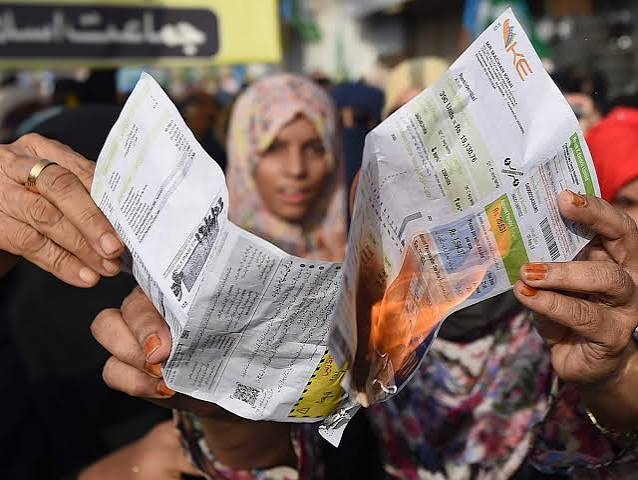
ISLAMABAD: Pakistan’s mounting debt burden and the relentless climb in electricity and gas prices have eclipsed every other worry for ordinary citizens, a first-of-its-kind nationwide survey showed, exposing a widening gap between what Pakistanis fear most and where the government actually spends its money.
The National Citizen Survey 2026, unveiled on Monday at a Citizens’ Roundtable in Islamabad, found that 66% of respondents view the country’s swelling national debt as a serious concern, with nearly half — 49% — calling it “extremely concerning.” Yet debt servicing consumes 42.9% of Pakistan’s Rs18.771 trillion federal budget, outstripping combined spending on defence, health, education, pensions and subsidies. Federal health spending, by comparison, amounts to a mere 0.1% of the budget.
The survey was conducted by the Institute for Public Opinion Research and released at an event organized by the Pakistan Institute of Legislative Development and Transparency, which led stakeholder engagement and communications for the launch. Researchers said the disconnect between public concern and government spending held steady across provinces, income brackets, age groups and the urban-rural divide.
Interviewers carried out 5,155 face-to-face polls in homes across the country between Aug. 23 and Sept. 5, using a four-stage stratified sample that spanned all four provinces and split respondents 60% rural and 40% urban, while capturing the full range of age, gender and income groups.
Rising electricity and gas prices topped the list of concerns nationwide, cited by 19% of respondents as Pakistan’s foremost problem. The surging cost of everyday goods followed closely, named by nearly one in five, while unemployment came in third.
The survey painted a bleak picture of the business climate: 91% of respondents said starting or running a business in Pakistan today is difficult, with taxation cited most often as the chief obstacle. Skepticism toward the International Monetary Fund ran deep, with 68% saying the Fund’s program has either harmed ordinary Pakistanis or delivered no benefit to them. Another 60% said the education system fails to prepare graduates for a modern economy.
Public trust in state institutions registered at strikingly low levels across the board. No institution — not parliament, not the election commission, not the tax authority — commanded the confidence of a majority of citizens. Only 15% of respondents said they trusted parliament completely, while just 13% expressed full trust in the Federal Board of Revenue. The Federal Investigation Agency and the National Accountability Bureau fared better, drawing complete trust from 33% and 23% of respondents, respectively — the highest marks of any institution measured.
On graft, 18% of respondents said a government official had personally solicited a bribe from them within the past year, offering rare first-hand data underpinning Pakistan’s poor standing in global corruption rankings.
The poll also captured a generational shift in how Pakistanis get their news: 42% said they trust social media more than television, even as 56% blamed the internet for eroding the country’s social values. Separately, 79% described the rise in drug use across Pakistan as “extremely dangerous.”
Foreign-funded organizations came under scrutiny as well. Some 43% of respondents said reporting on Pakistan by foreign-backed NGOs and think tanks is either factually inaccurate and overstated, or shaped by an outside agenda — more than double the 25% who viewed such reporting as fact-based.
Mamoon Bilal, executive director of PILDAT Consulting, opened the roundtable, while IPOR Executive Director Tariq Junaid walked attendees through the survey’s methodology and findings. The event drew academics, think-tank researchers, members of the judiciary and legal profession, and journalists for a discussion of the results.
Copyright © 2021 Independent Pakistan | All rights reserved