By Staff Reporter
ISLAMABAD: Pakistan’s gas regulator raised regasified LNG prices by as much as 15.3% for October, a rebound from September’s 20% cut that comes with Qatari supply still suspended.
The Oil and Gas Regulatory Authority notified the increase on Friday for sales by Sui Northern Gas Pipelines Ltd. and Sui Southern Gas Co., citing mainly higher crude prices.
At the distribution stage, Sui Northern’s price rose 14% to $17.33 per million British thermal units from $15.196 in September. Sui Southern’s climbed 15.27% to $16.396 from $14.22.
Transmission-stage prices rose 13.9% to $15.94 for Sui Northern, which serves Punjab and Khyber Pakhtunkhwa. They rose 15.25% to $14.53 for Sui Southern, which supplies Sindh and Balochistan.
September’s reductions were 20.14% for Sui Northern and 21.57% for Sui Southern.
The October basket consisted of two cargoes, both from Qatar, bought under separate long-term contracts priced at 13.37% and 10.20% of Brent. Brent futures topped $111 a barrel on Oct. 22.
The delivered ex-ship price of the two cargoes averaged $10.75 per mmBtu, compared with $10.06 in September, $12.12 in August and $18.96 in July. The roughly 7% rise in landed cost was about half the increase in the end price.
The distance between the two is widening along a supply chain that sits entirely in the public sector. Distribution prices stand $6.58 per mmBtu above the delivered price for Sui Northern and $5.65 above it for Sui Southern.
Importers Pakistan State Oil and Pakistan LNG Ltd., along with port authorities, charge retainage and margins at 3.77% of the delivered price. System losses add to the bill: 8.97% at Sui Northern, against 7.47% a year earlier, and 12.55% at Sui Southern, against about 10.6%.
RLNG-based power generation cost Rs40 per unit in September, based on an average import price of $10.06 per mmBtu. The higher October import price is expected to weigh heavily on fuel costs for power generation in December.
Pakistan State Oil holds a long-term contract with Qatar for as many as 11 cargoes a month, though part of that volume was typically diverted to the spot market even before the war closed the Strait of Hormuz.
QatarEnergy has since extended force majeure on deliveries to Pakistani clients through the end of this year, according to a person with knowledge of the matter cited by Reuters. The company exported 18 cargoes through August, against 509 in the same period last year, according to ICIS.
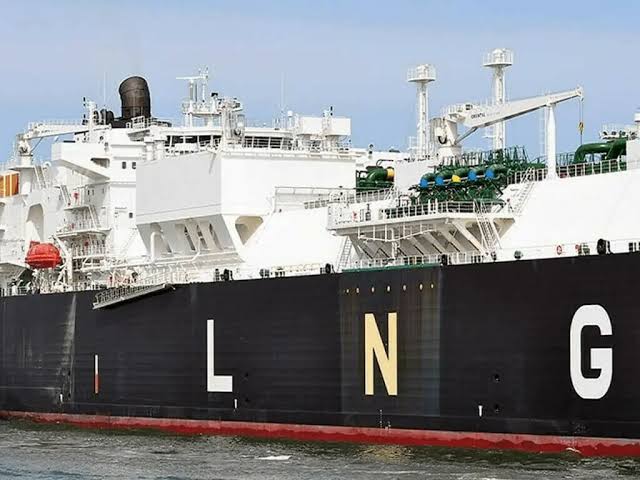
Pakistan still received three Qatari cargoes in October, the latest of them the Shandong Redwood, which berthed on Oct. 28. Authorities are expected to arrange three to four cargoes for November, with requirements rising to nine in December and 11 in January.
Oilprice.com has reported that Pakistan plans to buy about 10 spot cargoes at roughly double the long-term contract price, a winter bill that could exceed $1 billion.
Quarterly Gas Price Resets
Meanwhile, the government introduced a bill in the Senate that would reset natural gas prices every quarter instead of twice a year and drop public hearings on those revisions.
Minister of State for Interior Tallal Chaudhry presented the Oil and Gas Regulatory Authority (Amendment) Bill, 2026, to the upper house on Friday. It would insert a new Section 8A into the 2002 ordinance that governs the regulator, known as Ogra, and would take effect immediately on passage.
Under the proposal, gas licensees would file their revenue requirement with Ogra every three months, limited to wellhead gas prices and the cost of imported fuel, including re-gasified liquefied natural gas. Ogra would review the filings and advise the federal government, which would have 30 days to advise minimum charges and sale prices for each category of retail consumer. Those would then be published in the official gazette.
The bill also lets the government direct Ogra to carry all or part of a quarterly adjustment into its next half-yearly determination under Section 8, which would allow ministers to defer an increase. Section 9 would be amended so the regulator is not required to hold a public hearing on revisions made under the new section. Ogra currently holds hearings before it issues its determinations, which the government uses to set consumer prices.
The bill’s statement of objects and reasons says the goal is to align tariffs with market conditions, including timely adjustment for rupee-dollar parity, to signal accurate prices, to curb the build-up of circular debt in the gas sector and to keep the supply chain financially and operationally stable.
The proposal has been in the works for a year. The Petroleum Division asked Ogra last November to propose changes that would allow quarterly gas tariff revisions instead of six-monthly announcements, according to the Express Tribune. The model resembles the one used in the power sector and is meant to improve the finances of state gas utilities and slow the growth of circular debt.
It follows a faster repricing of fuel. The government announced on July 17 that petroleum product prices would be reviewed and notified daily, replacing a weekly system, with Ogra calculating them from a seven-day average of international prices. Fuel retailers opposed the change and called a nationwide strike, then postponed it after talks with the government. Transporters, businesses and opposition lawmakers also objected, arguing that frequent revisions create uncertainty and raise freight costs. A report by the Institute of Cost and Management Accountants of Pakistan found petrol prices rose 16.4% in just over a month as tensions between the US and Iran lifted oil markets. Petroleum Minister Ali Pervaiz Malik said this month that the mechanism has improved fuel availability at pumps.
The Senate also took up the planned relocation of Pakistan Petroleum Ltd.’s head office from Karachi to Islamabad. Waqar Mehdi, a senator from the Pakistan Peoples Party, said the headquarters has been in Karachi since around 1951 and that a board whose members are not elected representatives is now trying to move it. He said the current office costs about Rs4 million a month in rent, while a move would run into billions. About 500 officers and employees from Sindh would face severe economic and family disruption, he said.
Mehdi said the company’s exploration, imports and related infrastructure are tied to Karachi, and he demanded that the decision be withdrawn. He described a pattern of federal headquarters, ministries and corporations being moved out of the city. “Tomorrow they will talk of shifting Karachi’s sea to Islamabad as well,” he said.
Senator Zamir Ghumro, also of the PPP, said oil and gas fall within the remit of the Council of Common Interests, a constitutional body that includes the provincial governments. “How can you shift it without the will of the CCI?” he asked.
Chaudhry said PPL is a company and that its board has repeatedly said vacating the office has become inevitable. He said the company’s assets are in Balochistan as well as Sindh and that no employees are being affected. “There is no provincialism in shifting this office from Karachi,” he said. He also told the House that the move is an operational and administrative matter, and that running offices in two places would raise costs.
Staff and lawmakers have disputed that. PPL’s Karachi office had about 500 employees on Oct. 1, compared with roughly 80 in Islamabad, according to ProPakistani, which also reported that employees put the proposed Islamabad office’s rent at Rs50 million a month. Employees have urged the board and management to reconsider. In the National Assembly this month, PPP lawmaker Nafisa Shah put the cost of the move at Rs4 billion and recalled that the petroleum minister had said in 2025 that PPL would stay in Karachi.
Copyright © 2021 Independent Pakistan | All rights reserved