By Staff Reporter
ISLAMABAD: Prime Minister Shehbaz Sharif moved swiftly on Tuesday to condemn a wave of Houthi missile and drone strikes on Saudi Arabia, reaffirming Pakistan’s solidarity with the kingdom within hours of an assault that wounded 73 people and ignited fires at oil facilities across four southern Saudi cities — a response that leaned heavily on a trilateral defence pact Islamabad, Riyadh and Ankara had only recently finalised.
In a post on social media platform X, Sharif called the strikes a “cowardly” act. “I condemn in the strongest terms the cowardly attack by Houthis targeting civilian and energy facilities in the Kingdom of Saudi Arabia, which have left many people injured,” he wrote, adding that Pakistan stood in “unwavering solidarity” with King Salman bin Abdulaziz Al Saud, Crown Prince Mohammed bin Salman and the “brotherly people of Saudi Arabia.” He went further in a follow-up statement, framing the attacks as a threat that extended well beyond Saudi borders: “Such dastardly attacks threaten innocent lives as well as regional peace and security. We reaffirm our steadfast support for the Kingdom’s sovereignty, security and territorial integrity, and pray for the swift recovery of all those injured.”
Pakistan’s Foreign Office followed with a formal statement of its own, calling the strikes “reprehensible” and “a flagrant violation of the sovereignty and territorial integrity of the Kingdom.” The ministry warned the attacks threatened to undo years of effort toward a durable peace in Yemen and jeopardized stability across the wider region, while reiterating Pakistan’s recognition of Saudi Arabia’s right under international law to defend its territory and protect its citizens. The Foreign Office pledged continued support for “achieving lasting peace and stability in the region.”
The strikes landed after Pakistan, Saudi Arabia and Türkiye formally sealed the Makkah Joint Defence Agreement, a trilateral security pact signed at the Makkah Al-Mukarramah Summit for Joint Defence that its architects describe as a framework for collective deterrence — one that has drawn comparisons, however imperfect, to NATO’s mutual-defense structure. Tuesday’s attacks amounted to an early, unplanned test of that partnership, and Sharif’s statements read as an attempt to demonstrate the pact’s substance within days of its signing.
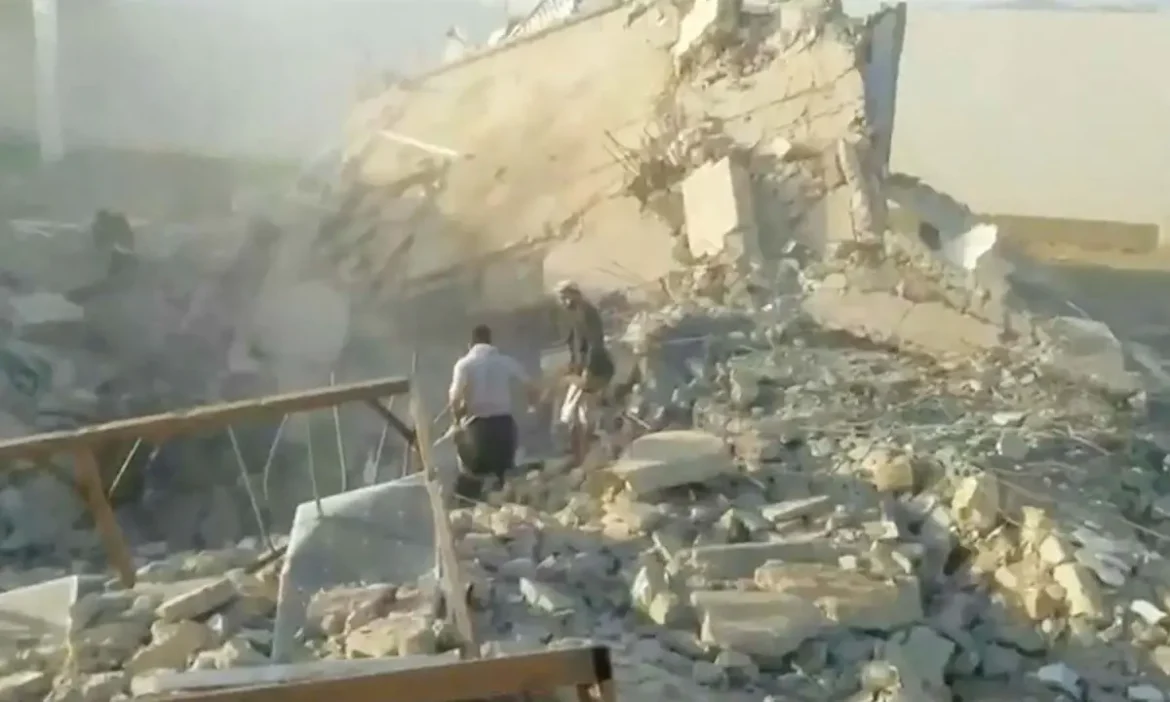
The Houthis, who control Yemen’s capital, Sanaa, and much of the country’s north, struck the Saudi cities of Abha, Khamis Mushait, Jazan and Najran, according to Maj. Gen. Turki al-Malki, spokesman for the Saudi-led coalition fighting the group in Yemen. Al-Malki said the strikes wounded 73 civilians, including women and children, and called the assault a “dangerous escalation” and a “blatant violation” of Saudi sovereignty. Saudi Arabia’s Energy Ministry said in a separate statement that the barrage struck “energy sector facilities and installations” across the kingdom’s southern region, sparking “fires at several locations” and forcing a “temporary halt in some operations.” Firefighting crews spent Tuesday morning containing blazes at sites that included a 400,000-barrel-a-day refinery in Jazan, one of Saudi Arabia’s largest.
The Houthis said the operation targeted specific infrastructure: Abha Airport, an Aramco fuel terminal in Abha, King Khalid Air Base in Khamis Mushait, the Jizan refinery, and a fuel terminal in Najran. The group’s military spokesman, Yahya Saree, described the strikes as “large-scale” and “long-range,” using “dozens of ballistic missiles and drones,” and framed the operation as retaliation for what the group said were more than 100 Saudi airstrikes across Yemen in the preceding three days. He warned that “every aggression against our country and people will be met with a firm response.” A Yemeni security official said the assault actually began a day earlier than the main barrage, with a single ballistic missile and drone launched from Saada in northern Yemen toward the kingdom on Monday.
Saudi Arabia’s own posture hardened visibly as the day went on. The kingdom’s Ministry of Foreign Affairs said Riyadh would “take all necessary measures to defend its sovereignty” and demanded an immediate halt to the attacks, while Al-Malki said the coalition would take “all necessary operational measures” to confront the strikes and act against their sources. Commentary from voices aligned with the Saudi government suggested officials in Riyadh viewed Tuesday’s attacks as a turning point rather than an isolated provocation, with one widely circulated account characterizing the mood as a resolve to “finish the job” against the group.
That hardening line drew a note of caution from Russia and its Foreign Minister Sergey Lavrov, meeting in Riyadh with Saudi Foreign Minister Prince Faisal bin Farhan Al Saud, said the Houthi attacks were “counterproductive” and were damaging the global economy, and said it was unacceptable to resolve the underlying disputes through military means — a diplomatic intervention that added an outside voice to a conflict that had, until recently, drawn comparatively little attention from powers outside the region.
Qatar’s Foreign Ministry issued its own condemnation of the strikes on the four Saudi cities, adding to a chorus of Gulf and allied governments moving to publicly back Riyadh.
The renewed fighting sits atop a broader conflict that has weighed on global energy markets for months. Yemen’s civil war, which began in 2014 when the Houthis seized Sanaa and forced the internationally recognized government into exile, drew in a Saudi-led coalition the following year and has killed at least 150,000 people by United Nations estimates, at times pushing the country to the brink of famine. That war eased considerably after a truce reached four years ago, but hostilities resumed in July, and fighting has since spread across multiple fronts, including Yemen’s west coast, where government forces claimed territorial gains Monday in Hodeida, Taiz and Baydah provinces. Tuesday’s strikes also threaten to compound pressure on global oil supplies, hitting Saudi facilities tied to the Bab al-Mandeb strait — an export route that has taken on added importance as the Strait of Hormuz remains constrained amid the separate, ongoing confrontation between the United States and Iran, a waterway that carried roughly one-fifth of the world’s oil before that conflict began.
Copyright © 2021 Independent Pakistan | All rights reserved