By Staff Reporter
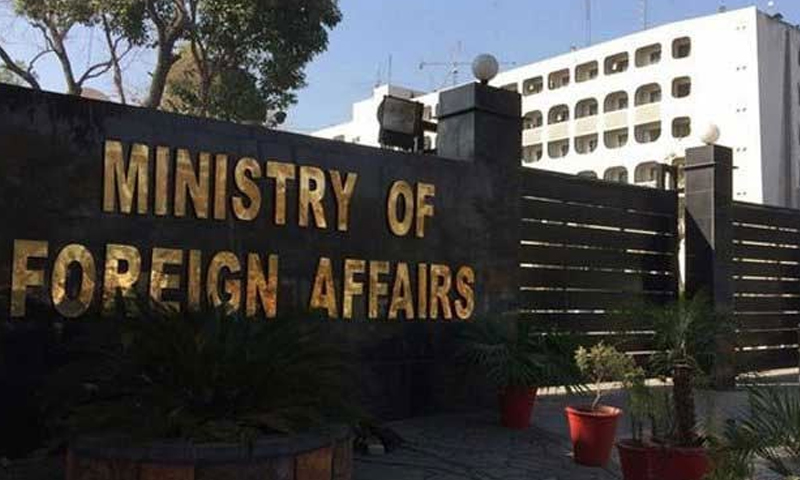
ISLAMABAD: The Foreign Office on Sunday sharply condemned remarks by India’s external affairs minister, S Jaishankar, accusing him of making “highly inflammatory, baseless and irresponsible” statements about the country’s armed forces and labeling them “misleading.”
The rebuke came a day after Jaishankar alleged that India’s primary difficulties with its neighbor arose directly from Pakistan’s military establishment, a claim that has further strained the already tense relations between the two nuclear-armed rivals.
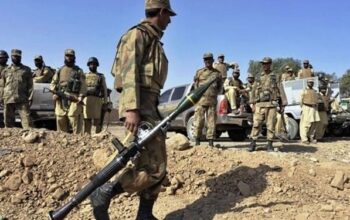
In a strongly worded statement, the Foreign Office emphasised Pakistan’s status as “a responsible state,” asserting that “all its institutions, including armed forces, were a pillar of national security, dedicated to safeguarding the sovereignty and territorial integrity of the country.”
The statement invoked a brief four-day conflict between the two nations in May, which it said “vividly demonstrated Pakistan armed forces’ professionalism as well as their resolve to defend the motherland and the people of Pakistan against any Indian aggression in a befitting, effective yet responsible manner.” “No amount of propaganda can belie this truth,” the Foreign Office added.
Pakistan’s response framed Jaishankar’s comments as part of a broader effort by Indian leaders to discredit its institutions and leadership. Such attempts, the statement said, were “part of a propaganda campaign designed to distract attention from India’s destabilising actions in the region and beyond, as well as state-sponsored terrorism in Pakistan.”
It went on to criticise what it described as “such incendiary rhetoric,” which “only exemplifies the extent of India’s disregard for amity, peace and stability in our region.” Rather than leveling accusations against Pakistan’s military, the Foreign Office urged India to confront its own internal issues, including “the fascist and revisionist Hindutva ideology that has unleashed a reign of mob justice, lynchings, arbitrary detentions and demolition of properties and places of worship.”
The Indian state and its leadership, the statement charged, had become “hostage of this terror in the name of religion.” Even as it delivered these pointed criticisms, the Foreign Office reiterated Pakistan’s commitment to peaceful resolution of disputes. “Pakistan believes in co-existence, dialogue and diplomacy,” the statement said. “However, it stands united and resolute in its intent and ability to safeguard its interests and sovereignty.”
The exchange underscores the persistent friction between India and Pakistan, which have fought multiple wars since their partition in 1947 and continue to clash over issues like the disputed territory of Kashmir. Recent months have seen escalated rhetoric from both sides, with mutual accusations of aggression and interference fueling a cycle of distrust.
The May conflict referenced in the statement involved the four-day conflict, triggered by an April attack on tourists in occupied Kashmir that New Delhi blamed on Pakistan. New Delhi launched “Operation Sindoor” on May 7 and Indian forces targeted sites inside Pakistan, resulting in civilian casualties. India attributed the initial attack to Pakistan without providing evidence, further straining relations between the longtime adversaries.
In retaliation, Pakistan launched “Operation Bunyanum Marsoos,” leading to intense artillery and drone exchanges along the Line of Control. The clashes subsided after diplomatic intervention, including a push by the United States, which helped broker a ceasefire. Pakistan has portrayed its forces’ actions during that episode as a measured defence, while India has characterised them as provocative incursions. Pakistan and India, which have fought three full-scale wars since their partition in 1947, continue to trade accusations over terrorism and border incursions.
Copyright © 2021 Independent Pakistan | All rights reserved