By Staff Reporter
ISLAMABAD: Pakistan on Friday dismissed as “frivolous” and “absolutely false” Afghan Taliban accusations that it had violated a temporary pause in cross-border hostilities during the Eid al-Fitr holiday, while issuing a blunt warning that any act of terrorism, cross-border attack or drone strike would immediately end the truce and trigger a resumption of military operations with “renewed intensity.”
The rebuttal came from the information ministry, which posted a detailed “fact check” on X shortly after the Taliban-led defence ministry in Kabul circulated statements accusing Pakistani forces of breaching the ceasefire on the first day of Eid, observed in Afghanistan on Thursday. Those statements claimed civilian casualties in border areas.
“The claim of the so-called Ministry of Defence/spokesperson of the Taliban regime that Pakistan has violated the temporary pause — initiated itself by Pakistan in view of Eid al-Fitr — is frivolous,” the ministry said. “No violation of the temporary pause has taken place along the western border by Pakistan, and all such claims are absolutely false.”
The ministry went further, suggesting the allegations might stem from internal Taliban dynamics. “Such propaganda may probably be initiated by detractors within the Taliban regime, aimed at creating a false pretext for some Afghan Taliban regime-directed terrorism or other action,” it said. Regardless of the source, it added, Pakistan’s position was unchanged: “any act of terrorism, cross-border attack, drone attack, etc. by the Afghan Taliban regime and its proxies will result into forthwith termination of the temporary pause and immediate resumption of Operation Ghazab lil-Haq with renewed intensity.”
The five-day pause was announced by Islamabad on Wednesday, a surprise de-escalation two days after what Afghan officials described as the deadliest strike in months. On Monday night, Pakistani airstrikes hit a drug rehabilitation center in Kabul, according to the Taliban government, which reported more than 400 people killed and 265 wounded — many of them patients and staff who had been praying at the time. Pakistan has denied targeting civilian or non-military sites, insisting its operations were aimed solely at militant infrastructure.
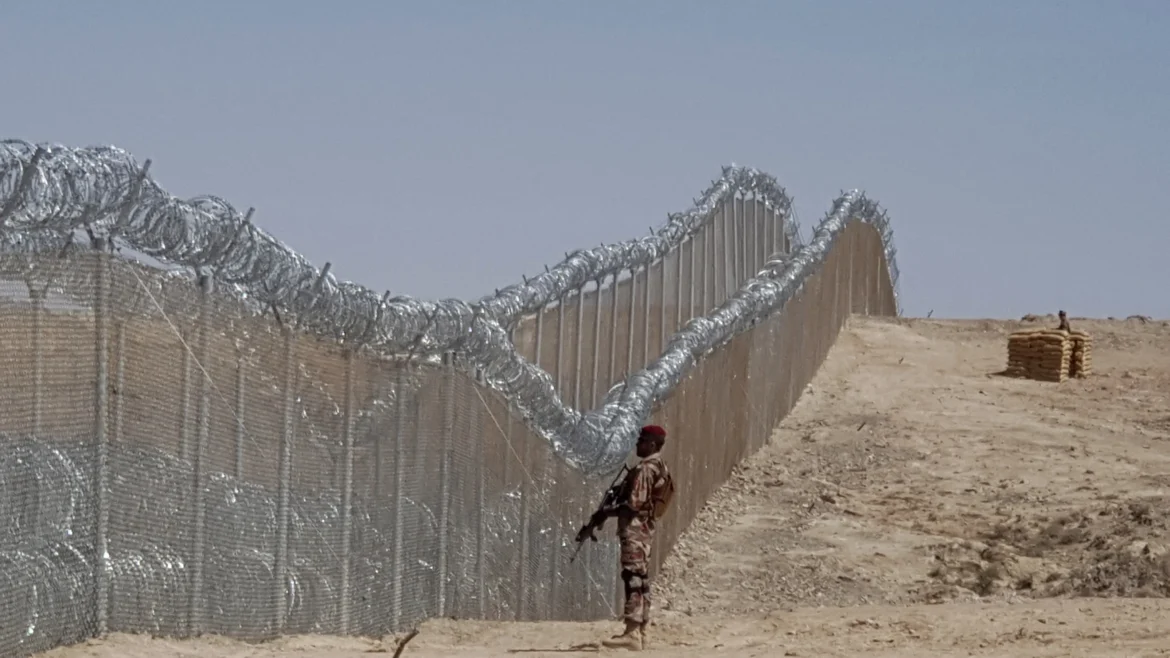
The truce followed weeks of one of the most intense periods of fighting between the two neighbors in years. Pakistani and Afghan forces have exchanged air and drone strikes and engaged in cross-border firing along their 2,600-kilometer (1,600-mile) frontier since clashes erupted in earnest last month. Pakistan launched Operation Ghazab lil-Haq on the night of Feb. 26 after what it described as unprovoked firing from the Afghan side.
Hours after Islamabad’s announcement, the Taliban government in Kabul said it too would suspend military operations against Pakistan. Both sides cited requests for de-escalation from Saudi Arabia, Qatar and Turkiye. Information Minister Attaullah Tarar had already warned that “in case of any cross-border attack, drone attack or any terrorist incident inside Pakistan, Operation Ghazab lil-Haq shall immediately resume with renewed intensity.”
Pakistan has long accused the Taliban government of providing safe haven to militants of the Tehreek-e-Taliban Pakistan (TTP), the group it blames for a surge in attacks inside Pakistan. The Taliban government denies offering such sanctuaries and insists it is not responsible for groups operating from its soil.
Despite appeals for restraint from regional powers including China, Turkiye and Gulf states, no formal negotiations have taken place during the current crisis. A similar round of border clashes last year ended in a ceasefire mediated by Qatar, Saudi Arabia and Turkiye.
Analysts note the absence of dialogue this time has left the situation more volatile. “There is no ceasefire yet,” said Maleeha Lodhi, Pakistan’s former ambassador to the United States. “A pause in hostilities has been agreed, and that too Pakistan has qualified by saying military actions will resume if there is a cross-border attack.” Lodhi said Islamabad’s core demand — that Kabul rein in the TTP and prevent cross-border attacks — remains unchanged. “If it can do that, then the path will open to normalization of relations. Words are not enough.”
Former ambassador to Afghanistan Asif Durrani called the Eid pause a welcome step but cautioned it would stay fragile without follow-through. “This pause can evolve into a durable ceasefire only if the Afghan Taliban undertake practical and enforceable measures,” he said, adding that Pakistan wants Kabul to dismantle militant networks and improve coordination along the border.
Pakistan’s military has made clear that its position has not shifted. In an interview with private television channal this week, Director General of Inter-Services Public Relations Lt. Gen. Ahmed Sharif Chaudhry stressed that Afghanistan “must not be used as a base for attacks inside Pakistan” and called for verifiable mechanisms to prevent it. “Afghan Taliban must make a clear choice between supporting groups like the TTP or maintaining a relationship with Pakistan,” he said.
Copyright © 2021 Independent Pakistan | All rights reserved