By Staff Reporter
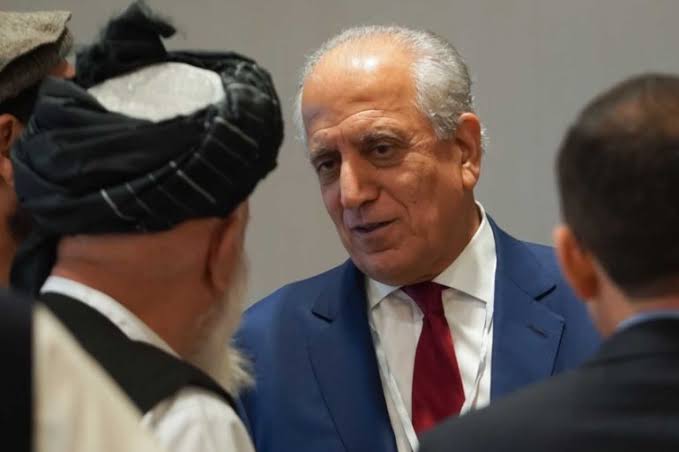
ISLAMABAD: Pakistan has dismissed claims by Zalmay Khalilzad, Washington’s former special representative for Afghanistan, that it is arming Afghans to fight the Taliban, accusing him of using “baseless and misleading allegations” to serve a personal agenda.
The information ministry issued its rebuttal on Saturday through its fact-check account on X, a day after Khalilzad, who held the Afghanistan brief during Donald Trump’s first term, wrote on the platform that there were “many reports that Pakistan is arming Afghans to fight the Taliban in Afghanistan”. He also alleged that Pakistan was recruiting Afghans to fight anti-Pakistan insurgents, and predicted that relations between Islamabad and Kabul were likely to “get much worse”.
The ministry said his “sweeping baseless assertions merely recycle speculative narratives as part of his personal agenda to prop [the] terrorism-supporting Taliban regime”. It said his “peddling” of such claims “only exposes his skewed agenda-based views”.
Islamabad also objected to conflation of two separate matters. It was “particularly misleading”, the ministry said, to equate Pakistan’s counterterrorism operations against militant groups based in areas under Taliban control with allegations that it was recruiting Afghan nationals or sponsoring armed groups inside Afghanistan.
“Pakistan remains at the forefront of the fight against terrorism and has made enormous sacrifices in protecting regional peace and security,” the statement said.
It pointed to successive UN monitoring reports, which it said had documented the continued presence and activities of militant organisations, including the banned Tehreek-i-Taliban Pakistan (TTP) and al-Qaeda, inside Afghanistan. The ministry said Khalilzad’s allegations “conveniently divert attention from the Afghan Taliban regime’s responsibility to prevent its territory from being used by India-sponsored proxies for terrorism against Pakistan”.
Pakistani officials say UN assessments have also recorded the presence in Afghanistan of the East Turkestan Islamic Movement and Islamic State-Khorasan (IS-K). They argue that the militant threat goes beyond cross-border movement to training, arming and operational support. According to figures cited by Pakistani authorities, terrorism emanating from Afghan soil has killed 1,327 Pakistanis and injured 2,484 in 2026 alone.
Officials said that when Pakistani forces strike militant hideouts, the Taliban government moves to defend the fighters and their sanctuaries rather than dismantle them. Islamabad’s position is that Kabul must take verifiable steps to close sanctuaries and training camps, stop infiltration and ensure Afghan territory is not used against Pakistan. The government has said the matter is one of national security that cannot be settled by denials.
Khalilzad negotiated the US agreement with the Taliban that paved the way for the withdrawal of Nato forces from Afghanistan. He has repeatedly urged Islamabad and Kabul to reach a negotiated settlement, most recently in January. In September he condemned Pakistan’s airstrikes and said its current strategy was not working. Earlier this year he also claimed that most Islamic State members had fled to Pakistan and were being used against Afghanistan.
It is not the first time the ministry has taken him to task. Last November it accused him of “creating a false impression” that IS-K had a presence in Punjab, after he claimed that one of the group’s commanders had been killed in Akhtarabad. The ministry said the dead man was killed during a robbery, not a counterterrorism operation, and that nothing linked him to IS-K. In March 2023, the Foreign Office said Pakistan did not need “unsolicited advice” from Khalilzad on its domestic challenges. The US State Department then made clear that he did not represent American foreign policy or speak for Joe Biden’s administration.
Similar accusations have come from Kabul in recent weeks. The Taliban’s defence ministry said fighters, including members of groups affiliated with Islamic State, had crossed from Pakistan into Nuristan’s Kamdesh district with Islamabad’s support. It later said its forces had killed 28 fighters and wounded 32. Pakistan’s information ministry denied that its security or intelligence agencies had any involvement in the clashes, or had recruited or trained former Afghan security personnel.
Pakistan accuses both India and the Afghan government of backing the TTP and separatist militants in Balochistan.
Security in Pakistan’s western provinces has deteriorated sharply since the Taliban returned to power in August 2021. Open conflict broke out in February, when Pakistan bombed Taliban government targets in Afghanistan’s major cities and its defence minister called it “open war”. The latest round of fighting followed a suicide attack in north-western Pakistan on 18 September that killed 31 people and injured more than 100.
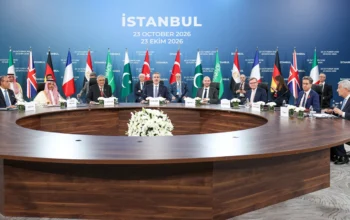
On 17 October, Pakistani and Taliban forces exchanged fire for nearly four hours in Kurram and across the border in Afghanistan’s Paktia province. Diplomatic pressure is building: the EU’s special envoy visited Kabul earlier this month to urge de-escalation, Russian and Pakistani officials have met, and China’s foreign minister has said the Taliban must act against militant groups.
Copyright © 2021 Independent Pakistan | All rights reserved