By Staff Reporter
ISLAMABAD: Pakistan is pushing back against efforts by the British government to deport a convicted child rapist released from prison earlier this month, deepening a diplomatic standoff over a case that has inflamed public anger across the United Kingdom.
Tahir Andrabi, a spokesman for Pakistan’s Ministry of Foreign Affairs, told the BBC that Shabir Ahmed’s case falls squarely under British jurisdiction and that his government bears no responsibility for what happens to him.
“The matter in question is entirely an internal matter of the United Kingdom,” Andrabi said. Ahmed, he added, “is a British national who spent his entire adult life in the UK and was duly convicted by a British court for reprehensible offences committed on British soil.”
Andrabi went further, arguing that geography of upbringing, not birth, should determine accountability. “Regardless of where he was born, the onus lies on where he grew up, was raised, groomed, and unfortunately spoiled,” he said, adding that Ahmed’s “heinous crimes demand serious introspection rather than the quest to search for extraneous causes.”
“The government of Pakistan has no connection whatsoever with this matter,” he said. “We cannot be associated with any decisions relating to the individual’s release or subsequent treatment under British law.”
Downing Street said Thursday it remained in active talks with Islamabad over Ahmed’s removal, though officials offered no indication of when — or whether — an agreement might be reached.
A conviction that shook a nation
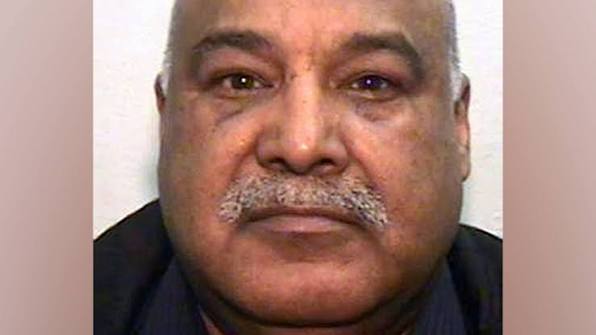
Ahmed, who emigrated to Britain in the late 1960s, was among nine men from Rochdale and Oldham, in northern England, convicted in 2012 of running a child sexual exploitation ring centered on two takeaway restaurants. The men targeted girls as young as 13, subjecting them to what prosecutors described as systematic abuse. Ahmed, identified as the group’s ringleader, was sentenced to 22 years for multiple counts of rape and other sexual offences against children.
He held dual British-Pakistani citizenship at the time of his conviction. British authorities subsequently stripped him of his UK passport, though his Pakistani nationality — which he has said he renounced — remains a point of contention in the current dispute.
More than 100 people have been convicted nationwide in cases connected to grooming gang activity, according to figures cited by British officials, who have faced sustained criticism over findings that police and social services failed for years to intervene, in part out of fear of being perceived as racially insensitive toward the predominantly Pakistani-heritage men involved in many of the cases. British Prime Minister Keir Starmer announced a national inquiry into the failures last year, a probe that has also drawn commentary from billionaire Elon Musk.
Ahmed left prison earlier this month under Britain’s early release scheme. He has since been placed in accommodations with round-the-clock staff supervision and fitted with an electronic GPS monitoring tag. Officials have said any breach of his strict release conditions would send him back to prison.
Several of Ahmed’s victims have told British media they feel “frightened” and “unsafe” following his release.
A legal obstacle four decades old
Ahmed’s deportation has been complicated by a provision of the Immigration Act 1971, which bars the removal of Commonwealth citizens who arrived in Britain before 1973 and had lived in the country for at least five years — a threshold Ahmed meets.
Home Secretary Shabana Mahmood announced Monday that the government intends to amend the law specifically to close that loophole. Speaking to members of Parliament, she said the change would ensure that “the vilest foreign criminals” are not shielded from deportation.
“In response to the widely reported case of the vile grooming gang leader, Shabir Ahmed, our amendment will provide the Home Secretary with a new power to disapply Section 7 of the Immigration Act 1971 for serious criminals,” Mahmood told MPs. She added that while the provision “provides protections for long-term UK residents,” it “clearly should not be acting as a bar against removal in cases like that of Shabir Ahmed.”
The amendment, which would be attached to the Immigration and Asylum Bill currently before the UK Parliament, is intended to align Britain’s deportation law more closely with its citizenship-revocation law. The BBC reported that the timeline for the legal change remains uncertain, with one government source suggesting the process could take up to a year.
Even if the amendment passes, Mahmood cautioned, it would not guarantee Ahmed’s removal. Pakistan would still need to agree to accept him — and Islamabad has so far shown no indication it intends to do so. Mahmood said ministers were continuing “to explore all avenues to pursue a deportation.”
Andy Burnham, the mayor of Greater Manchester who is widely expected to succeed Starmer as prime minister, has called Ahmed a “vile criminal” and said he should be deported.
Pressure mounts over foreign aid
Opposition lawmakers have urged the government to take a harder line with Islamabad, including threatening to suspend foreign aid payments if Pakistan continues to refuse Ahmed’s return.
Chris Philp, the Conservative shadow home secretary, said the government should consider “very robust measures to essentially compel” Pakistani cooperation. Speaking on BBC Radio 4’s “World at One,” Philp outlined two potential options: suspending bilateral overseas aid to Pakistan entirely or, in what he called “the most extreme” step, imposing visa restrictions on Pakistani nationals seeking to enter Britain.
“If a British citizen commits a crime somewhere else, we would accept them back,” Philp said, “and I would expect other countries to do the same when the boot’s on the other foot.”
Government figures released Thursday show Britain is set to provide £51 million in aid to Pakistan annually over each of the next three years. Downing Street said that funding would not factor into negotiations over Ahmed’s case, noting that the money is not distributed directly to the Pakistani government.
Copyright © 2021 Independent Pakistan | All rights reserved