By Staff Reporter
ISLAMABAD: Pakistan has signed a preliminary agreement with a Saudi-linked investment group and two domestic firms to explore developing a 140-acre commercial district on prime waterfront land controlled by the Karachi Port Trust, as Islamabad deepens its courtship of Gulf capital for large-scale infrastructure.
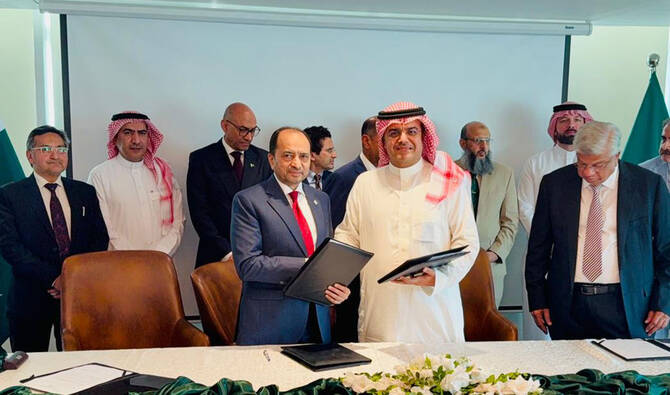
The memorandum of understanding brings together KPT, the Saudi Business Council’s Najd Gateway Holding Company, Arif Habib Dolmen REIT Management Limited — a unit of one of Pakistan’s largest financial conglomerates — and the Pakistan Corporate Consortium. The signing came during a visit to Islamabad by a high-powered Saudi business delegation led by Prince Mansour bin Mohammad Al Saud, chairman of the Saudi-Pak Joint Business Council.
The proposed development, situated on MT Khan Road along Karachi’s historic port waterfront, envisions a modern commercial and maritime hub designed to draw foreign investment, generate employment and accelerate urban regeneration in one of South Asia’s most congested port cities, Maritime Affairs Minister Junaid Anwar Chaudhry said in a statement Saturday.
“This strategic collaboration is a transformative opportunity to unlock the full potential of KPT’s waterfront assets and position Pakistan as a regional hub for maritime commerce and investment,” Chaudhry said, adding that the project, subject to regulatory approvals, “could become one of the largest waterfront commercial projects in the region.”
The minister said all regulatory and legal requirements under Pakistani law would need to be satisfied before construction proceeds — a caveat that underscores the distance between Saturday’s framework agreement and a binding development contract.
The deal is the latest iteration of Islamabad’s effort to monetize KPT’s land holdings and redirect state-controlled port assets toward commercial development. In November, the maritime ministry had invited proposals from the private sector for the same 140-acre plot, at the time proposing a joint venture model in which KPT would act as a strategic partner in establishing an industrial park. The shift toward a waterfront commercial district signals an ambition to capture higher-value real estate yields from the site.
Members of the Saudi delegation expressed interest in extending cooperation beyond the KPT project to include port infrastructure and logistics-related investments more broadly, according to the ministry’s statement — a signal that Riyadh sees the partnership as a potential platform for wider economic engagement rather than a single-asset transaction.
Saudi Arabia has emerged as one of Pakistan’s most actively courted economic partners over the past two years, with bilateral discussions spanning mining, energy, agriculture and infrastructure. The relationship has taken on added urgency for Islamabad as Pakistan navigates a fragile economic recovery under an International Monetary Fund program and seeks to crowd in foreign direct investment to shore up its external accounts.
Pakistan’s port strategy has been framed explicitly around its geography: Karachi and Gwadar sit at the southern end of potential trade corridors connecting energy-rich Gulf states and landlocked Central Asian economies, a pitch Islamabad has directed at Gulf sovereigns, Chinese state enterprises and international logistics groups alike.
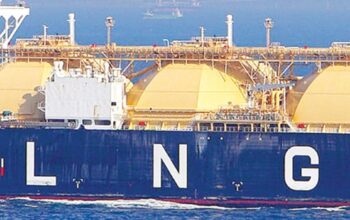
Separately, Chaudhry said the government has set an accelerated timeline for expanding the Pakistan National Shipping Corporation’s fleet to 30 vessels — a target originally spread over three years that he said should now be reached within twelve months, representing a 50% increase in PNSC’s current capacity.
Copyright © 2021 Independent Pakistan | All rights reserved