By Staff Reporter
ISLAMABAD: Other Arab nations could join a new mutual defence pact between Pakistan and Saudi Arabia, Islamabad’s defence minister said Thursday, adding that the “doors are not closed” a day after the landmark agreement was signed.
The “Strategic Mutual Defence Agreement” treats any aggression against one country as an attack on both, and was signed by Prime Minister Shehbaz Sharif and Saudi Crown Prince Mohammad Bin Salman at the Al-Yamamah Palace in Riyadh on Wednesday, marking the most significant upgrade in bilateral defence ties in decades.
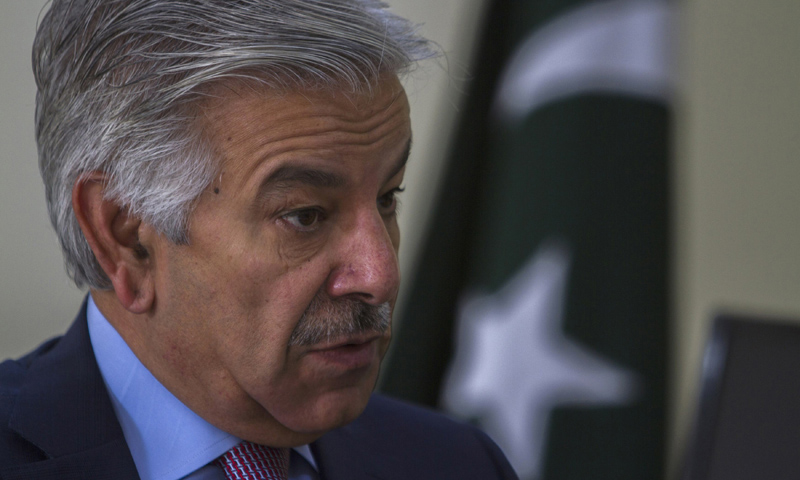
In an interview on a private broadcaster, Defence Minister Khawaja Asif said the possibility of expanding the deal to include more countries could not be ruled out. “I cannot prematurely answer this, but I will definitely say the doors are not closed,” Asif said when asked if other Arab nations could become part of the arrangement.
He stressed that there was no clause in the agreement barring the entry of any other nation or preventing Pakistan from signing similar pacts elsewhere.
Asif described the accord as a defensive arrangement akin to Nato, driven by regional vulnerabilities over the past 40-50 years. “I think it is a fundamental right of the countries and people here, particularly the Muslim population, to together defend their region, countries and nations,” he said.
On whether Pakistan’s nuclear assets would be involved under the pact, Asif affirmed: “What we have, our capabilities, will absolutely be available under this pact. But let me say, since Pakistan has become a nuclear state, never has anyone challenged our status of being a responsible nuclear power.”
He noted that Pakistan had always offered its nuclear facilities for inspection and never committed any violation, contrasting this with Israel, which had not allowed any inspection.
Questioned on the pact’s implications, Asif said: “Yes, absolutely. There is no doubt in this,” confirming that an attack on one country would lead to the involvement of the other. He clarified that neither Pakistan nor Saudi Arabia had named or conditioned the deal’s implementation on any specific country.
“It is an umbrella that has been provided by both sides, that, if there is aggression against any side from any side, it will be jointly defended against and responded to,” Asif said. “If there is aggression, whether against Saudi Arabia or Pakistan, we will jointly defend against it.”
He added that the protection of holy Islamic sites in Saudi Arabia was a “sacred duty” for Pakistan.
Asif said the agreement was not an “aggressive pact” but a formal extension of longstanding cooperation, including Pakistan’s training of Saudi forces and the presence of Pakistani military and air force contingents in the kingdom for decades. “I think that [pre-existing] relationship has been more defined now and that understanding has been given the form of a defence agreement. This is embedded in the history of our military cooperation and our brotherly relationship with Saudi Arabia,” he said.
The accord comes amid heightened regional tensions, following an Arab summit that signalled a shift towards collective security in the wake of Israel’s attack on Qatar. The timing also reflects Saudi concerns over threats from Iran, Houthi militias and instability caused by Israel’s actions in Gaza and aggression against neighbouring countries.
The Israeli attack targeting the Hamas delegation in Doha heightened the urgency for the agreement, which had been under discussion for some time.
A joint statement issued simultaneously by Islamabad and Riyadh at the end of Sharif’s day-long state visit said the pact “reflects the shared commitment of both nations to enhance their security and to achieve security and peace in the region and the world”. “[It] aims to develop aspects of defence cooperation between the two countries and strengthen joint deterrence against any aggression,” the statement said, underscoring that “any aggression against either country shall be considered an aggression against both”.
Cooperation between Pakistan and Saudi Arabia dates back to 1967 and deepened after the 1979 Grand Mosque seizure, when Pakistani special forces helped Saudi troops reclaim Masjid al-Haram. In 1982, the two sides institutionalised ties through a Bilateral Security Cooperation Agreement, enabling Pakistani training, advisory support and deployments on Saudi soil.
At times, as many as 20,000 Pakistani troops were stationed in the kingdom, and Saudi Arabia became a key purchaser of Pakistani-made arms. In recent years, the partnership has gained urgency amid regional instability.
In February, a meeting of the Joint Military Cooperation Committee in Riyadh pledged to expand training and exchanges. The new pact formalises commitments that had long existed in practice, creating what some analysts saw as a de facto joint defensive umbrella, though finer details were not made public. For Pakistan, the agreement offers strategic and economic benefits, securing vital Saudi investment and funding amid fiscal strain, while reinforcing Islamabad’s role as a pan-Islamic security provider.
For Saudi Arabia, it bolsters defences against ongoing threats. Pakistan’s earlier alignments, such as Cold War-era pacts with the United States under Seato and Cento, have eroded. Ties with China, Turkiye and other Gulf states remain important but lack binding mutual defence clauses.
Wednesday’s signing thus represents Pakistan’s most consequential formal defence commitment in decades, tying its security inextricably to the Gulf’s evolving strategic architecture.
Copyright © 2021 Independent Pakistan | All rights reserved