By Staff Reporter
ISLAMABAD: Pakistani forces killed 352 Afghan Taliban militants and wounded more than 535 others in “Operation Ghazab lil Haq,” Information Minister Attaullah Tarar said on Saturday, providing the most detailed accounting yet of a military campaign that has thrust Pakistan and Afghanistan into their most serious confrontation in years.
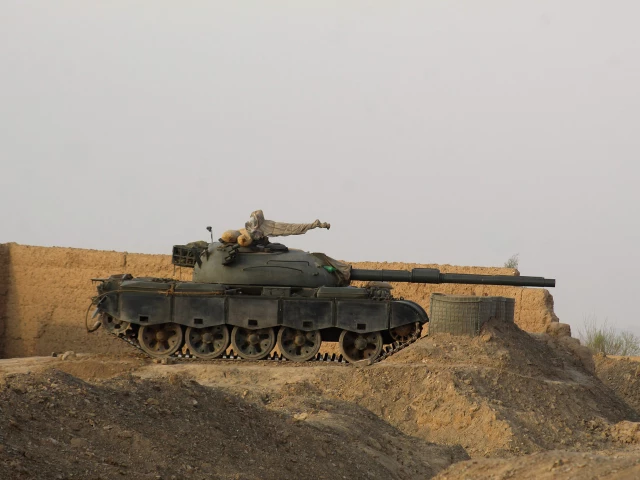
The strikes, launched Friday after an unprovoked cross-border firing, reached deep into Afghan territory, hitting Taliban military installations and posts in and around Kabul and Kandahar, officials said. Tarar, writing on X, said Pakistani troops destroyed 130 check posts, captured 26 others and eliminated 171 tanks and armed vehicles. Air operations targeted 41 locations across Afghanistan.
Fighting continued along the rugged 2,600-kilometer (1,615-mile) frontier into a third day on Saturday. The escalation has alarmed governments across the region and beyond, raising the specter of a wider conflict that neither side appears eager to sustain but both seem prepared to prosecute. For years, Pakistan has accused the Taliban government of sheltering militants from the Tehreek-e-Taliban Pakistan, the group blamed for a surge of deadly attacks inside Pakistan. The Taliban has consistently denied the allegations.
Security forces carried out airstrikes and ground operations against Afghan Taliban military positions in multiple Afghan provinces overnight and into Saturday, destroying army headquarters and other installations. In separate updates issued through the night and on Saturday, security sources said the military was conducting “decisive operations” under the banner of “Operation Ghazab-lil-Haq,” which they said continued to expand. The Afghan Taliban regime was facing heavy casualties and material losses, with its forces in full-scale retreat on every front.
The Pakistan Air Force targeted and destroyed an Afghan army headquarters during strikes in Kandahar province, security sources said. In Afghanistan’s Nangarhar province, it successfully struck two objectives at the Mohmand Dara base and destroyed the Afghan army’s brigade headquarters. An update issued at 10:10 a.m. Saturday said the Pakistan Army was conducting “full and powerful retaliatory operations” in response to the aggression by the Afghan Taliban regime. The air force “effectively targeted and destroyed” an Afghan army headquarters in Kandahar, the sources said, adding that Pakistani forces were successfully destroying Afghan Taliban military installations. “Pakistan’s armed forces stand resolute and unwavering in defending the country’s borders,” the security sources said.
Along the border, operations unfolded across several sectors. In Chitral’s Kandaksi base sector, Pakistani forces inflicted heavy damage on an Afghan Taliban position, the sources reported. In the Khyber sector, Afghan Taliban posts and camps suffered “severe damage,” and the Khyber post was destroyed. In the Noshki sector, Pakistani forces “successfully targeted and destroyed” an Afghan Taliban post. In the Qila Saifullah sector, the Rahim Thana post on the Afghan side was destroyed. Taliban forces were facing setbacks “on every front” after the unprovoked aggression along the Pak-Afghan border. The sources emphasized that “Pakistani forces are not targeting any civilian population or civilian targets.”
In the Qila Saifullah sector, an infiltration attempt was foiled and multiple terrorists were killed, they said. The movement of terrorists along the border was under close surveillance. In the Ghulam Khan sector, an Afghan post was destroyed and caught fire. “Operation Ghazab-lil-Haq is ongoing and will continue until its objectives are achieved,” they added.
Defence Minister Khawaja Muhammad Asif described the fighting as “open war” and said “our cup of patience has overflowed.” He warned that Pakistan would respond forcefully to any further attacks. Pakistan’s conventional military — a standing army of hundreds of thousands backed by a modern air force — vastly outmatches the Taliban’s light infantry forces, which have no conventional air power.
As the guns sounded along the border, diplomatic efforts gathered momentum. Afghanistan’s acting foreign minister, Amir Khan Muttaqi, held a telephone conversation with Saudi Arabia’s Prince Faisal bin Farhan aimed at reducing tensions and keeping channels open. The European Union called for immediate de-escalation and dialogue. The United Nations urged both sides to end hostilities without delay. Russia, Iran and China issued appeals for restraint and a return to talks.
The United States, however, said it supports Pakistan’s right to defend itself against attacks originating from Afghan territory. A State Department spokesperson said Washington did not view Pakistan as the aggressor. A US official, speaking on the condition of anonymity, added that Islamabad faces pressure to address its security challenges and expressed hope the situation would not spiral further.
Pakistani officials forcefully rejected Afghan claims that Taliban militants had shot down a Pakistani fighter jet in Nangarhar province and captured the pilot alive. The Ministry of Information and Broadcasting called the assertion “totally untrue” and said it was part of a coordinated disinformation effort amplified by Indian media and Afghan propaganda outlets.
In a detailed rebuttal posted on X, the ministry noted that Pakistan’s armed forces had reported no aircraft losses. No independent international media outlet or defence monitoring agency had verified the claim, it said. There was no geolocated imagery, satellite evidence or wreckage photos. “In modern conflict environments, verified crashes are rapidly documented — none exists in this case,” the ministry stated.
It identified several videos circulating as proof of the crash as recycled footage from unrelated incidents. One widely shared image, it said, actually came from a Russian aircraft incident in Turkey in 2021.“Reusing unrelated foreign crash imagery is a deliberate attempt to construct a false narrative,” the ministry added. It noted that hundreds of similar misleading videos linked to the India-Afghan propaganda ecosystem had already been debunked in the past two days. Foreign Office spokesperson Tahir Hussain Andrabi was blunt when asked about the claim by AFP. “That’s a false claim. Totally untrue,” he said.
In a separate and unusually personal post on X, Asif addressed Taliban leader Sirajuddin Haqqani directly, invoking the long and tangled history between Pakistan and the Afghan mujahideen. Pakistan had stood “heart and soul” with Afghan fighters during the Soviet Union–Afghanistan war, he wrote. It had hosted Haqqani and his family, along with millions of Afghan refugees, many of whom still “earn their livelihood from our sacred soil.” Both sides had fought a common war in that era, with objectives shaped by the United States, Asif recalled. After the Sept. 11 attacks, Pakistan supported NATO logistics but later faced accusations that it was facilitating the Haqqani network. “We were asked about your location. Do you remember?” he wrote.
Asif reminded Haqqani of Pakistan’s later efforts to reconcile Afghan factions, including taking rival groups to Makkah. Asif said he himself had visited Kabul to urge Taliban leaders not to align with groups hostile to Pakistan. “We asked you not to support them. We were even ready to provide financial assistance if required, but there was no guarantee.” Despite that legacy of support, Asif said Pakistan now faces violence from militants allegedly protected on Afghan soil. “Why are you sheltering those who kill our innocent children and people?” he asked. “Militants targeting Pakistan were being protected and treated as allies.”
The minister appealed for mutual restraint. “We ask nothing from you. Live peacefully in your own home and let us live peacefully in ours,” he wrote. “Let them be hosted in your country if you wish, but do not play the role of our enemy by allowing your soil to be used against us.” “Our tradition, culture and religion teach us to wish well for the home that provides refuge,” Asif concluded. “God is great. Pakistan Zindabad.”
Copyright © 2021 Independent Pakistan | All rights reserved