By Staff Reporter
ISLAMABAD: Pakistani officials on Monday mounted a vigorous defence of the country’s airstrikes inside Afghanistan, declaring that Islamabad had exhausted diplomatic options and would no longer tolerate militants using Afghan soil to attack Pakistan.
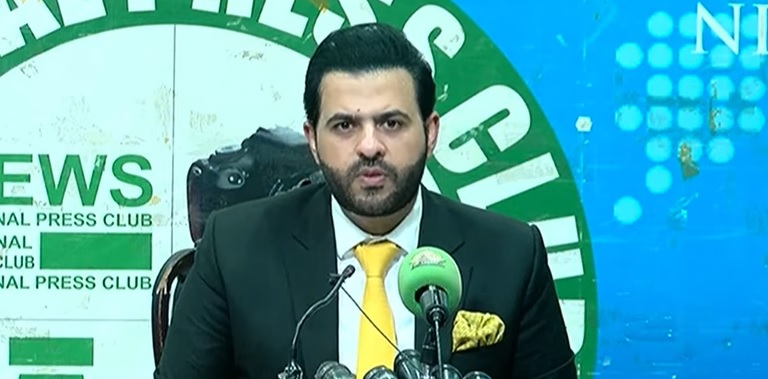
Parliamentary Secretary for Information and Broadcasting Barrister Danyal Chaudhry said the operation, which security sources said killed more than 80 terrorists, was a measured response to a surge in deadly attacks inside Pakistan. “Pakistan has always chosen the path of dialogue and peaceful coexistence,” Chaudhry said in a statement. “But when Afghan soil continues to be used for proxy attacks, we have no choice but to defend our homeland. National security is non-negotiable.”
The PML-N lawmaker added that the Pakistani people “stand firmly” with their armed forces and urged the Afghan government to take “decisive action to prevent its land from being used for cross-border militancy.” Lasting regional peace, he warned, depends on “the complete dismantling of terrorist sanctuaries.”
Chaudhry described the strikes as narrowly targeted at militants responsible for violence inside Pakistan, insisting that “every precaution was taken to protect innocent lives.” He pointed to Afghanistan’s emergence as a haven for multiple terrorist organisations, citing a United Nations report that militants from 21 terror outfits are operating from Afghan territory.
He singled out India, accusing it of “actively funding and training these groups” and equipping them for cross-border attacks. “Such elements deserve no concessions,” he said.
The remarks came a day after President Asif Ali Zardari issued a blunt warning to Kabul that Pakistan’s tolerance for cross-border terrorism had reached its limit. In a statement released by his office on Sunday night, Zardari described the airstrikes as an exercise of Pakistan’s “inherent right” to defend its people. “Tolerance for cross-border terrorism has reached its limit,” he said.
Zardari noted that Islamabad had shown restraint for months, limiting earlier responses to hideouts near the border. But he warned that Pakistan knows precisely where the planners, facilitators and patrons of the violence are based. “If bloodshed continues inside Pakistan, those responsible will not remain beyond reach,” the statement said.
The president also expressed regret that Afghan authorities had failed to act despite repeated warnings and engagements, in violation of commitments under the Doha Accord after fierce border clashes. Under that agreement, Kabul pledged that Afghan soil would not be used against any neighboring country for militant activities.
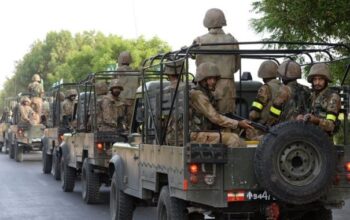
Pakistan carried out the intelligence-based airstrikes on Saturday, destroying seven centers belonging to the Pakistani Taliban, also known as the Tehrik-i-Taliban Pakistan or TTP, in the Afghan provinces of Nangarhar, Paktika and Khost, a Pakistani security official said. The targets also included a camp of the Islamic State Khorasan Province, or ISKP, which had claimed responsibility for a suicide bombing earlier this month at a Shia mosque in Islamabad that killed 32 people.
The operation followed a series of suicide attacks in Islamabad, Bajaur and Bannu that killed Pakistani security personnel and civilians. Authorities described the strikes as proportionate and aimed solely at those responsible.
In a separate statement posted on X, Khyber Pakhtunkhwa Governor Faisal Karim Kundi said the people of Pakistan, especially in the northwestern province bordering Afghanistan, “stand firmly” with the armed forces. “The sacrifices of our martyrs bind us together as one nation,” he wrote. “In this decisive struggle against terrorism, Pakistan stands united, resolute, and unwavering. Our sovereignty is non-negotiable.”
Afghan officials offered a sharply different account. Government spokesperson Zabihullah Mujahid said on X on Sunday that Pakistani forces had violated Afghan territory and killed or wounded dozens of civilians in Nangarhar and Paktika. Those claims of civilian casualties could not be independently verified.
Afghanistan’s Ministry of National Defence condemned the strikes as a breach of international law and Islamic principles, warning that it would give an “appropriate and measured response” at a “suitable time.”
The exchanges mark one of the most direct confrontations between Islamabad and Kabul in recent months and risk further fraying already fragile ties along their volatile shared border. Afghan authorities have long denied that TTP and allied groups operate from their soil and have urged Pakistan to address its own internal security challenges.
Copyright © 2021 Independent Pakistan | All rights reserved