By Staff Reporter
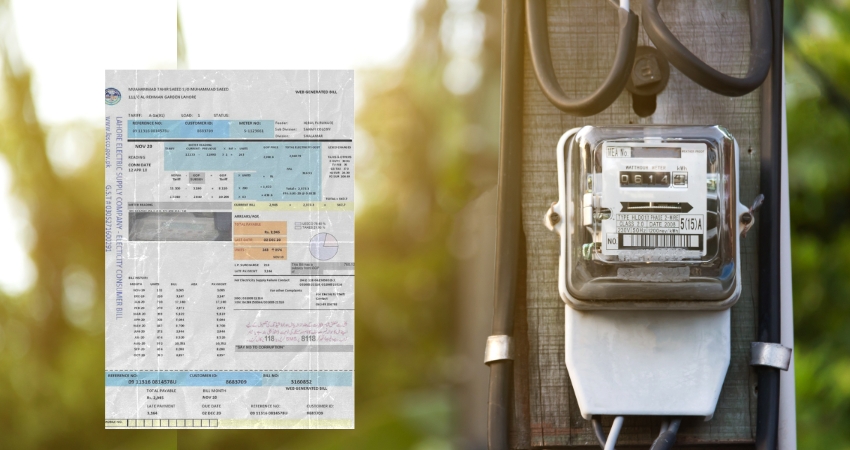
ISLAMABAD: The government is pushing to raise electricity tariffs by Rs1.20 per unit even as power consumption falls, exposing the fiscal bind facing an energy sector caught between shrinking demand and rising fuel costs.
Officials told a hearing convened by the National Electric Power Regulatory Authority on Wednesday that they need to collect Rs15.7 billion in August to cover fuel costs for electricity consumed in June. The request comes as national power demand dropped by more than 3% from a year earlier, prompting regulators to question why consumers should pay more for a smaller pool of electricity sales.
The hearing turned into a broader airing of grievances over Pakistan’s power sector, with regulatory officials and industry representatives criticising everything from loadshedding practices to outages at nuclear plants and the slow pace of reforms meant to fix distribution companies’ finances.
Electricity sales in June totalled 9.995 billion units, down from 10.337 billion units a year earlier, according to figures presented by a government team that included representatives from the power division and its subsidiary entities. Consumption came in roughly 5% below the government’s own estimates for the month.
The decline was broad-based. Domestic and commercial consumption fell between 3.5% and 5%, while agricultural and bulk consumers saw usage drop by 12% to 29%. Industrial demand was the exception, posting 2.8% growth even as every other category contracted.
Government officials attributed the slump to a mix of factors: households and businesses installing solar panels under net-metering programs, Balochistan’s shift of agricultural tube wells to solar power, and weather patterns that reduced cooling and heating loads. Naveed Qaiser, an official from the power division, told the hearing that the swing between solar generation during daylight hours and grid reliance at night has become a defining feature of the country’s demand patterns.
Fuel Costs Climb as Qatar LNG Falls Short
The push for higher tariffs stems largely from a shortfall in contracted liquefied natural gas from Qatar, which forced Pakistan to turn to costlier spot-market purchases and limited use of furnace oil, according to the government team. The Central Power Purchasing Agency said the reference fuel cost for June had been set at Rs7.714 per unit, but actual costs came in at Rs8.9 per unit — a gap regulators said justifies the requested increase.
Rihan Akhtar, another power division official, said the net increase in the fuel cost adjustment would work out to about 86 paise per unit. An existing adjustment of 34 paise per unit is set to expire and be replaced by the new Rs1.20 per unit charge in August, pending regulatory sign-off.
Loadshedding Practices Draw Fire
Nepra’s Member for Development, Maqsood Anwar Khan, pressed government representatives over reports of public protests against loadshedding in various parts of the country, noting the apparent contradiction between falling demand and continued outages. He also took aim at the practice of commercial loadshedding.
Power companies acknowledged loadshedding occurred on four days in June, with outages ranging from 93 megawatts to 730 megawatts. Revenue-based loadshedding — outages targeted at areas with poor bill payment or high theft — remained elevated, the companies said.
Khan was particularly critical of how distribution companies have reported improvements in system losses. Government representatives said inefficiency costs at distribution companies fell to Rs326 billion from Rs591 billion over two years, a reduction they linked to a one-percentage-point drop in system losses. Khan said that improvement had come largely through loadshedding and shutting down grid stations and transformers, rather than through better governance or crackdowns on illegal power connections.
“The improvement could only be achieved when teams are in the field and remove kundas and theft, not through shutting down machines while people suffer in scorching heat,” Khan said, using a local term for the illegal hookups that siphon power directly from distribution lines.
Nuclear Plants Under Scrutiny
Industrial consumers raised concerns after government representatives disclosed that three nuclear power plants — one in Karachi and two at Chashma — were experiencing reactor problems. Both Nepra and government officials sought to downplay the issue, saying overall availability across the country’s nuclear fleet stood at around 94%, within the 8% non-availability threshold allowed under contractual terms.
Industrial representatives also criticized power companies over positive fuel cost adjustments, which they linked to unplanned technical shutdowns, continued reliance on expensive furnace oil and re-gasified liquefied natural gas, and the limited availability of cheaper hydropower.
New Tariff Package in the Works
Qaiser said the government is developing a new tariff package that would address time-of-use pricing, requirements for captive power plants, and the treatment of battery energy storage systems. He said battery storage installed by individual consumers would benefit the broader grid and could support tariff adjustments, but cautioned that utility-scale battery deployment would carry a fiscal impact that could push tariffs somewhat higher.
Qaiser declined to detail the proposed package, saying it remains under development and would be submitted to Nepra once finalized.
Separately, industrial representatives from Karachi called for a review of an incremental tariff package for the sector, arguing its costs were spilling over into other consumer categories, including households. Qaiser said the incremental package had benefited the industrial sector broadly, but acknowledged that the three-year incentive program — now six months old — is under review, with a data set already shared with Nepra to inform possible adjustments.
Copyright © 2021 Independent Pakistan | All rights reserved