By Staff Reporter
ISLAMABAD: Pakistan’s internet environment is among the world’s most restricted, according to a major annual assessment released this week by Freedom House, the Washington-based democracy advocacy group.
The country was classified “Not Free” and placed near the bottom of a 100-point global ranking, with authorities cited for widening censorship, repeated platform disruptions, threats to ban VPNs, and legal changes that rights monitors warn will chill online speech.
The report, Freedom on the Net 2025, covers June 1, 2024, to May 31, 2025, and evaluates obstacles to access, limits on content, and violations of user rights. Pakistan’s neighbours fared noticeably better: India scored 51 (“Partly Free”), Sri Lanka 53 (“Partly Free”), and Bangladesh 45 (“Partly Free”). Freedom House said it was unable to assess Afghanistan. At the very bottom were China and Myanmar (both 9), Iran (13), and Russia (17).
The watchdog placed Pakistan among the five countries — along with Egypt, Russia, Türkiye, and Venezuela — that have recorded the steepest long-term declines over the 15 years the report has tracked global internet freedom. In each case, the report said, governments “intensified their control over the online environment in response to challenges to their rule. ”Pakistan’s slide has been especially sharp. Between 2011 and 2015 the country’s score plunged from 55 to 69, and from 2012 onward, its status shifted from “Partly Free” to “Not Free.”
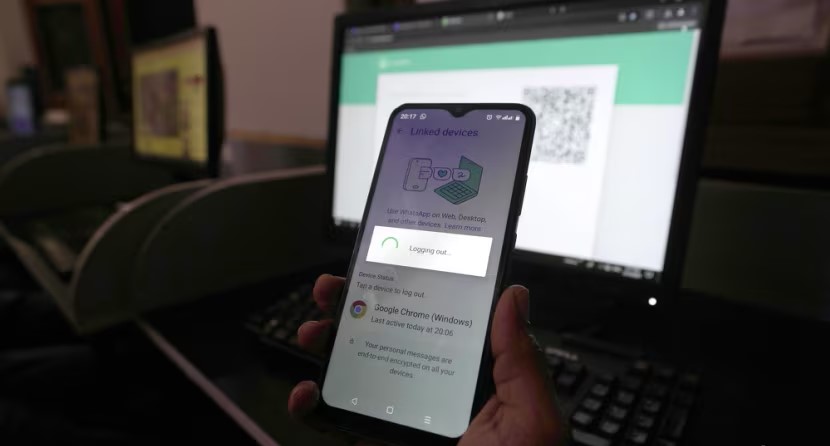
“Pakistanis reported periods of poor internet quality and disruptions to their access to WhatsApp, Signal, and other platforms throughout the coverage period,” the report said. “Researchers found that the connectivity disruptions were likely linked to the deployment of new website monitoring and blocking technology.”
One prominent example came in November 2024, when authorities restricted internet services across Islamabad during large protests in support of the imprisoned former prime minister Imran Khan. Khan, the report noted, “was imprisoned throughout the coverage period.” The military establishment, it added, “sought to curtail the influence” of Khan and his party, Pakistan Tehreek-e-Insaf (PTI).
Curiously, the same platforms became accessible again during a brief military flare-up with India that followed a terrorist attack in Pahalgam, in occupied Kashmir. X, the platform formerly known as Twitter, had been blocked since February 2024 but was unblocked in May 2025. Throughout the year, officials repeatedly threatened to ban unregistered VPNs. In November 2024, the government published registration rules that would have required VPN providers to collect and disclose customer-identifying data, but by month’s end, authorities backed down, acknowledging they lacked legal authority to enforce a blanket block.
In January 2025, amendments to the Prevention of Electronic Crimes Act (PECA) were signed into law. Rights groups immediately warned that vaguely worded provisions could be weaponised to remove any online content the government deems undesirable. The report also documented an extreme penalty for online speech: at least five people were sentenced to death after convictions for blasphemy tied to material posted on the internet. On the broader political landscape, Freedom House described Pakistan as holding “regular elections under a competitive multiparty system,” yet noted that “the military exerts enormous influence over the conduct of elections, government formation, and policies; intimidates the media; and enjoys impunity for indiscriminate or extralegal use of force.” It added that authorities “often impose selective restrictions on civil liberties,” while militant groups carry out attacks on religious minorities and other perceived opponents.
Copyright © 2021 Independent Pakistan | All rights reserved