By Staff Reporter
ISLAMABAD: Pakistan has begun work to power the Thar coal mines from the national grid instead of diesel, a switch the government says will save as much as $30 million a year in foreign exchange.
The contract has been awarded and the contractor has mobilized at the site, the Power Division said on Wednesday. It put completion at April 2028, eight to nine months ahead of the original end-2028 target, which means the savings start sooner.
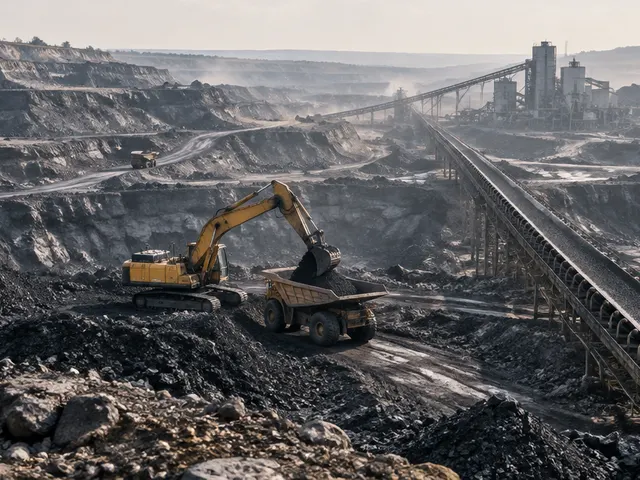
The project will connect mining operations in both Block I and Block II of the coalfield, in southeastern Sindh province, to the grid through 132-kilovolt transmission infrastructure from the Islamkot Grid Station. It is designed to supply about 60 megawatts to the mining sites.
Mining at Thar currently burns 200,000 to 250,000 liters of diesel a day, including about 35,000 liters for dewatering alone. Much of that will be replaced by grid electricity, the division said, putting the daily diesel saving at about 25 million rupees ($90,460).
“The cost of coal production — and consequently the coal tariff — is expected to fall by about $0.70 per ton, lowering the overall power purchase basket cost,” the division said. Electricity for mining operations costs about 33 cents a kilowatt-hour when generated from diesel and will drop to 13 cents, a reduction of more than 60%, it said.
Progress was reported at a review meeting on the electrification of the two blocks, chaired by Power Minister Sardar Awais Ahmad Khan Leghari. Officials from the Thar Coal and Energy Board, Sindh Engro Coal Mining Co., Sino Sindh Resources Ltd., the Power Division and Hyderabad Electric Supply Co. attended.
The Thar field holds one of the world’s largest lignite reserves and supplies several coal-fired power plants in Pakistan. It is also a key component of the China-Pakistan Economic Corridor. Islamabad has been trying to use more domestic fuel to ease pressure on its foreign-exchange reserves and bring down the cost of generating power.
The Power Division first announced the plan on April 1. It said then that the operators of both blocks had agreed to invest about 5.3 billion rupees ($19 million) in grid stations and transmission links. It pointed to water management during coal extraction as a key source of inefficiency in the mines. It also described the planning as timely given an energy crisis stemming from the Middle East situation. Sindh’s provincial government had asked in January 2025 for a concessional electricity tariff to make the switch from diesel viable.
Electrification is also meant to cut emissions. Carbon output is expected to fall by about 80,000 tons a year, and diesel-powered mining vehicles will be “progressively converted to electric systems, supporting long-term decarbonization goals,” the division said.
The managing director of the Thar Coal and Energy Board told the minister that both blocks are pursuing electric-vehicle deployment. Block I plans to bring in about 40 electric trucks by the end of this year, while Block II aims to start deploying EVs in 2028, alongside completion of its grid connection.
Copyright © 2021 Independent Pakistan | All rights reserved