By Staff Reporter
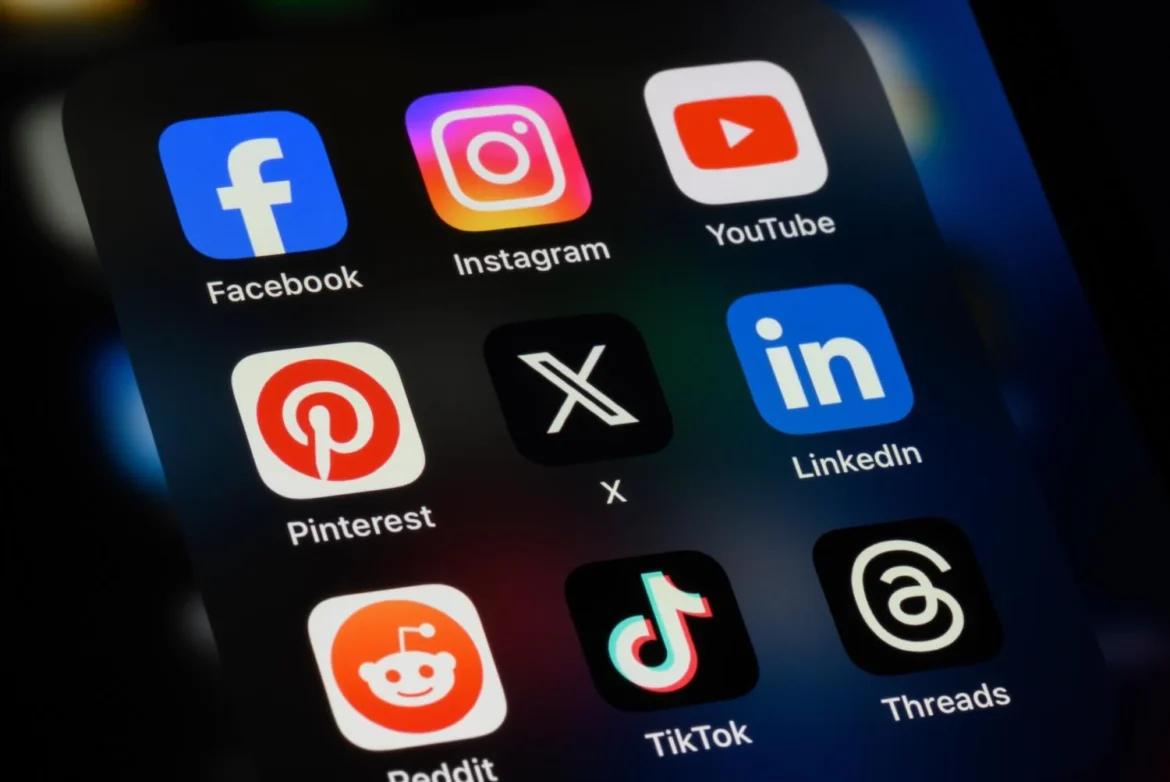
ISLAMABAD: Social media platforms, streaming services and major content creators will have to register with Pakistan’s new online regulator and appoint a local representative with the power to take decisions, Interior Minister Mohsin Naqvi said on Tuesday, insisting the government had no wish to silence legitimate criticism.
Speaking at a seminar organised by the Sustainable Development Policy Institute in Islamabad, Naqvi set out four “red lines” for the platforms: terrorism, hate speech, incitement to violence and the sexual exploitation of children.
“There will be no compromise on these four points,” he said, before adding: “Journalists must report. Citizens must question. Dissent must be heard, including against the government.” Free speech, he said, could never become a shield for those who crossed those lines.
“Pakistan has paid for terrorism in blood. As interior minister, I have attended the funerals of martyrs. And very often, the hate that killed them began on a mobile phone,” he said.
Naqvi accused the social media companies of ignoring Pakistan’s complaints. “Only 47% of the requests made by us, by our counter terrorism departments, are acted upon by social media platforms,” he said. He gave no timeframe, total number of requests or breakdown by platform.
The registration requirement will be enforced by the Social Media Protection and Regulatory Authority, created under a 2025 overhaul of the country’s cybercrime law. Naqvi gave no deadline for registration and did not say how a “major” content creator would be defined.
“Registration is not a licence to silence anyone, it tells us who is accountable when something goes wrong,” he said. Every platform, he added, “must name an empowered representative for Pakistan, who can actually take decisions”.
Enforcement, he said, would proceed in stages. “Finally, enforcement will be step by step: engagement, then notice, then penalties. Blocking a whole [social media] platform will remain a last resort … our request will be clear, lawful and open to review.”
The minister said the state lacked the people and technology to police the internet alone. Punjab, with a population of about 140 million, has only 61 staff in the National Cyber Crime Investigation Agency (NCCIA). “And these 61 people include drivers, clerks and officers. We cannot do this alone. That is why we have established a Social Media Protection Regulatory Authority.”
For citizens, Naqvi promised a single route for complaints. “We are moving all NCCIA complaints onto the Pak ID app and the authority is building a single fully tracked complaint system,” he said. The app was developed by the National Database and Registration Authority, which issues national identity cards.
He described a recent open court session at which five female victims of cybercrime met him. Reports of the event differed on the details. One account had three of the women fearing for their lives over the possible release of intimate images, and two having survived suicide attempts. All said they had no effective way to reach the platforms.
“We don’t have any pathway for approaching those platforms. It’s their responsibility to react immediately to save these innocent lives,” he said.
Naqvi singled out Google for thanking it for helping trace a child sex offender in Abbottabad, part of a case involving an international gang accused of selling sexually explicit material featuring children online. “When a platform acts, a child is protected,” he said.
His sharpest words were for the continued presence of militant groups online. “The state should not feel helpless. Yet, we see terrorist groups still recruiting, still raising terrorist funds, still spreading fear on these very platforms.”
The minister pointed to the Balochistan Liberation Army, a banned group, saying that “many of their officials are still using these platforms”. “If it is a declared [terrorist] organisation, then who allows them to move around and use all these platforms? Someone needs to stop [them]. This is our request.”
“If you are not doing it, what meaning should we take? If it is declared by your country that this organisation is a blacklisted organisation, is a terrorist organisation and then you don’t take action, there’s a big question mark,” he said.
The announcement comes against a contested background. The 2025 amendments to the Prevention of Electronic Crimes Act created the regulator. They also introduced an offence of spreading “false information”, punishable by up to three years in prison. Journalists and rights groups have warned that its broad wording could be used against dissent.
In its annual report published in May, the Human Rights Commission of Pakistan said the amendments, together with sedition and counterterrorism laws, had contributed to the targeting of journalists, political workers and activists.
The regulator’s powers include enlisting platforms, suspending or revoking their enlistment, and blocking them until they comply. Its first chairman, Ayaz Shaukat, the former Advocate General of Islamabad, was appointed in March. The Pakistan Telecommunication Authority has told the Islamabad High Court, according to local media, that major platforms ignored its own registration demands for five years.
Naqvi closed by offering a conciliatory tone. “Today, I extend an open hand to all these platforms. Let us sit together, not across the table. Operate globally, be accountable globally and never let Pakistani citizens feel unheard.”
Copyright © 2021 Independent Pakistan | All rights reserved