By Staff Reporter
ISLAMABAD: The government has summoned parliamentary leaders to an in-camera briefing on Wednesday to address the rapidly deteriorating situation across the Middle East, as it attempts to build cross-party consensus on a response that balances sensitive diplomatic relationships and national security concerns.
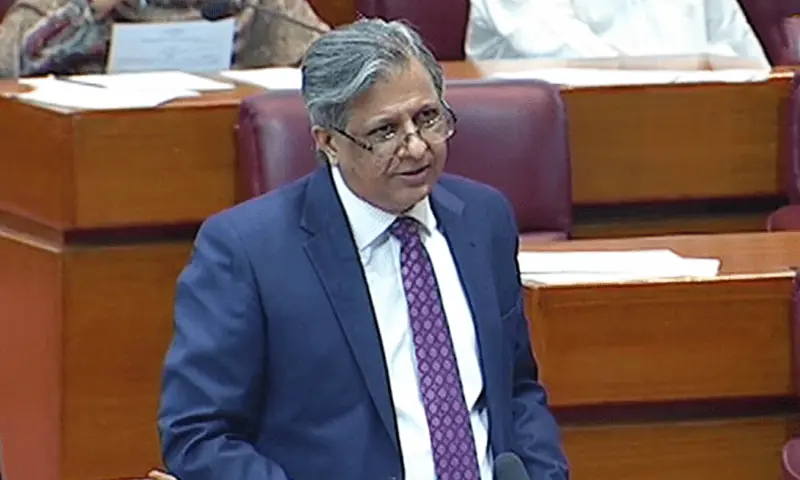
Law minister Azam Nazeer Tarar told the National Assembly on Tuesday that Prime Minister Shehbaz Sharif had personally invited leaders and heads of parliamentary parties to “sit down and develop a course of action so we can move forward”. He emphasised the constraints imposed by the current climate. “There are sensitivities we have to take into account and things that you cannot discuss openly, considering the tension in the region and our relations with brotherly Muslim countries,” Tarar said.
Pakistan enjoyed friendly relations with Iran but also maintained longstanding ties with other nations, he added, singling out Saudi Arabia, with which Islamabad has a defence agreement. “I am requesting both sides of the aisle that this is a sensitive situation and we must sit together for Pakistan and for the security of the wider region,” the minister urged.
Prime minister’s adviser on political affairs Rana Sanaullah was delivering personal invitations to all parties, Tarar said. The briefing, to be held at 11.30am, would be conducted in camera. “The future strategy; what you suggest and what you decide, will be taken into account,” he told MPs. The plan was confirmed in the Senate by deputy prime minister and foreign minister Ishaq Dar, who said parliamentary leaders from both houses – including the leaders of the opposition in the National Assembly and Senate – would receive a detailed briefing at the same time.
Dar indicated the session was also expected to touch on the situation in Afghanistan. The announcement came hours after a delegation from the Pakistan Peoples Party (PPP), a key coalition partner, met Sharif in Islamabad to discuss both the domestic political landscape and the unfolding crisis in the Middle East. A statement issued by the prime minister’s office described the PPP as “an important coalition party of the government” and noted the party’s consistent support for “important decisions for national development and progress”, for which the prime minister expressed gratitude.
The meeting, attended by Senator Sherry Rehman, former prime minister Raja Pervez Ashraf, and MNAs Naveed Qamar and Aijaz Jakhrani, also involved Dar, federal ministers Ahsan Iqbal and Azam Nazeer Tarar, and Rana Sanaullah. No further details of the discussions were released.The government’s move to consult parliament behind closed doors reflects the delicate balancing act facing Islamabad. Pakistan has sought to maintain relations with Tehran while preserving its longstanding strategic partnership with Riyadh and other Gulf states at a time of heightened tension following US and Israeli strikes on Iran during ongoing negotiations and Tehran’s subsequent retaliation.
Meanwhile, five senior leaders of the opposition Pakistan Tehreek-e-Insaf (PTI), held at Lahore’s Kot Lakhpat jail, issued a pointed statement through their lawyer urging the government to abandon “business as usual” and embrace immediate national reconciliation. The leaders – Shah Mahmood Qureshi, Dr Yasmin Rashid, Ejaz Chaudhry, Mian Mahmoodur Rasheed and Omar Sarfraz Cheema – warned that the region had been destabilised by a surge in Tehreek-i-Taliban Pakistan terrorism, deteriorating ties with Afghanistan, the US-Israeli attacks on Iran, and Tehran’s response.
They described the deepening India-Israel relationship as a “serious threat” to Pakistan. Rising oil and gas prices triggered by the Middle East hostilities would have an “immediate impact on the macro-economic stability recently achieved through a huge price paid by the people of Pakistan”, they said. Tensions in the Gulf were likely to damage remittances and the investment climate. They also expressed alarm over “public anger and outrage, witnessed throughout Pakistan, resulting in loss of lives” – an apparent reference to deaths during protests that followed the assassination of Iran’s supreme leader.
“Current developments will have a negative impact on Pakistan’s economy, security and stability,” the statement continued. “The government must revisit their approach to address immediate national challenges. National reconciliation is the need of the hour.” The PTI leaders further highlighted the water crisis, accusing India of holding the Indus Waters Treaty in abeyance while investing in increased storage capacity on the Jhelum and Chenab rivers. They criticised Pakistan’s failure to build internal consensus on its own water projects, warning that the situation was “not only alarming, it can be devastating for the agrarian economy”. “We do not have the luxury of time anymore; we must reconcile immediately.”
Copyright © 2021 Independent Pakistan | All rights reserved