By Staff Reporter
ISLAMABAD: Pakistan lowered the retail price of petrol and raised the cost of diesel on Monday, an adjustment under a new daily pricing mechanism the government adopted to keep pace with swings in global crude markets triggered by renewed fighting between the United States and Iran in the Persian Gulf.
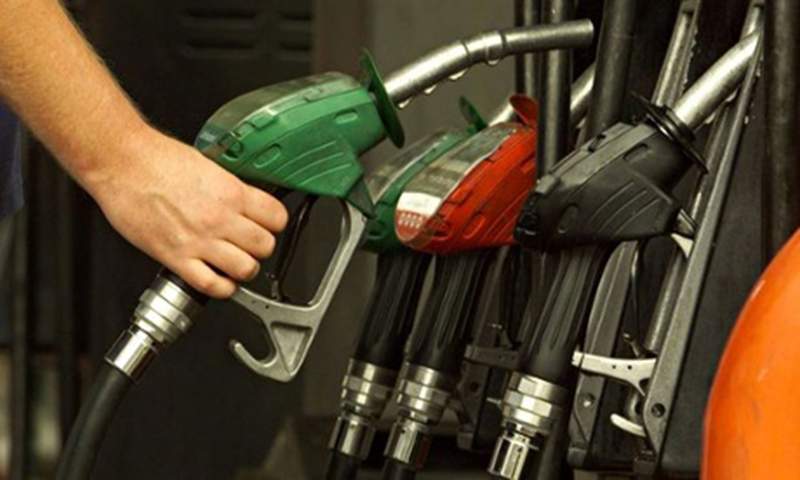
The Petroleum Division cut petrol by Re1 a litre to Rs334.18, while high-speed diesel rose Rs3.37 to Rs386.83, according to a notification from the Oil and Gas Regulatory Authority. The new rates take effect Tuesday and mark a widening in the gap between the two fuels to roughly Rs52.65 a litre, driven largely by a heavier tax burden on diesel relative to recent years.
The government collects Rs110 a litre in taxes and duties on petrol and Rs96 on diesel, according to the notification — a levy structure that has increasingly weighed on transport and logistics costs even as pump prices have retreated from their spring highs.
Monday’s move follows a decision by Petroleum Minister Ali Pervaiz Malik to shift fuel pricing from a fortnightly, and more recently weekly, review cycle to daily adjustments, after the cabinet and the prime minister assigned Ogra responsibility for tracking international benchmarks in real time. Malik said the change was necessary given the pace at which global prices have been moving since fighting between the US and Iran resumed, threatening the flow of oil through the Strait of Hormuz, a chokepoint for roughly a fifth of the world’s crude and liquefied natural gas trade.
The conflict, which broke out in late February, sent Brent crude surging past $100 a barrel within weeks as Iran moved to restrict tanker traffic through the strait, and prices have remained elevated and volatile through the summer even as the intensity of fighting has fluctuated. Islamabad’s pricing overhaul reflects an attempt to pass through those swings to consumers more quickly than its previous review schedule allowed, while limiting the size of any single price shock.
Both fuels remain well below the peaks reached in early April, when the conflict’s disruption to Gulf shipping was at its most acute. Petrol touched a record Rs458.41 a litre on April 3, having climbed from about Rs266 in early March, while diesel hit Rs520.35 the same day, up from roughly Rs281 when the war began. Prices have since eased in stages, helped in part by a partial recovery in tanker traffic and by targeted subsidy measures the federal government introduced in April to cushion the impact on consumers.
Under the revised mechanism formalized this month, Ogra sets prices without requiring prior cabinet approval, basing them on the landed cost of imports and a rolling average premium where imports are unavailable, according to the government’s pricing memo. Diesel prices are calculated using import costs and a seven-day average benchmark. The regulator has been publishing international reference prices on its website since July 1 to improve transparency around how the daily rates are derived. Any adjustment to the petroleum levy itself still requires finance ministry sign-off, and remains capped at a limit set by the cabinet.
The shift to daily pricing has drawn opposition from fuel retailers. The All Pakistan Dealers Association rejected the new system and said it was weighing a protest campaign this week, arguing that more frequent price changes complicate inventory management and margins at the pump.
The price divergence carries different implications for different segments of the economy. Petrol is consumed mainly in private cars, motorcycles and rickshaws, making it a closely watched cost for middle- and lower-middle-income households. Diesel, by contrast, powers the freight trucks, buses, tractors, power plants and generators that underpin much of Pakistan’s goods transport and electricity generation, meaning increases tend to feed more broadly into transport and food prices across the economy.
Petrol and diesel together dominate Pakistan’s refined fuel market, with combined monthly sales of roughly 700,000 to 800,000 tonnes, dwarfing kerosene, which sees demand of about 10,000 tonnes a month and remains a niche fuel used mainly for lighting and cooking in off-grid areas of Gilgit-Baltistan, upper Chitral and interior Balochistan.
Monday’s revision follows two consecutive reviews, on July 26 and 27, in which the government held prices steady at Rs335.18 for petrol and Rs383.46 for diesel — a pause that now gives way to the first divergence between the two fuels since the daily system took effect.
Copyright © 2021 Independent Pakistan | All rights reserved