By Staff Reporter
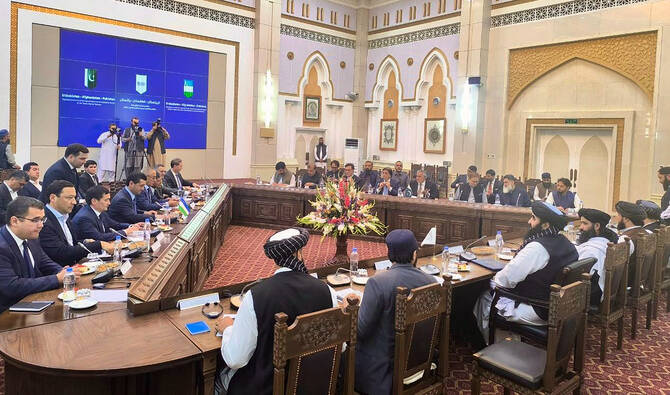
ISLAMABAD: Pakistan, Uzbekistan, and Afghanistan signed a framework agreement on Thursday to conduct a joint feasibility study for the Uzbekistan-Afghanistan-Pakistan (UAP) Railway Project, a transformative initiative to link Central Asia to Pakistani seaports via Afghanistan, boosting regional trade and connectivity.
The signing in Kabul marks a significant step toward economic integration in a region long constrained by geographic and political barriers.
Pakistan’s Deputy Prime Minister and Foreign Minister Ishaq Dar, who traveled to the Afghan capital for the ceremony, called the agreement a “major milestone” in connecting Central Asian countries to Pakistan’s ports through the Naibabad-Kharlachi rail link.
“I congratulate the people and governments of Pakistan, Afghanistan, and Uzbekistan on the signing of the Framework Agreement on the Joint Feasibility Study,” Dar said in a post on X. He thanked the foreign ministers of Uzbekistan and Afghanistan for their “support and commitment” to finalizing the deal, adding, “We remained closely engaged throughout the negotiation process to finalize the details.”
The UAP Railway Project, first agreed upon by the three countries in 2023, envisions a rail link stretching from Termiz in Uzbekistan through Mazar-i-Sharif and Logar in Afghanistan, entering Pakistan via the Kharlachi border crossing in Khyber Pakhtunkhwa. The corridor is expected to facilitate regional, transit, and bilateral trade while supporting both passenger and freight services, according to Pakistan’s Foreign Office.
“This project is expected to promote regional stability, growth, and development,” the Foreign Office said in a statement, describing the agreement as “an important step toward its implementation.” For landlocked Uzbekistan, which has limited access to marine shipping, the rail link promises a vital connection to global trade routes through Pakistan’s ports.
Dar, accompanied by Pakistan’s Railways Minister Hanif Abbasi, the special representative for Afghanistan, and the secretary of the Ministry of Railways, arrived in Kabul earlier Thursday for the signing. The visit also provided an opportunity to strengthen bilateral ties with Afghanistan, which have been strained in recent years amid Pakistan’s allegations of Afghan-based insurgent activity fueling militancy within its borders, claims Kabul has consistently denied.
During the visit, Dar met with acting Afghan Foreign Minister Amir Khan Muttaqi to discuss trade, transit, and security cooperation. The two sides expressed a commitment to maintaining “the momentum in bilateral relations” and expanding collaboration, according to the Foreign Office. They agreed to stay engaged to “achieve the full potential of regional economic development, including through the realization of trans-regional connectivity projects.”
On the sidelines of the ceremony, Dar also called on Afghanistan’s acting Prime Minister, Mullah Muhammad Hassan Akhund. The two leaders reaffirmed their commitment to continued bilateral engagement and discussed issues of mutual interest, including peace, security, and regional connectivity, Foreign Office said.
The UAP Railway Project holds strategic importance for Pakistan, which is seeking to establish itself as a regional connectivity hub. The rail link is expected to strengthen economic ties with Central Asia while navigating the complex security dynamics in Afghanistan, a country whose internal challenges have long impacted broader regional development goals.
The agreement builds on earlier efforts to enhance connectivity between Uzbekistan and Afghanistan, including a 2017 pact to extend a railroad between the two nations. The UAP project expands on this vision, offering Uzbekistan and other Central Asian states direct access to global markets via Pakistan’s ports.
Thursday’s signing comes amid a tentative thaw in Pakistan-Afghanistan relations, bolstered by a China-hosted trilateral dialogue in Beijing in May. During that summit, the foreign ministers of Pakistan, Afghanistan, and China agreed to expedite the exchange of ambassadors between Islamabad and Kabul, a move announced by Chinese Foreign Minister Wang Yi. The UAP railway pact is seen as one of the first tangible outcomes of this renewed engagement, reflecting a shared commitment to regional cooperation.
Copyright © 2021 Independent Pakistan | All rights reserved