By Staff Reporter
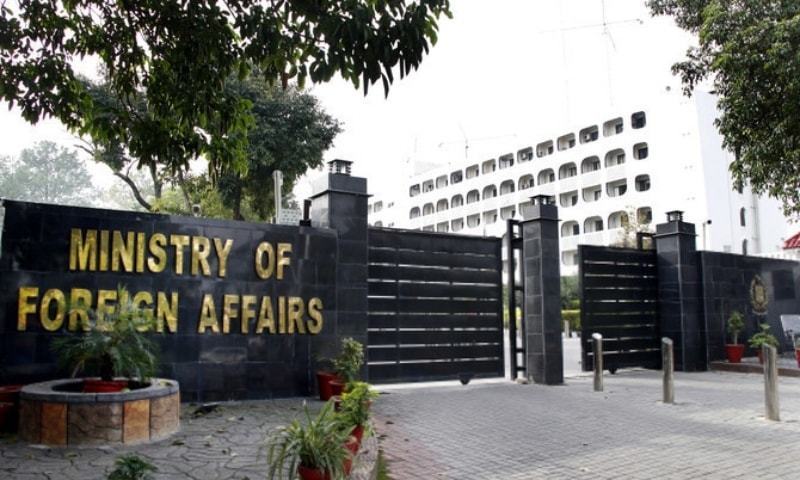
ISLAMABAD: The Foreign Office on Monday voiced deep concern over what it described as the persecution of minorities in India, citing recent vandalism against Christmas celebrations and a pattern of violence targeting Muslims, and called on the international community to intervene to protect vulnerable groups.
The statement, issued amid longstanding tensions between the nuclear-armed neighbors, highlighted incidents last week in several Indian states where right-wing groups disrupted holiday events, including attacks on a shopping mall in Chhattisgarh and a school in Assam. It also pointed to broader abuses against Muslims, such as home demolitions and lynchings, including the 2015 killing of Muhammad Akhlaq in Uttar Pradesh.
“The persecution of minorities in India is a matter of deep concern,” the Foreign Office said. “Recent condemnable incidents of vandalism during Christmas, as well as state-sponsored campaigns targeting Muslims — including the demolition of their homes and repeated lynchings, notably the case of Muhammad Akhlaq, in which the state worked to shield the perpetrators from accountability — have deepened fear and alienation among Muslims.”
Ministry of Foreign Affairs spokesman Tahir Andrabi, in remarks carried in the statement, said “the list of such victims is sadly long” and urged global powers to “take note of these developments and take appropriate steps to help protect the fundamental rights of vulnerable communities in India.”
The comments came as Christian organizations reported a surge in attacks on their community during the holiday season. Open Doors International, a watchdog group, said it had documented more than 60 alleged assaults on Christians across India in the period around Christmas. In one widely circulated video, Anju Bharvaga, a local leader of Prime Minister Narendra Modi’s Bharatiya Janata Party, was seen assaulting a visually impaired Christian woman at a holiday event in the city of Jabalpur. Details of the vandalism emerged in reports from Indian news outlets.
In Raipur, the capital of Chhattisgarh, a mob armed with wooden sticks stormed a mall and tore down decorations during a statewide shutdown called by the Sarva Hindu Samaj to protest alleged religious conversions. “Around 80-90 people barged in,” a mall employee told The Indian Express, adding that the group threatened staff and “indulged in violence.”
Separately, in Assam’s Nalbari district, members of the Vishva Hindu Parishad’s Bajrang Dal unit — which the CIA has labeled a militant religious organization — entered St. Mary’s School in Panigaon village and disrupted preparations for the holiday. “The activists entered the St Mary’s School of Panigaon village and vandalised the preparation of the Christmas Day programme,” an unidentified police official told The Hindu. “They burnt down the banner and posters of the celebration.” Similar disruptions were reported in Kerala and Uttar Pradesh, according to Indian media accounts.
Pakistan’s criticism drew on longstanding accusations of discrimination under Modi’s government, which has been accused by rights groups of promoting Hindu nationalism, or Hindutva, through the ruling party’s ties to the Rashtriya Swayamsevak Sangh. The United States Commission on International Religious Freedom recommended last month that India be designated a country of “particular concern” for severe violations of religious freedom.
Its report accused Modi and the BJP of enacting policies that discriminate against minorities in pursuit of Hindu nationalist goals. A US State Department assessment in August found that Indian authorities had taken “minimal credible steps” to identify or punish officials involved in human rights abuses. Groups like Amnesty International and Human Rights Watch have faulted the government for rising hate speech, a citizenship law that the United Nations has called “fundamentally discriminatory” for excluding Muslims, anti-conversion laws that restrict freedom of belief, the 2019 revocation of special status for Muslim-majority Kashmir, and the bulldozing of Muslim-owned properties.
In the Akhlaq case, cited prominently in Pakistan’s statement, a 50-year-old Muslim man was beaten to death by a Hindu mob in Uttar Pradesh after rumors circulated that his family had stored beef, which they denied. His son was severely injured in the attack. Last month, The Hindu reported that the BJP-led state government sought to withdraw charges against the accused, a move that was dismissed by a court last week, according to The Times of India.
Copyright © 2021 Independent Pakistan | All rights reserved