By Staff Reporter
ISLAMABAD: Pakistan warned on Monday that economic growth will fall short of its 4.2% target for the current fiscal year and face further pressure next year, after slashing development spending by almost 20% to finance fuel subsidies and absorbing the inflationary shock from global supply-chain disruptions tied to the Middle East conflict.
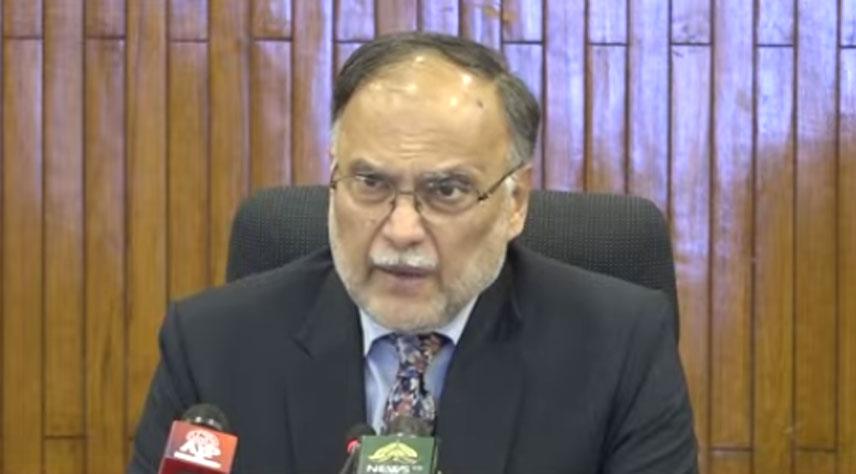
The cut marks the first official acknowledgment that the economy will miss its growth goal, even as international lenders have already penciled in a slower expansion of between 3.2% and 3.5%. Planning Minister Ahsan Iqbal told reporters in Islamabad that the reduction in the Public Sector Development Programme to 837 billion rupees from the original 1.01 trillion-rupee target would weigh on activity. “This (cut in development budget) will have a negative impact and, coupled with international oil prices and inflation, will result in economic slowdown and affect our growth target of 4.2pc” for the current year, Iqbal said.
The Rs173 billion reduction in PSDP funding was redirected to the Prime Minister’s Austerity Fund to subsidize fuel prices, particularly diesel, during the peak harvesting season. The move came as the government first raised diesel and petrol prices by Rs55 a liter, then froze them for two weeks at a cost of Rs129 billion in subsidies financed partly through a Rs100 billion development cut. When the Strait of Hormuz remained closed, authorities hiked petrol by Rs137 a liter and diesel by Rs184 a liter, only for the prime minister to roll back the diesel increase by Rs135 a liter to shield farmers from added costs.
Pakistan’s gross domestic product expanded 3.8% in the first two quarters of the fiscal year — July through December — up from 1.9% in the same period a year earlier. That momentum was interrupted by the external shock of the Middle East crisis, Iqbal said. “Oil prices and their smooth supply chain work like oxygen for the global economies, and their higher prices impacted export costs for all.” Unlike many trading partners, Pakistan managed to avoid outright supply disruptions through “proactive decision-making,” but still had to curb consumption via price adjustments to prevent deficits from spiraling.
The minister struck a cautious note on the outlook. The negative impact on growth this year will be limited because three-quarters of the fiscal year had already passed when the crisis intensified. The drag will be more pronounced in the first half of next year, even if the conflict ends immediately, he warned. Global supply chains and markets typically require six to nine months to normalize, he added.
Iqbal expressed guarded optimism about the second round of U.S.-Iran talks, which Pakistan is helping to facilitate. “Such complex and deep-rooted disputes are difficult to end overnight,” he said. “Both parties will have to show flexibility to end global tension and threat to the global economy.”
He said successful negotiations could help avert a broader inflationary storm and the risk of global stagflation. Consumer prices have already climbed. Average inflation over the first nine months of the fiscal year rose to 5.7%, from 3.5% a year earlier. In March alone, it jumped to 7.3%, compared with 0.7% in the prior year, driven largely by higher non-food and energy costs.
The government has responded by convening the National Price Monitoring Committee weekly instead of monthly and, in coordination with provincial authorities, has enforced price controls and reduced transport fares to align with the diesel subsidy. Iqbal said the entire government would now focus on “catching up” lost ground through what he called “budget proposals for exports, exports and exports,” the only sustainable way to narrow the gap between foreign-exchange outflows and inflows.
The minister noted that the Middle East conflict has also raised costs for petrochemicals and fertilizers. He pointed to the International Monetary Fund’s latest downgrade of its global growth forecast to 3.1% from 3.3%, alongside an increase in the projected inflation rate to 4.4% from 3.8%.
Copyright © 2021 Independent Pakistan | All rights reserved