By Staff Reporter
ISLAMABAD: Pakistan is poised to decide within days whether to dispatch troops to a multinational stabilisation force for Gaza, with officials saying internal discussions have reached an advanced stage and point toward participation in the American-brokered peacekeeping mission.
The prospective commitment, reported by Dawn newspaper on Tuesday, would mark a significant step for Islamabad in aligning with President Trump’s 20-point Gaza peace plan, finalised earlier this month after months of tense diplomacy.
A cornerstone of the agreement is the creation of the International Stabilisation Force, drawn primarily from Muslim-majority nations, to help secure the enclave after more than two years of devastating war.
Officials described the tone of government and military consultations as favoring involvement. “We were among the original backers of the peace architecture for Gaza,” one senior official told Dawn. “To step aside now would mean abandoning an initiative we helped shape. There’s a moral obligation, not just a political one.”
The force’s mandate, as outlined in the peace agreement, includes maintaining internal security, disarming Hamas, safeguarding border crossings and aiding humanitarian relief and reconstruction efforts under a transitional Palestinian authority.
The Trump administration has made clear it will not send American soldiers into Gaza but has pressed countries including Indonesia, the United Arab Emirates, Egypt, Qatar, Turkey and Azerbaijan to contribute. Israel, however, has drawn a sharp line at Turkish involvement. On Monday, Foreign Minister Gideon Saar publicly rejected Turkey’s participation, citing President Recep Tayyip Erdogan’s “hostile approach against Israel.” The day before, Prime Minister Benjamin Netanyahu said Israel would have the final say on any foreign troops entering Gaza and signalled strong opposition to Turkish security forces.
According to a report in the Israeli press, lawmakers on Parliament’s Foreign Affairs and Defence Committee were informed during a closed briefing last week that the force, comprising soldiers from Indonesia, Azerbaijan and Pakistan, would handle policing and internal security in Gaza while assisting Israel in securing borders and blocking weapons smuggling.
The developments coincide with a Middle East tour by Pakistan’s army chief, Field Marshal Asim Munir, who has visited Egypt and Jordan, two nations central to the post-ceasefire landscape. Pakistan’s military described the trip as focused on deepening defence ties, but officials said talks prominently featured the fragile rollout of Trump’s peace blueprint.
In Cairo, Field Marshal Munir met with President Abdel Fattah el-Sisi and praised Egypt’s “pivotal role” in easing regional tensions and fostering stability, according to a statement from the Egyptian presidency. He also commended Egypt’s “tireless efforts” to end the humanitarian catastrophe in Gaza. Egypt, alongside Qatar and the United States, mediated the pivotal Sharm el-Sheikh summit on Oct. 13, where the plan’s first phase was inked. President Sisi, in turn, expressed appreciation for Pakistan’s “positive and proactive contributions” to issues vital to the world and the Muslim ummah, according to Pakistan’s Inter Services Public Relations.
Analysts see the army chief’s discussions in Cairo as a strong indicator of Pakistan’s likely role not only in the stabilisation force but also in a United States-led Civil-Military Coordination Center tasked with implementing the peace plan.
In Jordan, Field Marshal Munir held talks with King Abdullah II and Maj. Gen. Yousef Ahmed al-Huneiti, chairman of the Joint Chiefs of Staff. The Jordanian leadership acknowledged Pakistan’s “contributions toward peace and regional security,” the military said. Pakistan’s potential involvement draws on multiple imperatives. Officials emphasised the country’s place among the original eight nations that proposed a peace framework in late 2024, an initiative backed by several Muslim states and that evolved into the current American-led accord.
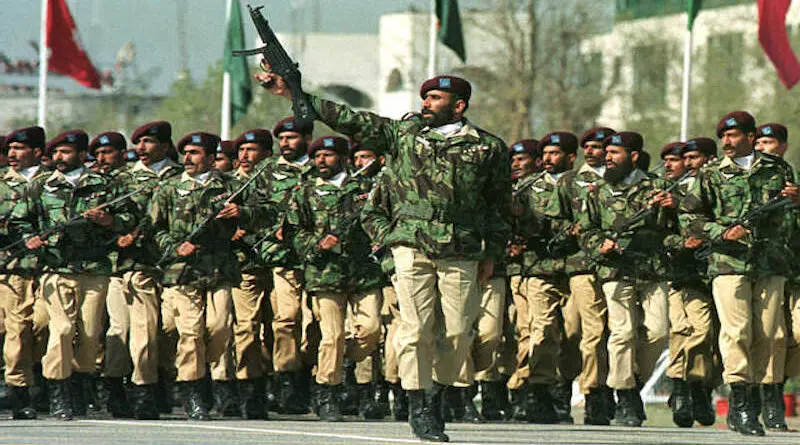
Participation, they argue, would affirm Islamabad’s consistency and credibility. Pakistan also brings unmatched experience: It is among the United Nations’ largest troop contributors, having sent more than 200,000 personnel to over 40 missions across Africa, Asia and the Middle East. That record, officials say, equips Pakistani forces for Gaza’s post-conflict volatility while bestowing legitimacy on the force.
Strategic calculations loom large as well. Relations with Washington have warmed steadily since Trump’s return to the White House, after years, strained by disputes over Afghanistan and counterterrorism. Joining a United States-backed mission, officials said, could accelerate that rapprochement, unlocking economic aid, military support and greater regional sway.
Yet significant hurdles remain. Legal clarity is lacking. “Ideally, we would like this deployment to take place under a UN mandate,” one official said .Gaza’s volatility poses operational risks, and at home, the politics are treacherous. Many Pakistanis, profoundly sympathetic to Palestinians, could view the mission — conceived in Washington — as advancing Israeli aims or betraying the resistance. “It’s a difficult but defining choice,” another official said.
Copyright © 2021 Independent Pakistan | All rights reserved