By Staff Reporter
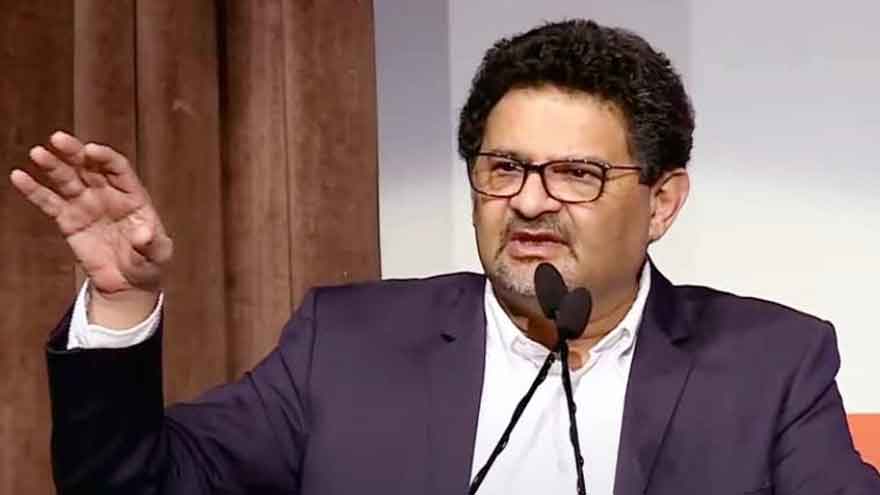
KARACHI: Former Finance Minister Miftah Ismail has criticized the PML-N-led government’s sharp increase in petrol and diesel prices, arguing it has primarily benefited oil companies with windfall profits.
In a series of posts on X, Ismail, who served as finance minister during Prime Minister Shehbaz Sharif’s prior term and now leads the Awam Pakistan Party, said the government’s Rs55-a-liter hike handed oil firms an additional Rs35 per liter profit on petrol and Rs70 per liter on diesel.
The increases, effective March 6, push petrol to a record Rs321.17 a liter from Rs266.17 and diesel to Rs335.86 from Rs280.86. They mark the biggest one-time jump ever and the highest price levels for both fuels. The move comes as global oil prices surge amid the US-Israel war with Iran, pressuring Pakistan’s energy import bill.
Pakistan revises fuel prices every 15 days based on the average Singapore Platt’s index for the preceding period. For the March 1-15 window, the government used February 15-28 Platt prices, added the petroleum levy and incidentals. Oil companies had already purchased their inventory for early March at lower pre-surge international rates, meaning their base costs and standard profits were covered under the original pricing. Market expectations of an even steeper increase for March 15-31 triggered heavy buying by consumers and hoarding by pumps and distributors. To prevent shortages, authorities opted for an immediate hike rather than waiting.
Ismail said the government could have credibly committed to cutting the petroleum levy from March 15 onward, keeping consumer prices stable and deterring hoarding. Fiscal discipline and the International Monetary Fund program precluded that route. Enhanced monitoring of oil companies and retailers was another possibility, but one in which the government lacked confidence.
Instead of temporarily boosting the levy by Rs55 for just this fortnight and pledging a reversal, the administration raised the levy by Rs20 on petrol — while allowing oil companies Rs35 extra profit — and cut the levy by Rs20 on diesel while granting marketers Rs70 more per liter. “This is beyond comprehension,” he wrote. “This is really just giving huge profits to oil companies at the cost of consumers and the government.”
Ismail noted that oil firms’ costs plus normal profits were already accounted for in the March 1-15 prices. “There was absolutely no reason to increase their prices and allow them excessive profits. This is just taking advantage of a crisis.”
He compared the policy to last year’s decision allowing sugar millers to export, which boosted millers’ profits at the public’s expense. “It’s always large companies over the people,” he said. To avert shortages without favoring oil firms, the government should have either hiked the levy temporarily or improved oversight, he added.
Ismail also called for joint sacrifice. While acknowledging that higher oil costs from the conflict make some price increase inevitable — if not now, then by mid-March — he questioned why only ordinary Pakistanis are asked to tighten their belts. People have already become poorer by 12% over the last six years, he said. “What about the government’s own belt-tightening?” he asked. “How about cutting fuel allowance of senior bureaucrats by 10%. How about asking ministers (who have unlimited fuel allowance) to also pay just 10% of their own fuel. This would suggest some shared sacrifice.”
Copyright © 2021 Independent Pakistan | All rights reserved