By Staff Reporter
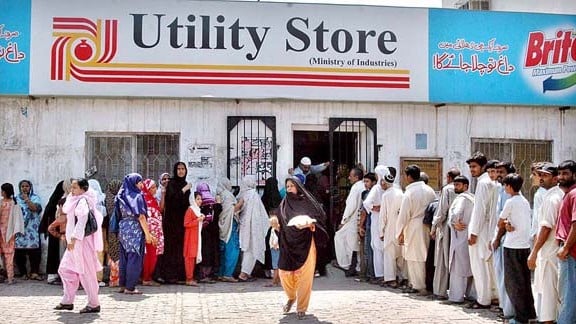
ISLAMABAD” Pakistan’s Utility Stores Corporation (USC), a state-owned enterprise tasked with providing affordable essentials to low-income households, officially shut down operations on Thursday, ending a 54-year run plagued by financial losses and chronic inefficiencies.
The closure, mandated by Prime Minister Shehbaz Sharif, follows a restructuring effort that failed to stem losses totaling Rs15.5 billion, leaving thousands of employees and millions of customers facing an uncertain future.
Founded in 1971, USC operated more than 4,000 retail outlets across the country, offering subsidised staples like flour, sugar, and cooking oil to ease the burden on Pakistan’s poorest families. But years of operational inefficiencies and mounting deficits forced the government’s hand. According to the Finance Ministry’s Federal SOE Performance Overview for the first half of fiscal year 2025, USC racked up a Rs4.1 billion loss in just six months, pushing its cumulative shortfall to Rs15.5 billion, a stark indicator of deep-seated challenges.
The decision to wind down USC crystallised earlier this year. In January, the federal cabinet set up a high-level committee to map out the corporation’s closure and address the fate of its workforce. By April, the National Assembly’s Standing Committee on Privatisation learned that 1,203 stores had already been shuttered and 2,237 employees laid off as part of the overhaul. The final directive came on June 28 from Prime Minister Sharif, with the USC board sealing the timeline earlier this month.
A notification from the Ministry of Industries and Production spelled out the endgame. “All the sales and purchases at utility stores have been closed with effect from July 31, except shifting of stock from stores to warehouses and returned to vendors and handing-taking of stores’ inventories.” The order demanded “strict compliance,” signaling no room for delays or exceptions.
The shutdown also severed USC’s reliance on Odoo, a business-management software suite used for sales and procurement. A second USC notification confirmed that “all point of sale systems connected with Odoo will be rendered inactive across all stores effective July 31.” “No store in charge or designated official is authorised to conduct any sales through the Odoo system after this date. Additionally, no procurement transactions shall be initiated through Odoo either,” it added. Going forward, Odoo will serve only for inventory reconciliation and record-keeping.
“Any attempt to carry out sales or purchase transactions after today will be treated as a serious violation of official policy,” the notification warned, adding that “any employee found conducting or facilitating sales or purchases through Odoo after July 31 shall be held personally responsible, and strict disciplinary action will be initiated under USC rules.”
For Pakistan’s low-income households, the closure marks a harsh blow. USC’s subsidised goods were a lifeline for millions grappling with rising inflation and stagnant wages. Without it, families face steeper costs for basics at a time when economic pressures are already acute. On the employment front, the picture is equally grim. While some permanent staff may find spots in other government agencies or the surplus pool, many others join the ranks of the 2,237 already cut loose, adding strain to an economy battling high unemployment.
Copyright © 2021 Independent Pakistan | All rights reserved