By Staff Reporter
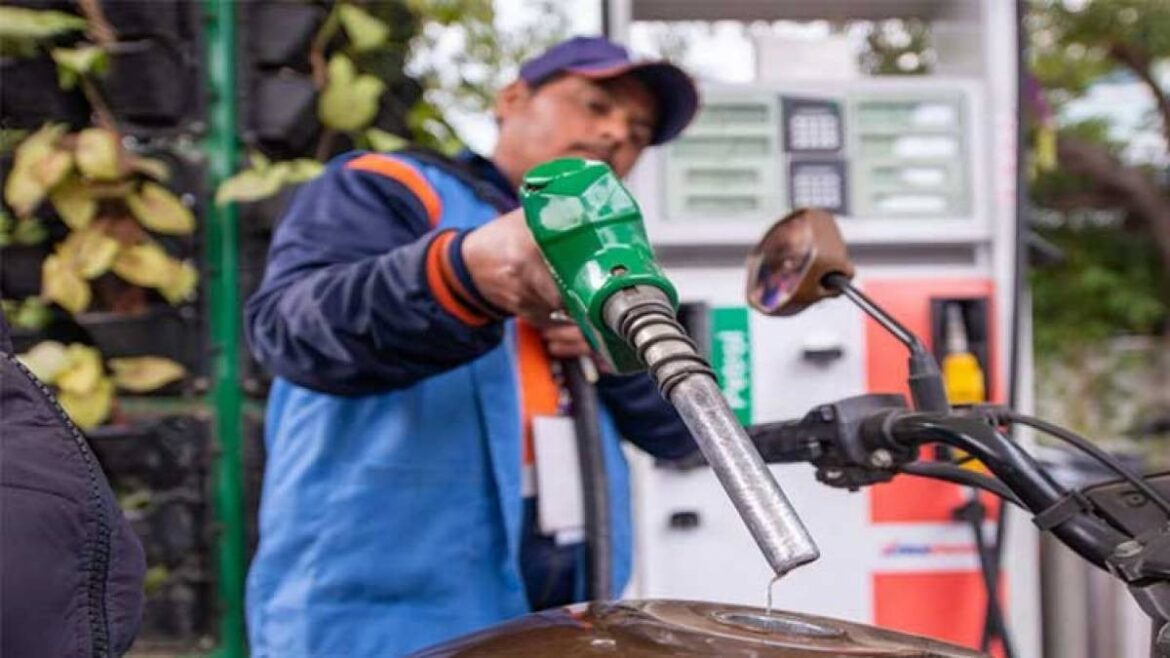
ISLAMABAD: The government cut the price of petrol by Rs3.63 a litre on Thursday but raised diesel by 31 paisa, leaving both fuels far above their level before the war between the US and Iran began in February.
Petrol will sell at Rs390.23 a litre on Friday and high-speed diesel (HSD) at Rs396.96, according to a notification from the Petroleum Division. The government continues to levy Rs114 a litre in taxes and duties on petrol and Rs100 on diesel.
The adjustment follows a revision a day earlier, when petrol rose by Rs1.20 a litre and diesel fell by 17 paisa. Published price tables show petrol had reached Rs398.96 a week ago, within touching distance of the Rs400 mark.
Prices have fallen from their highs but remain punishing. HSD peaked at Rs520.35 on 3 April, after starting its climb from Rs281 when fighting broke out on 28 February. Petrol also peaked on 3 April, at Rs458.41, having begun rising from about Rs266 in the first week of March. By these figures, petrol is still roughly 47 per cent dearer than before the war and diesel about 41 per cent.
The two fuels hit different parts of the economy. Petrol is used mainly in private cars, small vehicles, rickshaws and motorbikes, so price changes fall hardest on middle-income and lower-middle-income households. Diesel powers heavy transport, power plants and large generators, and its cost works through to the price of goods across the country. Petrol and diesel are the biggest revenue earners in the fuel market, with monthly sales of about 700,000 to 800,000 tonnes, against only about 10,000 tonnes of monthly demand for kerosene.
The pricing system has itself been overhauled by the crisis. After the war began, the government announced fuel prices weekly, alongside measures to conserve supplies in case oil shipments were disrupted. On 17 July, teh government announced that prices would be set daily, citing swings in international markets after renewed hostilities between Iran and the US. The cabinet and the prime minister had given the Oil and Gas Regulatory Authority (Ogra) responsibility for deciding prices each day based on global trends. In April, the federal government also announced targeted measures to provide subsidised fuel.
On 13 September, Prime Minister Shehbaz Sharif announced a relief scheme offering Rs100 a litre off petrol for motorcycles, three-wheeler rickshaws and cars of up to 800cc. It is intended to cushion lower-income consumers and is expected to reach an estimated 11.8 million people.
About 10 million two-wheeler users and 800,000 three-wheeler users would be entitled to relief on 20 litres a month, a maximum of Rs2,000 each. A further one million owners of cars up to 800cc would receive relief on 30 litres a month, worth up to Rs3,000 each.
Four days later, the government reintroduced austerity and fuel conservation measures. A Cabinet Division notification, effective immediately, requires shops, markets, shopping malls, bazaars, departmental stores, grocery stores and general stores to close by 9pm every day of the week. Marriage halls, marquees and other venues hosting celebrations must shut by 10pm. Restaurants, cafes, eateries and standalone fruit and vegetable shops may stay open until 11pm, and takeaway and home delivery services are exempt. Fuel allocations for official vehicles have been cut by 50 per cent for three months.
Pakistan imports most of its petroleum, so movements in global prices reach domestic pumps quickly. Crude prices are shaped by decisions taken by Opec+, conflict in the Middle East, sanctions on oil-producing countries and disruption to shipping routes such as the Strait of Hormuz and the Red Sea.
Brent crude, the international benchmark, was little changed on Thursday, up 2 cents at $106.08 a barrel at 12.14pm EDT (1614 GMT). Investors were weighing possible US steps to ease restrictions on the world’s “shadow fleet” of tankers, while the conflict kept a geopolitical risk premium in the market. US West Texas Intermediate futures rose $2.96, or 3.11 per cent, to $98.05 a barrel, supported by a large draw on US crude stocks.
Analysts at the bank MUFG said in a note: “The ongoing conflict between Saudi Arabia and the Houthis is keeping a geopolitical premium in oil markets, but energy infrastructure has not been attacked in the last several days.”
Tensions in the Gulf have not eased. Last week, a tanker was struck by unidentified projectiles in the Strait of Hormuz with casualties, according to the UK Maritime Trade Operations agency. The US Treasury also targeted 17 more vessels it accuses of evading sanctions by carrying Iranian oil. Donald Trump then said on social media that Washington would not attack Iran before the US midterm elections on 3 November.
Copyright © 2021 Independent Pakistan | All rights reserved