By Staff Reporter
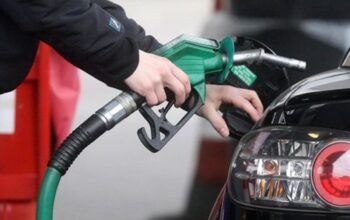
ISLAMABAD: Prime Minister Shehbaz Sharif pressed provinces on Sunday to release their agreed contributions toward a new, targeted fuel-subsidy program, warning that the country’s deepening energy crisis was straining ordinary citizens, motorcyclists and the transport sector that moves both people and goods.
The federal government announced the shift from blanket fuel subsidies to a more narrowly focused relief package on Thursday. Under the plan, provinces are responsible for administering the subsidized fuel quotas, drawing on their shares of the National Finance Commission award. Collectively, the four provinces are expected to pool about 200 billion rupees over the next three months, with Punjab contributing roughly 100 billion rupees, Sindh 51 billion to 52 billion rupees, Khyber Pakhtunkhwa 15 billion rupees and Balochistan 8 billion to 9 billion rupees.
Presiding over a high-level meeting to review austerity measures, Sharif singled out Balochistan Chief Minister Sarfaraz Bugti for having already disbursed his province’s full share. “Balochistan’s government has already paid the decided share in the package, which is commendable. I hope that other provinces will also pay their share soon,” a statement issued by the Prime Minister’s Office quoted Sharif as saying.
The prime minister told the meeting that the government had begun disbursing subsidies directly to owners of motorcycles, trucks and public buses through digital wallets in a transparent and secure process. Although the rollout had originally been scheduled to start Monday, officials moved it forward to Saturday after provinces submitted detailed counts of eligible vehicles, including public-transport buses, goods carriers and trucks.
Sharif said the government was “taking, and would continue to take, all possible measures to provide relief to the public during these challenging times.” The meeting received briefings on the progress of the subsidy rollout, the country’s fuel reserves and consumption patterns, as well as the impact of recent regional tensions on energy supplies. Officials reported that fuel stocks remain sufficient to meet national needs.
To shield commuters from higher fares, the program provides passenger buses with a monthly subsidy of 100,000 rupees and minibuses and wagons with 40,000 rupees each. Goods transporters, whose costs feed directly into food prices, will receive 70,000 rupees a month for trucks, 80,000 rupees for large freight vehicles and 35,000 rupees for delivery vans. Sharif noted that a broader public relief package worth 129 billion rupees had already been rolled out over the past three weeks. He pointed to immediate steps already taken, including a reduction of the petroleum levy by 80 rupees per liter, a 6 billion-rupee subsidy from Pakistan Railways that has kept passenger and freight fares unchanged, and the withdrawal of a planned 25 percent quarterly increase in toll taxes.
The intelligence bureau also presented a report on the implementation of the government’s wider austerity measures. Sharif has repeatedly described the current energy situation as one of Pakistan’s most difficult in years. By ending universal subsidies and shifting the cost partly onto provincial budgets, the federal government hopes to ease pressure on the national exchequer while still delivering help to the segments of the economy hit hardest by rising fuel costs.
Copyright © 2021 Independent Pakistan | All rights reserved