By staff Reporter
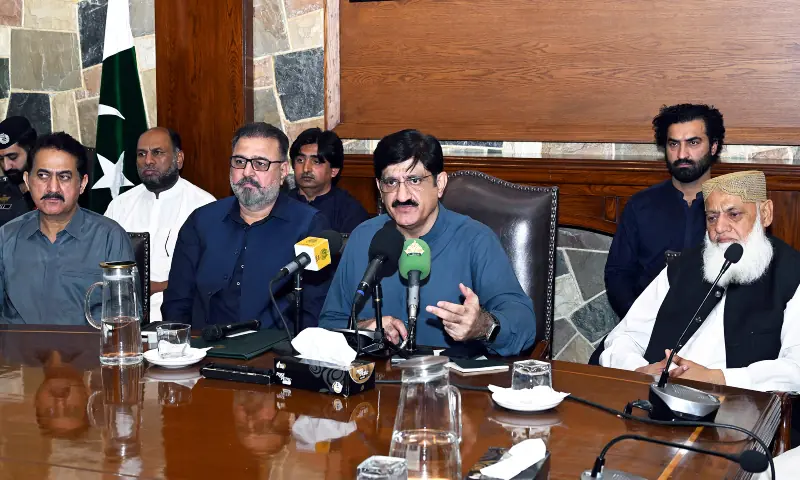
KARACHI: Sindh Chief Minister Murad Ali Shah said on Sunday that the provincial government had secured a comprehensive fare freeze for inter-city and intra-city public transport after weeks of negotiations with transporters, shielding millions of commuters from the sharp rise in fuel costs that has followed disruptions in global oil supplies.
Speaking at a news conference at the Chief Minister’s House in Karachi, Shah said transporters had agreed to keep fares at the levels in effect on Feb. 28, even as operational costs climbed because of higher petroleum prices. He was joined by provincial ministers, senior officials and representatives of the transport sector; divisional commissioners and regional transport authorities participated by video link.
The chief minister described the agreement as part of a broader strategy to protect low-income passengers. A government statement quoted him as saying the administration had “worked out a comprehensive strategy to protect citizens — particularly low-income commuters — from rising transportation costs triggered by global fuel price increases.”
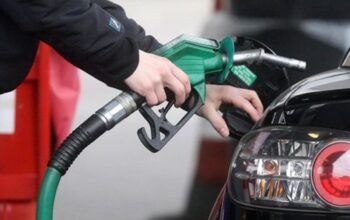
The move comes as Pakistan’s four provinces have scrambled to blunt the impact of successive fuel-price hikes that began after a major escalation in the Middle East conflict. On Feb. 28, the United States and Israel launched joint strikes on Iran. In retaliation, Tehran effectively blocked the Strait of Hormuz, a critical chokepoint for oil shipments. Pakistan responded by raising petrol and diesel prices by Rs55 a liter on March 6. A further sharp increase on April 2 pushed petrol to Rs458.41 a liter and diesel to Rs520.35 a liter before Prime Minister Shehbaz Sharif cut the petroleum levy by Rs80, bringing petrol down to Rs378 a liter for one month.
In Sindh, the government opted against making public buses free — a step announced in Punjab and the federal capital — and instead negotiated the wider fare freeze, which officials said would benefit a larger cross-section of society. The province operates more than 11,000 buses. Maintaining the freeze through subsidies is expected to cost the provincial exchequer between Rs3 billion and Rs4 billion, according to the Chief Minister’s House.
Shah said the subsidies would cover route-permit holders in public transport, goods vehicles and school vans, combining federal support with additional provincial funds. “The government will bear the subsidy cost so that fares remain stable across the province,” he was quoted as saying. He added that Sindh would contribute roughly Rs14 billion to the national subsidy framework while rolling out its own targeted relief for transporters, small-scale farmers and consumers.
“I am thankful to the transporters for supporting the government’s relief efforts in the national interest,” Shah said. “Despite increased operational costs, transporters had shown responsibility by agreeing to pass on relief to the public.”
The chief minister noted that fuel supply had remained stable despite the global turmoil. “It is a major achievement that despite challenging circumstances, fuel supply remains stable,” he said. “Our priority is to provide maximum relief to the people while maintaining economic stability and essential services.” On Friday, Sindh had already announced a Rs2,000 monthly fuel subsidy for registered motorcyclists, along with support packages for small-scale farmers and transporters that range from Rs70,000 to Rs100,000 a month for public and goods transport operators.
Punjab has gone further, declaring public transport free across its cities and offering targeted monthly subsidies for transporters, a diesel subsidy for wheat-growing farmers and relief for motorcyclists. Balochistan has made Green and Pink bus services free for one month in Quetta and other areas. At the same time, the governments of Khyber Pakhtunkhwa and Balochistan imposed strict energy-conservation measures Sunday night, ordering early closures of commercial activity in an effort to reduce electricity demand and ease the financial burden on citizens.
In Khyber Pakhtunkhwa, a notification from the chief secretary’s office set the following timetable, effective Monday: markets, shopping centers and commercial establishments in divisional headquarters must close by 9 p.m.; those in other districts by 8 p.m. Restaurants, cafes and eateries must shut by 10 p.m., though home delivery and takeaway may continue. All marriage halls, marquees, event lawns and similar venues must conclude events by 10 p.m. Night-time sports activities in divisional headquarters are also barred after 9 p.m. The order exempts agriculture and construction work, hospitals, laboratories, emergency services, medical stores (subject to strict conditions limiting them to licensed pharmacies selling only medicines), tandoors selling roti or naan for immediate consumption, petrol pumps (fuel dispensing only) and public transport terminals (limited lighting only).
Industrial units may continue genuine production but must avoid excessive lighting; any attached commercial showrooms must observe closure times. Decorative floodlights, billboards, LED screens and non-essential air-conditioning, lifts and escalators are prohibited after business hours. Generators may not be used for non-essential commercial activity. Government offices must switch off all appliances when not in use and avoid after-hours work except in emergencies.
Balochistan’s Home Department issued a parallel order: markets and shopping centers must close by 8 p.m., with pharmacies, tandoors and bakeries exempt. Wedding halls, banquet halls, hotels and restaurants must close by 10 p.m., and all wedding-related events must end by that hour. District administrations and law-enforcement agencies were told to enforce the rules strictly.
Khyber Pakhtunkhwa also launched the Ehsaas Fuel Support Programme on Sunday, offering Rs2,000 a month to owners of motorcycles, scooters and rickshaws. Special Assistant to the Chief Minister Shafi Jan said the program, to be accessed through the Dastak App, was ordered by Chief Minister Sohail Afridi to help low-income transport users. The provincial actions form part of a coordinated national response. Prime Minister Shehbaz Sharif on Friday outlined a wider relief package that includes subsidies for transporters and small farmers. He also extended an earlier austerity measure, requiring federal cabinet members to forgo salaries for six months instead of two. The federal government has already imposed a four-day workweek, cut fuel allowances and ordered a 20 percent reduction in departmental spending.
Officials across the provinces described the measures as temporary, aimed at easing pressure on electricity supply, limiting additional costs to citizens and supporting the national effort to manage the fallout from the global oil shock. Enforcement will be handled by deputy commissioners, with warnings of inspections and legal action for violations.
Copyright © 2021 Independent Pakistan | All rights reserved